
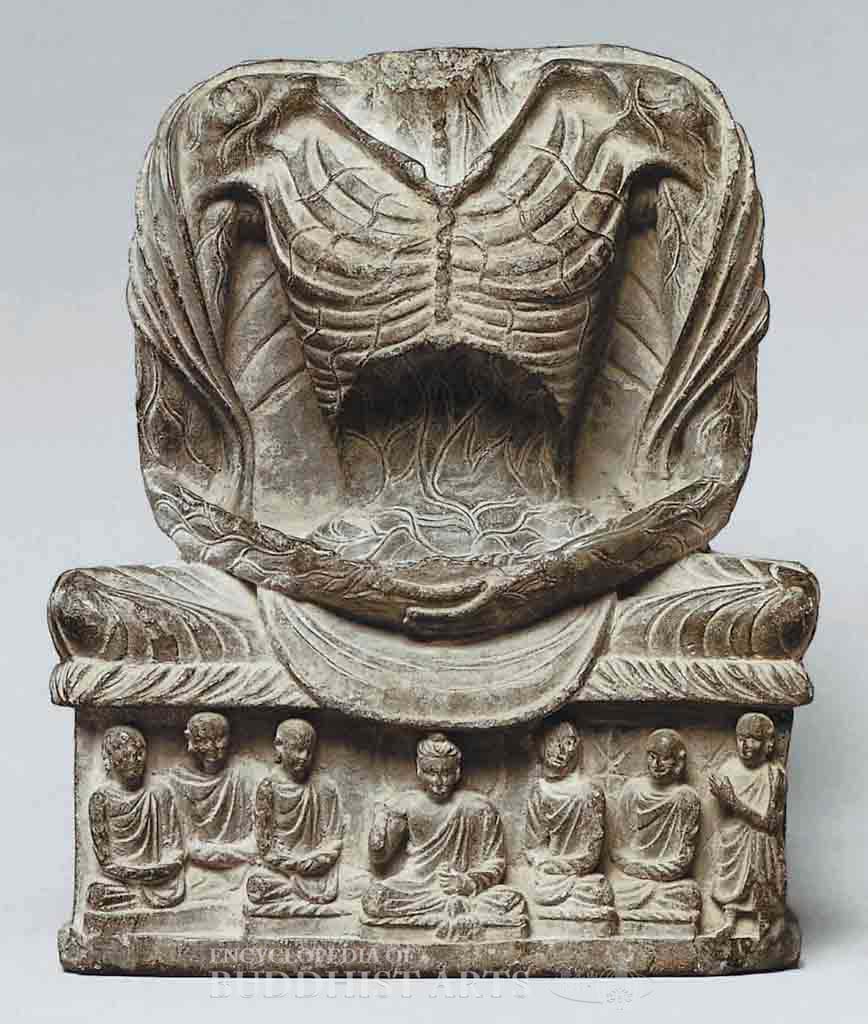
Ascetic Sakyamuni
Schist
Ascetic Sakyamuni
PAKISTAN
The Buddha in the Sutra of Cause and Effect in the Past and Present related to his disciples how, before his enlightenment, he practiced asceticism for six years. His diet during this time was reduced to one sesame seed and one grain of wheat per day and as a result he became extremely emaciated.
It is this phase of the Buddha’s life that the sculpture portrays, with the addition of the veins standing out on the emaciated body. The figure sits upon a grass mat meditating in full lotus position with hands in dhyana (meditation) mudra. The relief carved along the base depicts the enlightened Buddha’s first teaching, in which he described the futility of such ascetic practice. The Buddha’s five former ascetic companions are seated about him. The person standing on the far right with palms joined in reverence may be the benefactor.
For more details, go to the Encyclopedia of Buddhist Arts: Sculpture A-F, page 57.
Cite this article:
author = Hsingyun and Youheng and Lovelock, Yann and Chou, Yuan and Huntington, Susan and Edson, Gary and Neather, Robert,
booktitle = {Encyclopedia of Buddhist Arts: Sculpture A-F},
pages = 57,
title = {{Ascetic Sakyamuni}},
volume = 10,
year = {2016}}