
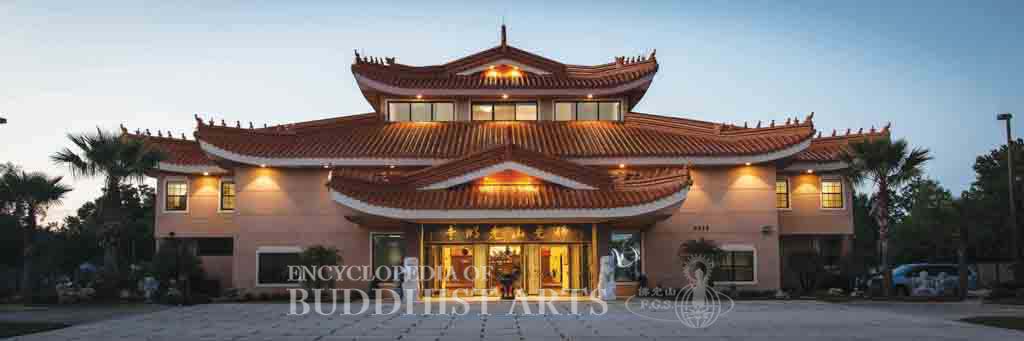
Fo Guang Shan Guang Ming Temple
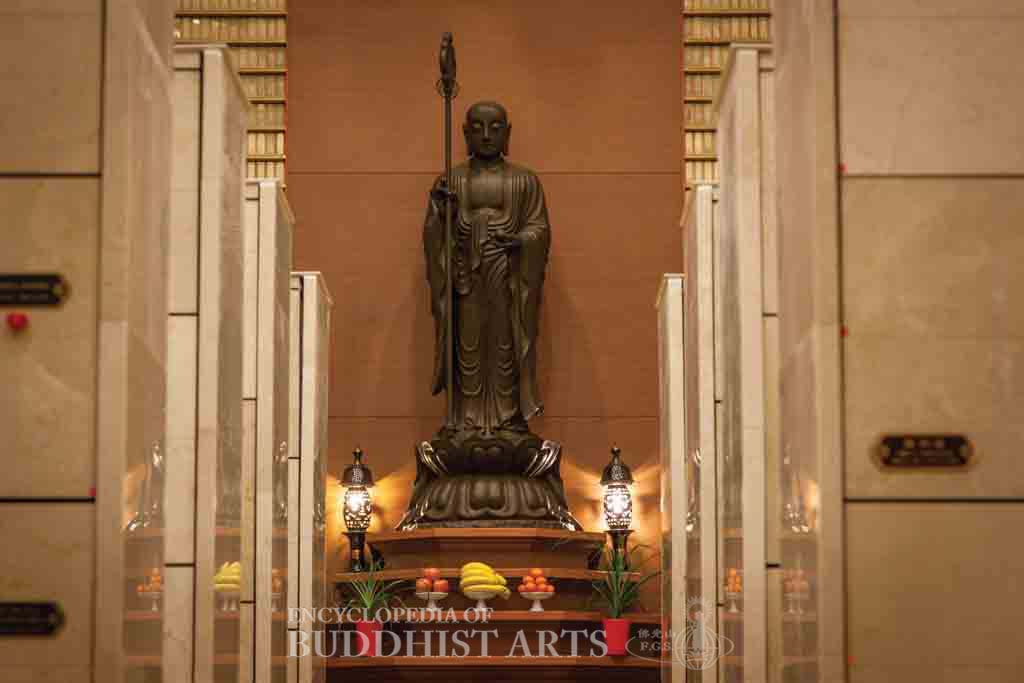
Fo Guang Shan Guang Ming Temple: Memorial Hall (interior)
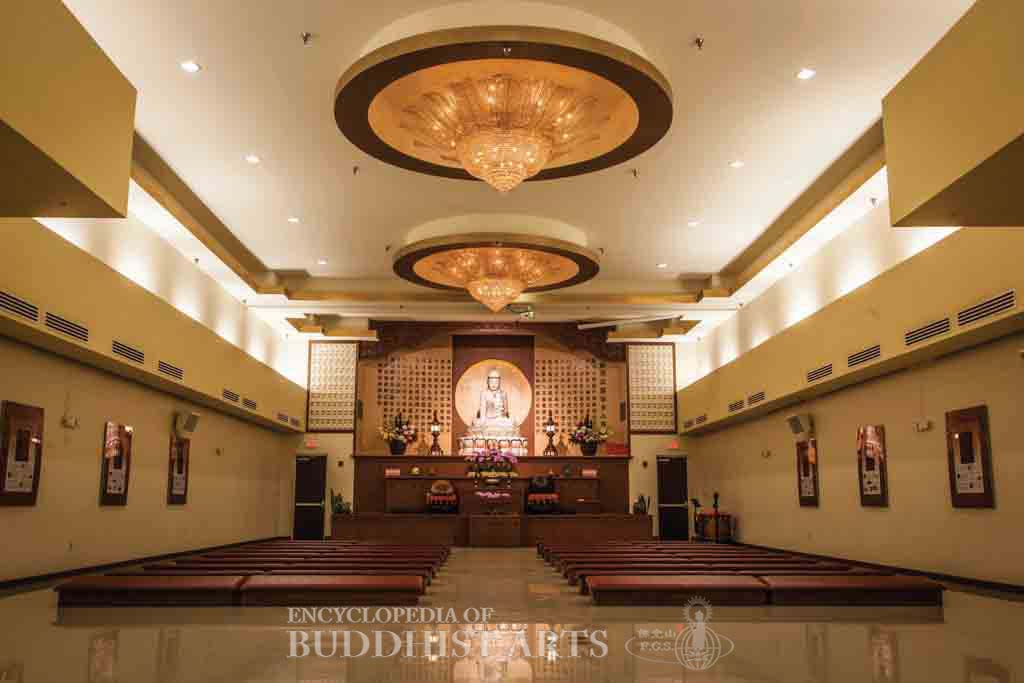
Fo Guang Shan Guang Ming Temple: Main Hall (interior)
Fo Guang Shan Guang Ming Temple
USA, Florida, Orlando
When the founder of Fo Guang Shan, Master Hsing Yun, visited Florida in 1991, he was informed by local lay Buddhists of the lack of temples for Dharma practice in the area. Therefore, the Fo Guang Shan Florida Buddhist Center was established in 1992. However, the temple could not meet the needs of the growing number of devotees and it was decided that a new building was required. Devotees Eddie Yeh and his wife donated 2 ha of land and construction began in 2004. Guang Ming Temple was formally opened in March 2007.
The temple is constructed in the traditional Chinese style of the Northern Dynasties and has a roof with a horizontal ridge, double eaves, and yellow glazed tiles. The main hall occupies the first and second stories. It contains a white jade statue of Sakyamuni Buddha. There is a Heart Sutra in Chinese on both sides of the Buddha, and rows of Avalokitesvara Bodhisattva reliefs next to the sutra.
The eastern corridor on the first story contains a reception area, office, tea house, gift shop, library, and assembly hall. The western corridor holds the dining hall and kitchen. On the second story there is an ambulatory containing a gallery, as well as classrooms. The third story contains a meditation hall. The building at the back courtyard is the memorial hall, which enshrines a statue of Ksitigarbha Bodhisattva.
The temple is an example of traditional Chinese architectural forms merging with modern spatial needs and facilities. It promotes Dharma practice, as well as being a focal point for the spreading of Humanistic Buddhism in the local community.
For more details, go to the Encyclopedia of Buddhist Arts: Architecture A-F, page 315.
Cite this article:
author = Hsingyun and Youheng and Johnson, Peter and Mankuang and Lancaster, Lewis,
booktitle = {Encyclopedia of Buddhist Arts: Architecture A-F},
pages = 315,
title = {{Fo Guang Shan Guang Ming Temple}},
volume = 1,
year = {2016}}