
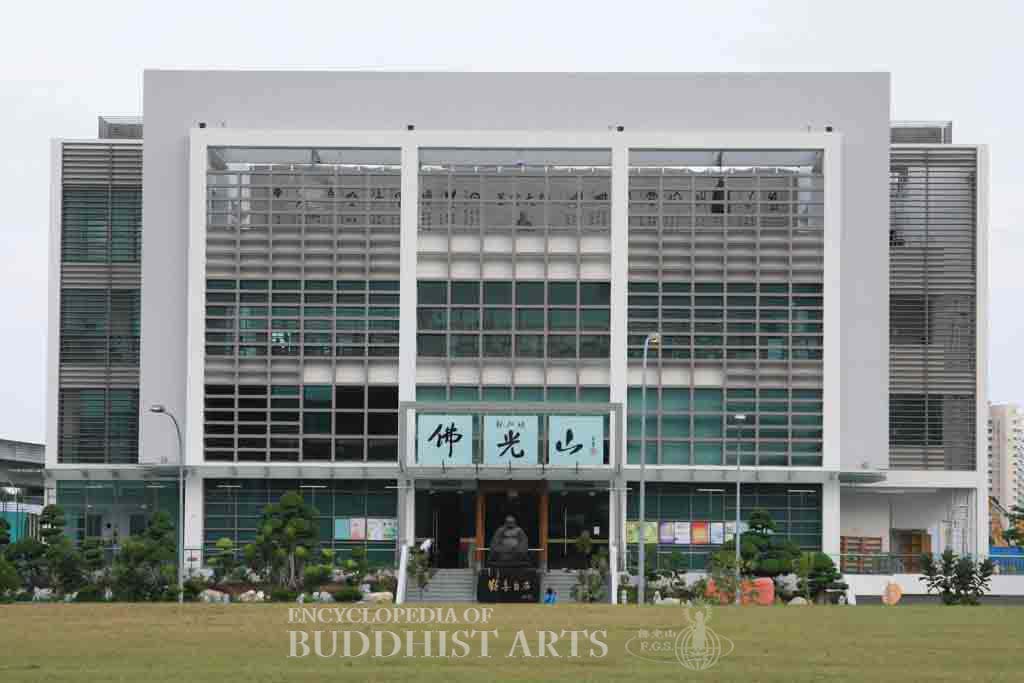
Fo Guang Shan Singapore
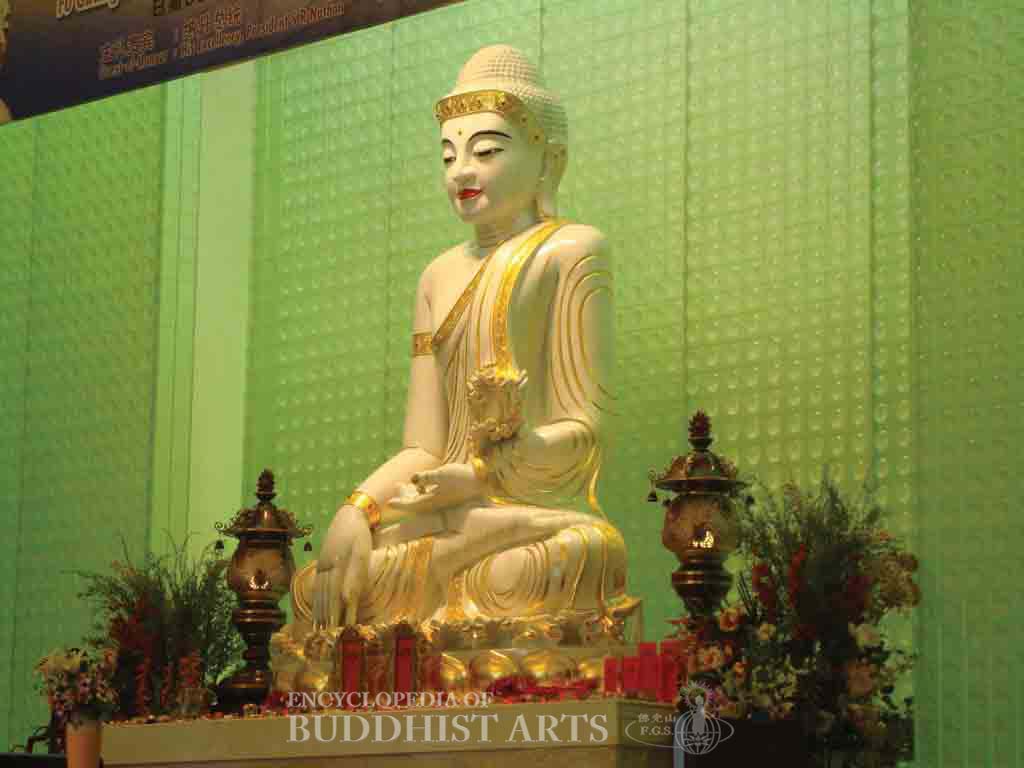
Fo Guang Shan Singapore: Main Hall (interior)
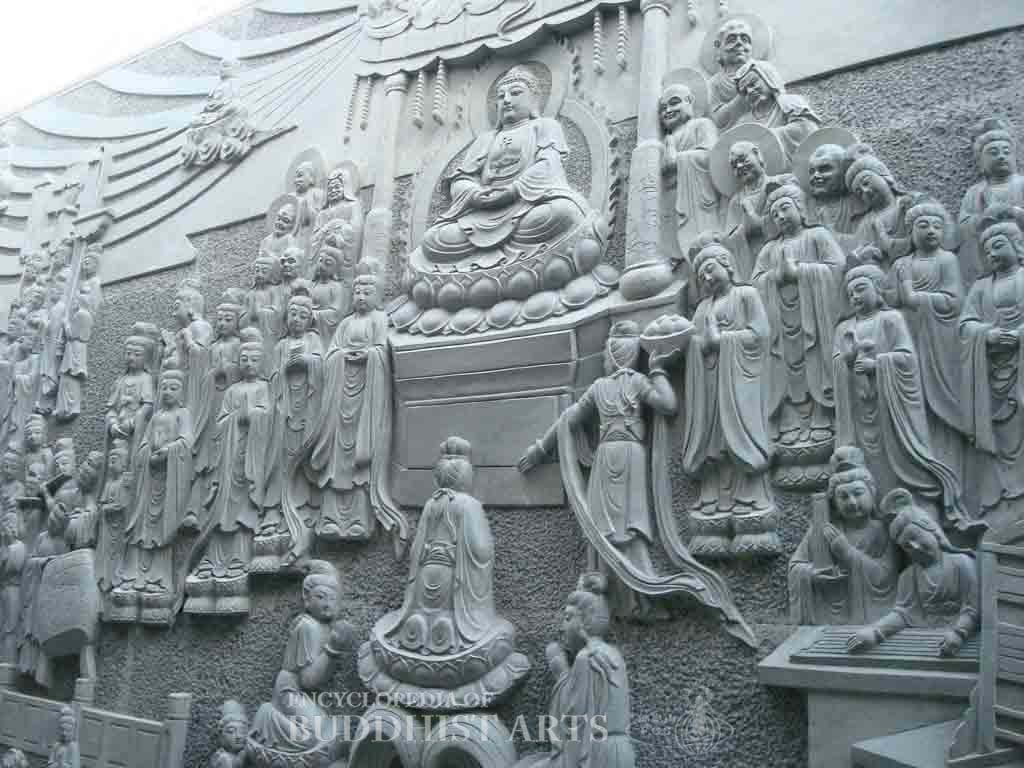
Fo Guang Shan Singapore: Pure Land Hall - Relief of the Lotus Sea
Fo Guang Shan Singapore
SINGAPORE
Established in 1993, this Fo Guang Shan branch temple has occupied a number of different locations before being built at its current site. Designed by the renowned architect, Liu Kah Teck, construction took just one year and was completed in 2007.
This four-story building with two basement levels occupies an area of 2,000 sq m. The temple has a modern appearance that blends in with the surrounding green spaces. Large glass walls allow natural daylight into the building. Between two flights of steps leading into the building is a statue of Maitreya. The main hall on the first story has an area of 550 sq m and can hold up to 500 people. It contains a 4 m high statue of Sakyamuni Buddha carved in Burmese white jade. The back wall consists of large slabs of lapis lazuli engraved with the text of the Diamond Sutra and is the largest lapis lazuli wall in Southeast Asia. Ten thousand Buddha images engraved on ceramic tiles fill the walls of the hall, while statues of the 33 manifestations of Avalokitesvara are located in front of these Buddha images along three walls.
On the second story there is the sutra calligraphy hall, library, and conference room. The third story has a tea house beside an open courtyard, while the fourth level is in the form of a spacious terrace providing a wide view outside. It contains a bell and drum suspended from above. The wall opposite the terrace, known as the Wall of Fame, is engraved with extracts from Master Hsing Yun’s Humble Table, Wise Fare in Chinese calligraphy vividly written by You Gouqing, a renowned calligrapher. The fourth story also houses the Pure Land Hall, a columbarium containing a statue of Ksitigarbha Bodhisattva. A large wall relief depicting the congregation of noble ones at the Lotus Sea lines the columbarium. This relief signifies the reception of the departed into the Western Pure Land.
For more details, go to the Encyclopedia of Buddhist Arts: Architecture A-F, page 333.
Cite this article:
author = Hsingyun and Youheng and Johnson, Peter and Mankuang and Lancaster, Lewis,
booktitle = {Encyclopedia of Buddhist Arts: Architecture A-F},
pages = 333,
title = {{Fo Guang Shan Singapore}},
volume = 1,
year = {2016}}