
Karad Caves
Karad Caves: Stupa
Karad Caves
Karad Caves: Cave 6
Karad Caves: Stupa
Karad Caves
INDIA, Maharashtra
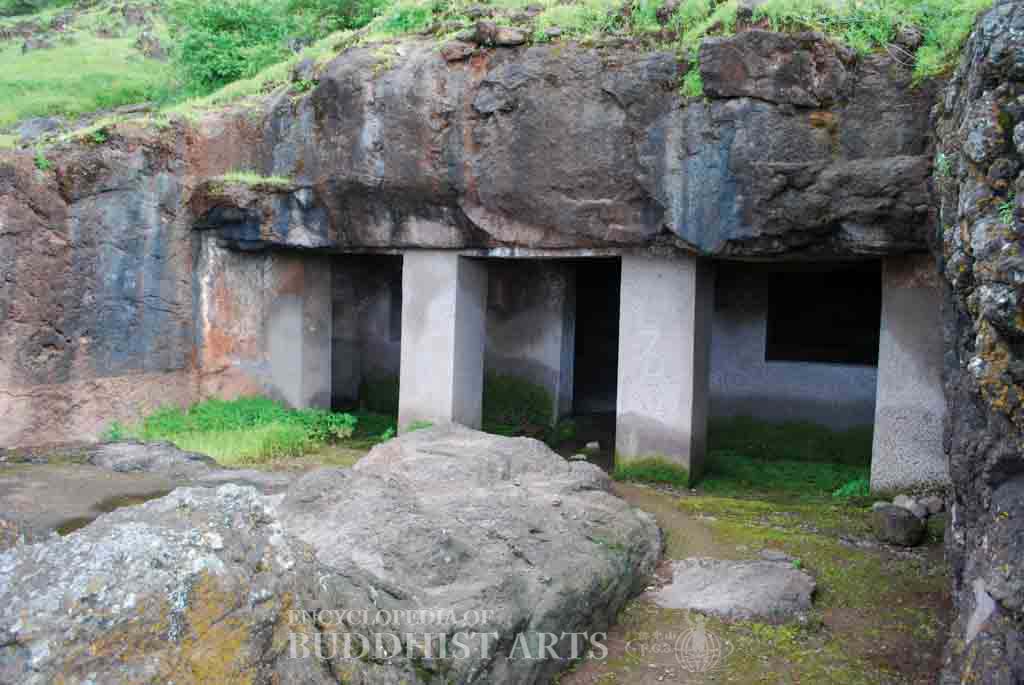
These caves are located near the city of Karad, about 150 km south of Pune in the state of Maharashtra. They are divided into three groups, the Agashiv, Bhairav, and Dongrai, located on different sides of the same mountain range. Over 60 caves are found within these three groups; it is believed that there are more caves yet to be discovered. The earliest of the caves date to the 1st century BCE and the majority are simple vihara caves.
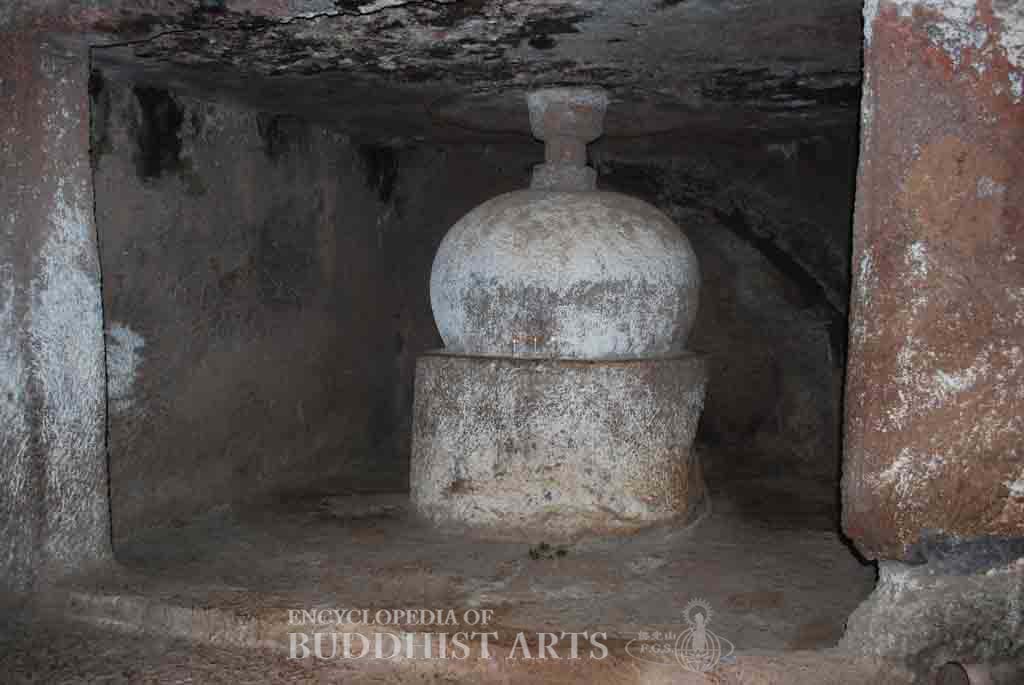
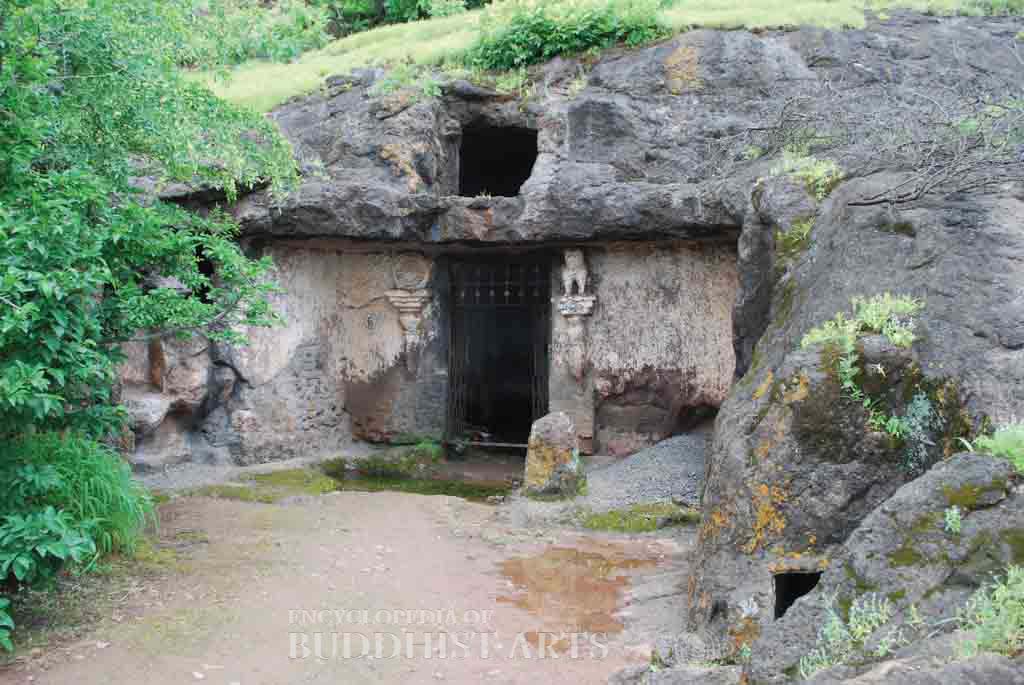
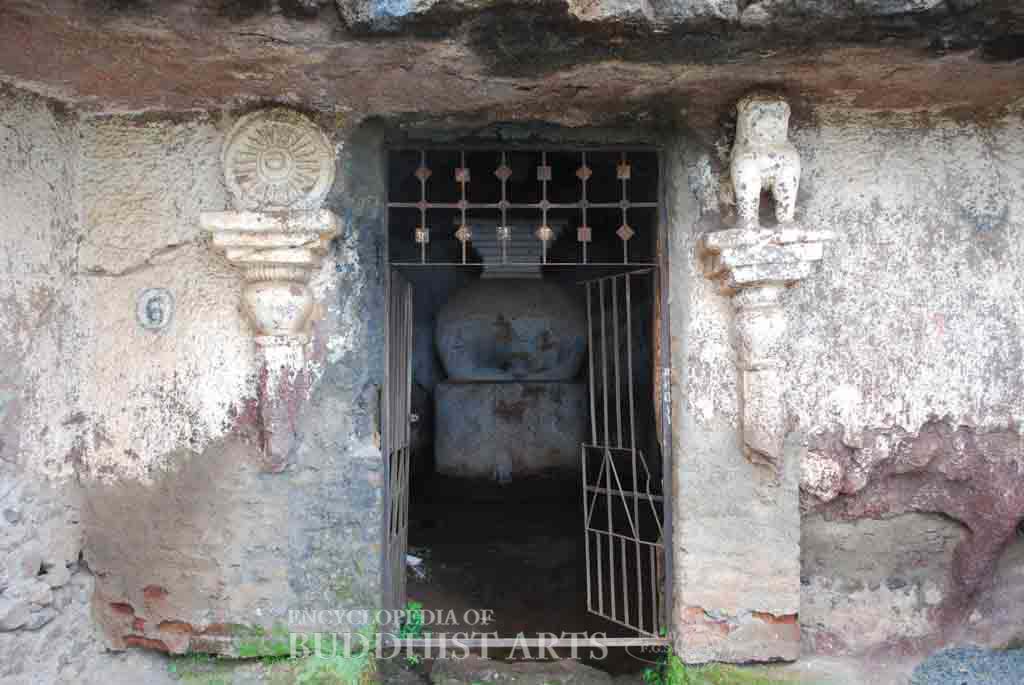
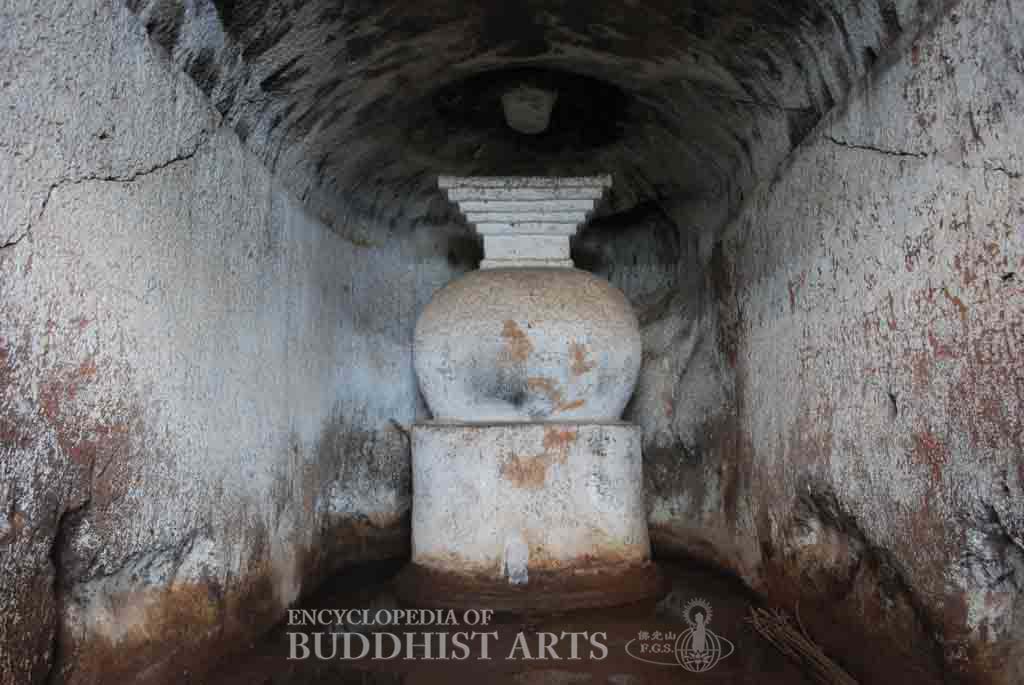
The Agashiv group is the largest among the three groups. These caves are numbered as Caves 1 to 26 by the Archaeological Survey of India. This group consists of 4 caitya caves with the rest being vihara caves, single cells, or water cisterns. Some caitya caves are U-shaped while others are rectangular in layout. The stupas enshrined within the caitya caves are unadorned and vary in shape and size, but they are all inverted bowl stupas. Most of the stupas are still attached to the ceiling, as they were originally designed to be so. Aside from the stupas, the caves retain some carvings of early Buddhist symbols, such as a Dharma wheel and lion, which are carved on top of two pilasters flanking the entrance to Cave 6.
The Bhairav Caves are located near Agashiv. They are known as Caves 27 to 39 and all 13 of them are vihara caves. The Dongrai Caves are further away from the first two groups but are located on the same mountain range. This group consists of over 20 caves, including two caitya caves.
For more details, go to the Encyclopedia of Buddhist Arts: Caves R-L, page 457.
Cite this article:
author = Hsingyun and Youheng and Johnson, Peter and Mankuang and Huntington, Susan and Edson, Gary and Neather, Robert,
booktitle = {Encyclopedia of Buddhist Arts: Caves R-L},
pages = 457,
title = {{Karad Caves}},
volume = 6,
year = {2016}}