
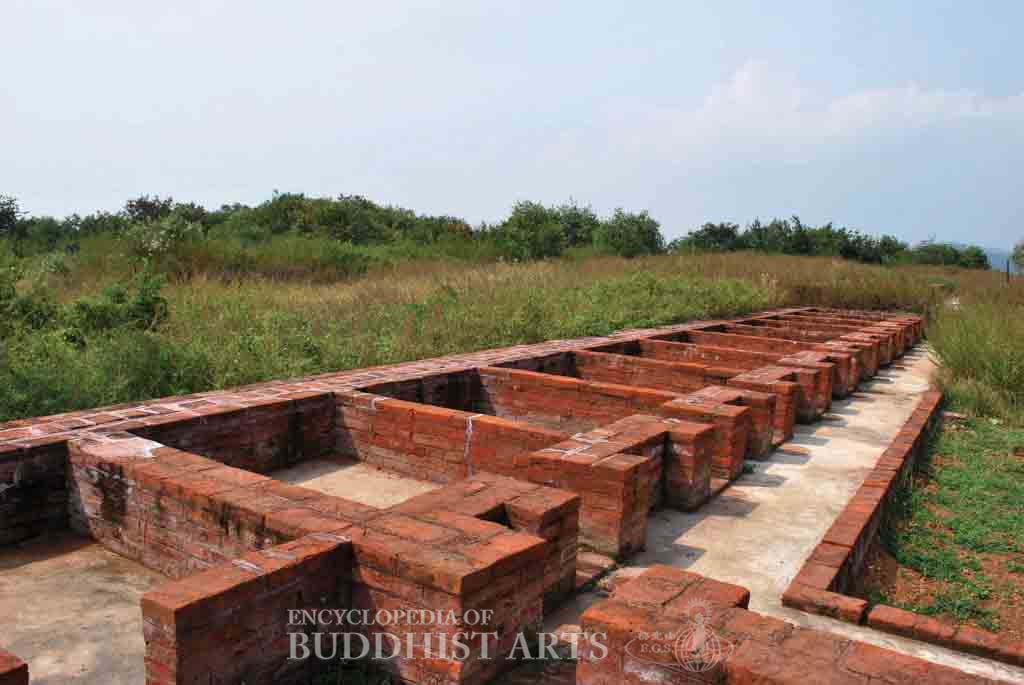
Thotlakonda Monastery: Vihara
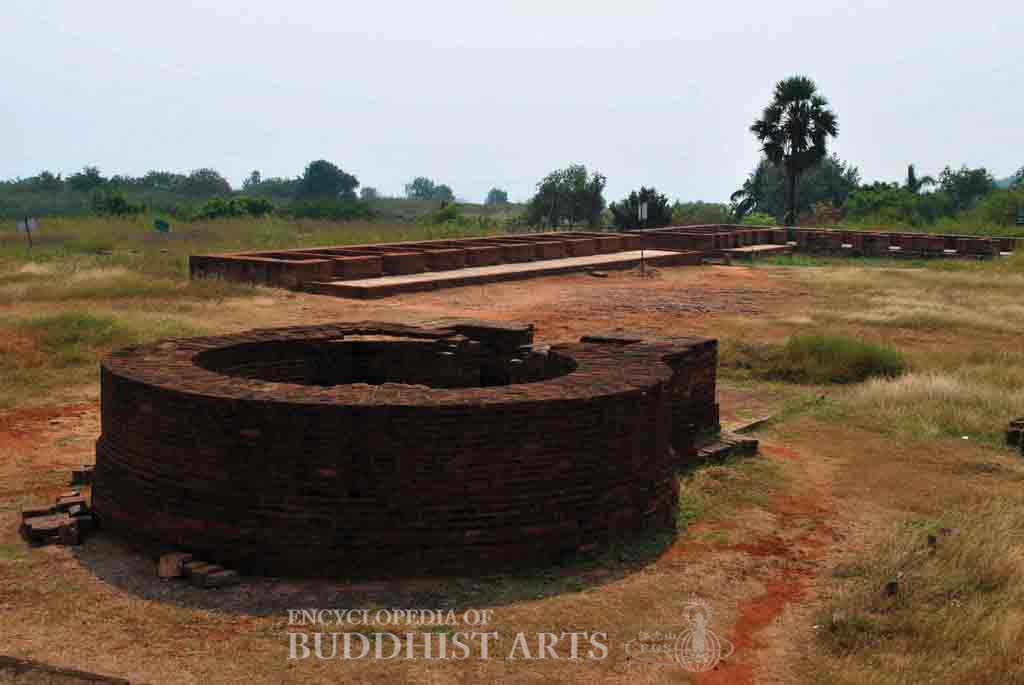
Thotlakonda Monastery: Circular Caitya
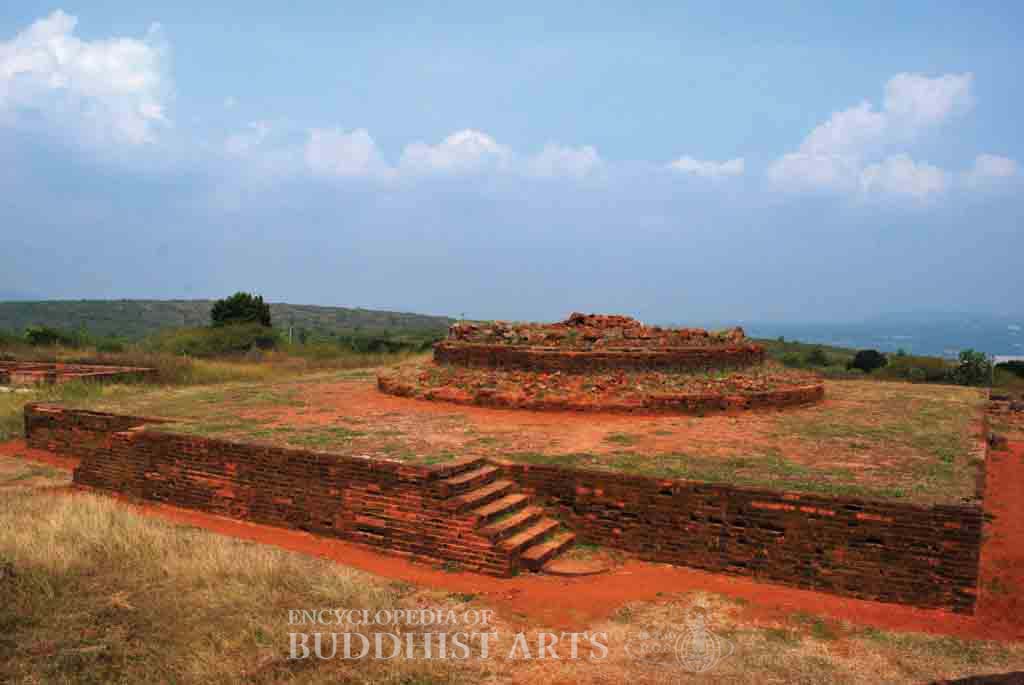
Thotlakonda Monastery: Central Stupa
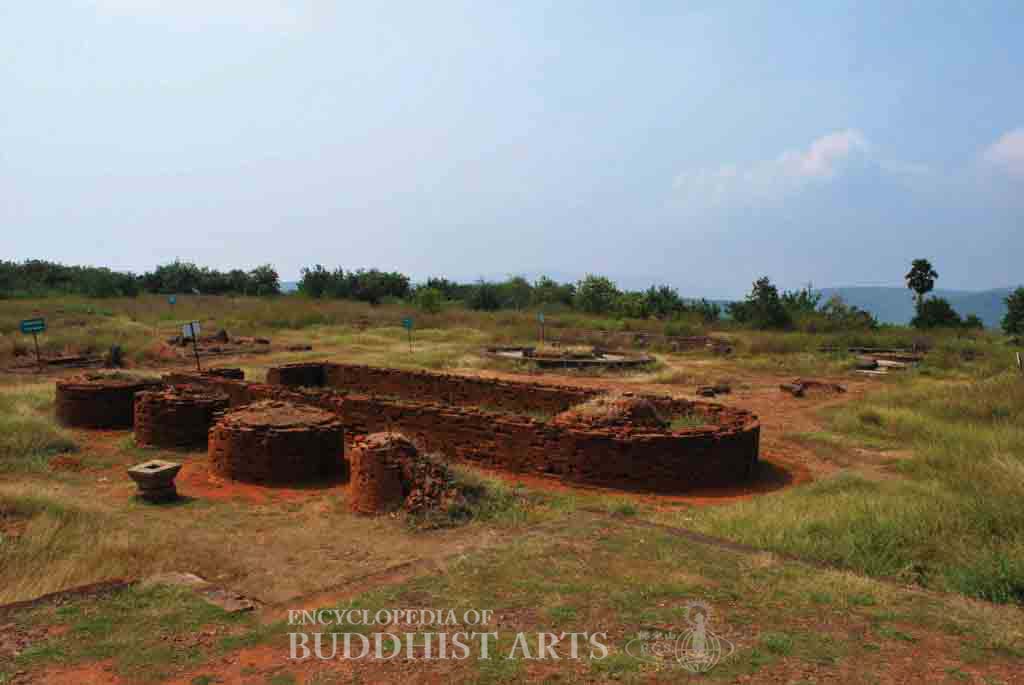
Thotlakonda Monastery: Apsidal Caitya
Thotlakonda Monastery
INDIA, Andhra Pradesh, Visakhapatnam
This monastic complex site stands on a hill 130 m above sea level in the district of Visakhapatnam, about 15 km northeast of Visakhapatnam city. It flourished between the 2nd century BCE and the 2nd century CE, and is thought to have been influenced by the Kalinga region, where Buddhism was disseminated to Sri Lanka and various parts of Southeast Asia. From 1987 to 1993, excavations established the existence of this early Buddhist monastery.
The monastery consisted of several viharas, caityas, and stupas. Most of the viharas comprise a square hall at the center with inward-facing single cells surrounding it. To the north there was an apsidal caitya, with three circular caityas nearby. The central stupa stood on a large square platform. It was surrounded by smaller stupas, with others placed around the site. In addition there were small funerary cairns outside the grounds of the monastery. Presently, the site consists only of stupa platforms and the low walls of cloisters and other buildings.
Artifacts found within the site include terracotta tiles, stucco decorations, miniature stone stupas, panels with reliefs, and Roman silver coins.
For more details, go to the Encyclopedia of Buddhist Arts: Architecture T-Z, page 1115.
Cite this article:
author = Hsingyun and Youheng and Johnson, Peter and Mankuang and Lancaster, Lewis,
booktitle = {Encyclopedia of Buddhist Arts: Architecture T-Z},
pages = 1115,
title = {{Thotlakonda Monastery}},
volume = 4,
year = {2016}}