
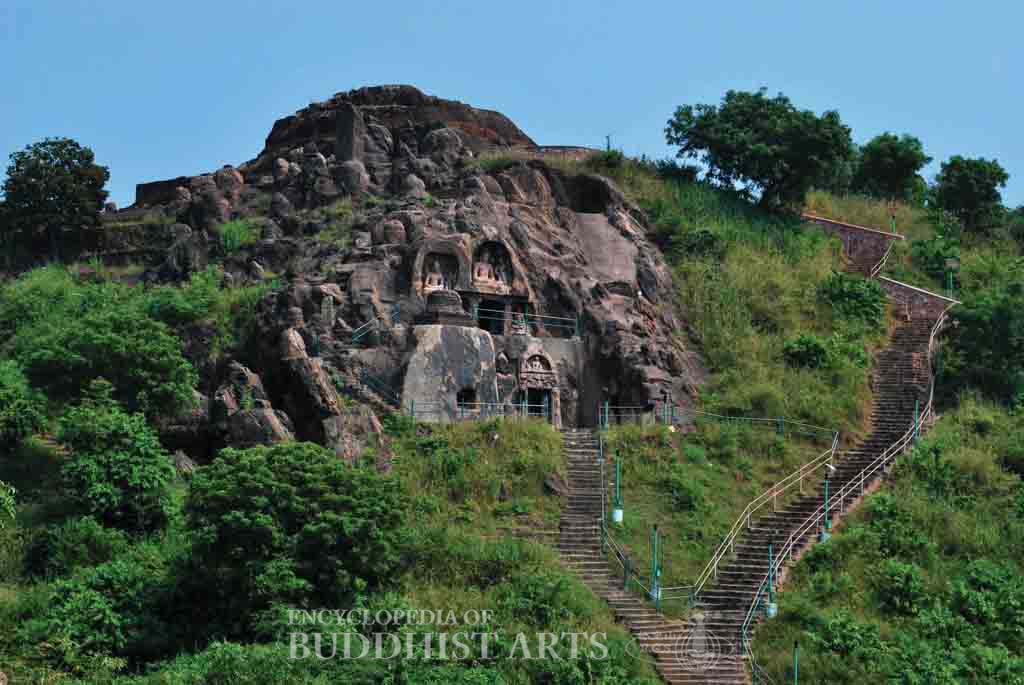
Bojjannakonda
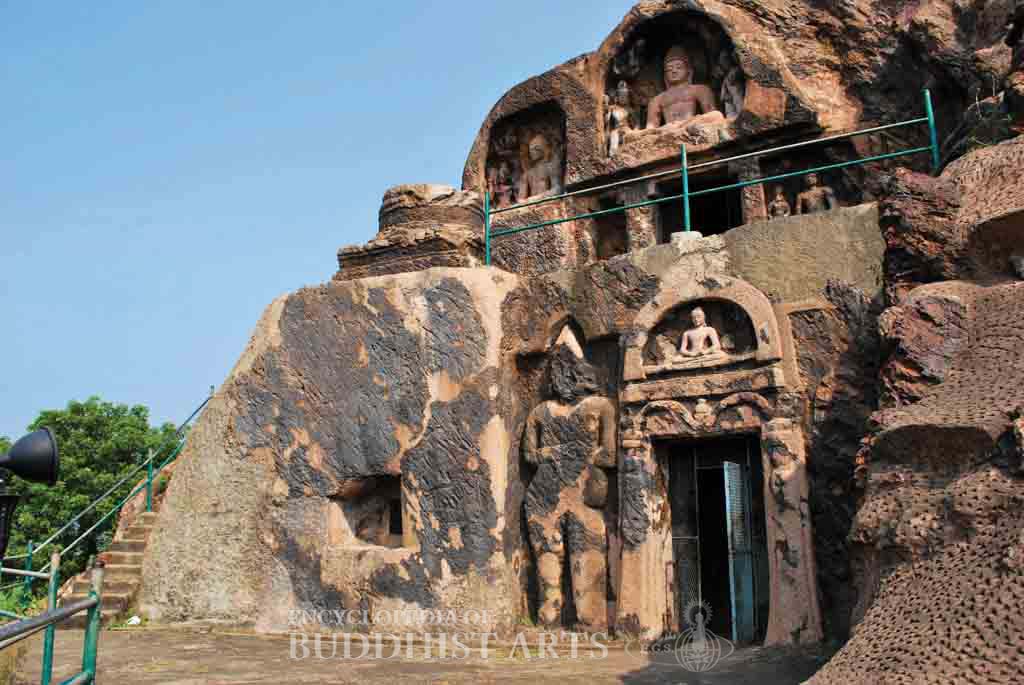
Bojjannakonda: Caitya

Bojjannakonda: Seated Buddha

Bojjannakonda: Monastery
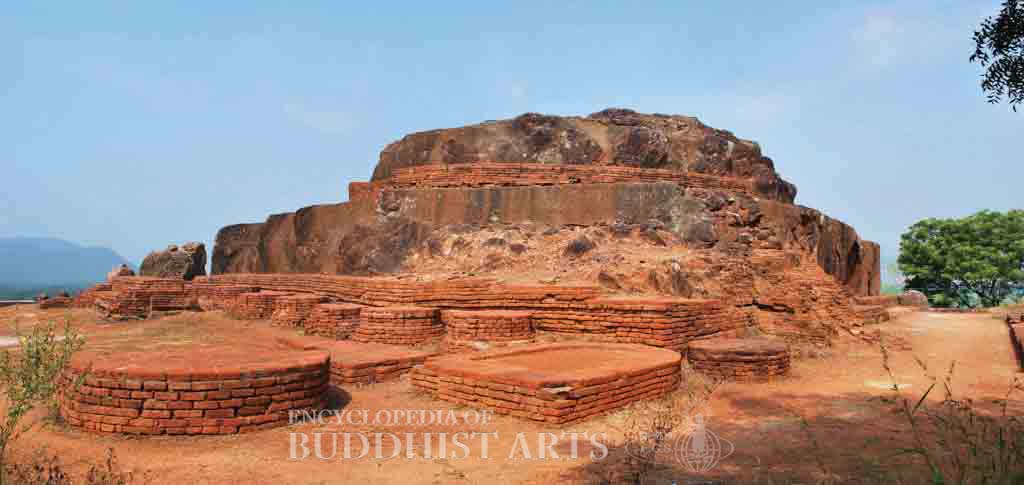
Bojjannakonda: Stupa
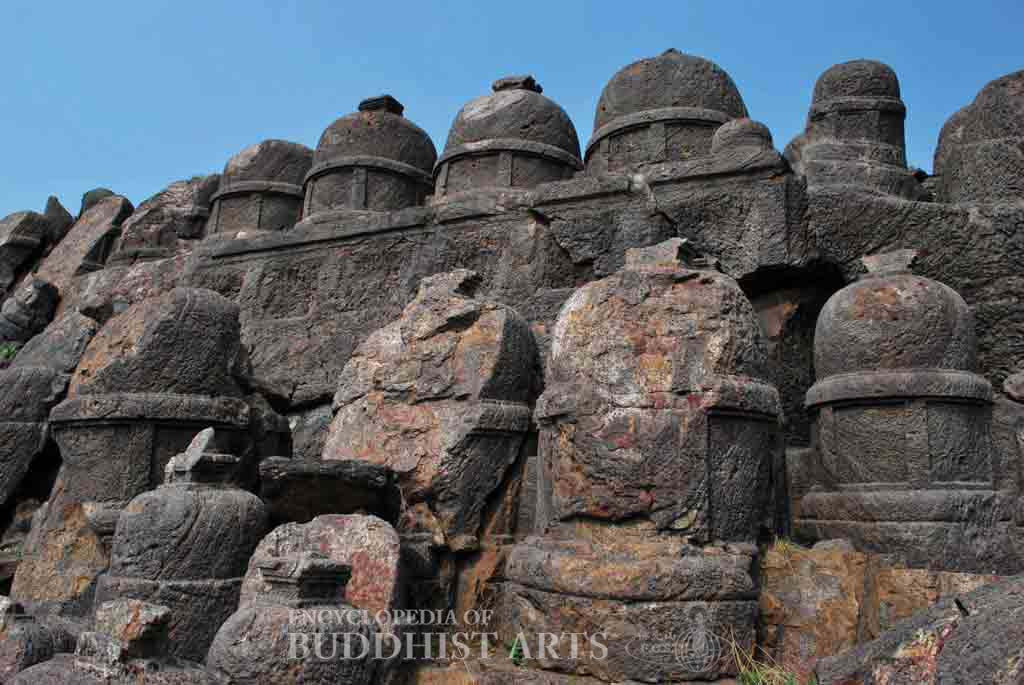
Bojjannakonda: Lingalakonda
Bojjannakonda
INDIA, Andhra Pradesh, Sankaram
Bojjannakonda and Lingalakonda are Buddhist sites located on two adjoining hills in the village of Sankaram, which is derived from the Sanskrit word Sangharama meaning monastery. The date of construction of the buildings is unknown but the sites were likely developed between the 3rd and 5th centuries. From the evidence of tablets possibly used as offerings, it is thought that pilgrims from different parts of India visited this site between the 4th and 9th centuries. There are also signs that all three traditions of Buddhism may have been followed here.
On the summit of Bojjanakonda there are the remains of a large monastery and stupa. The monastery was built in brick and consists of a large rectangular courtyard lying on an east-west axis surrounded by small cells. Slightly east of the center there is an apsidal shrine.
The large stupa is partly hewn from the rock and partly built in brick. The body of the stupa stands on a high, square base platform. Stupas and small caityas surround the stupa. Stone reliquaries in the form of miniature stupas were found in two of the brick stupas. The west slope is covered with groups of stupas, many of which are hewn from the rock. There are stone steps leading down to large niches cut into the rock with statues of the Buddha inside.
On the next level below that there is a caitya carved into the rock. The pillars and lintel are ornately carved and there is a tympanum with a seated Buddha image. The caitya has sixteen pillars, of which five are broken. In the center stands a stupa with a circumambulation path around it. On the ceiling over the stupa there is a carving of a canopy, which was originally connected to the top of the stupa. In total there are six rock-cut caves of which some have sculptured panels. Each panel usually consists of a seated Buddha and attendants.
There are a large number of rock-cut stupas on Lingalakonda. Many artifacts were discovered at the two sites, including pottery, inscribed terracotta tablets, beads, figures, gold and copper coins, and seals.
For more details, go to the Encyclopedia of Buddhist Arts: Architecture A-F, page 84.
Cite this article:
author = Hsingyun and Youheng and Johnson, Peter and Mankuang and Lancaster, Lewis,
booktitle = {Encyclopedia of Buddhist Arts: Architecture A-F},
pages = 84,
title = {{Bojjannakonda}},
volume = 1,
year = {2016}}