
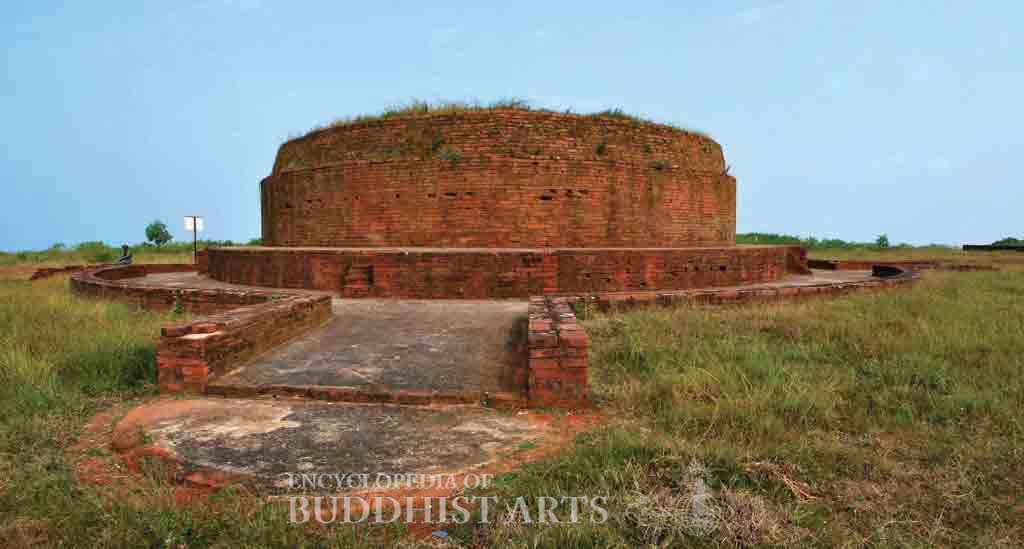
Bavikonda Monastery: Great Stupa
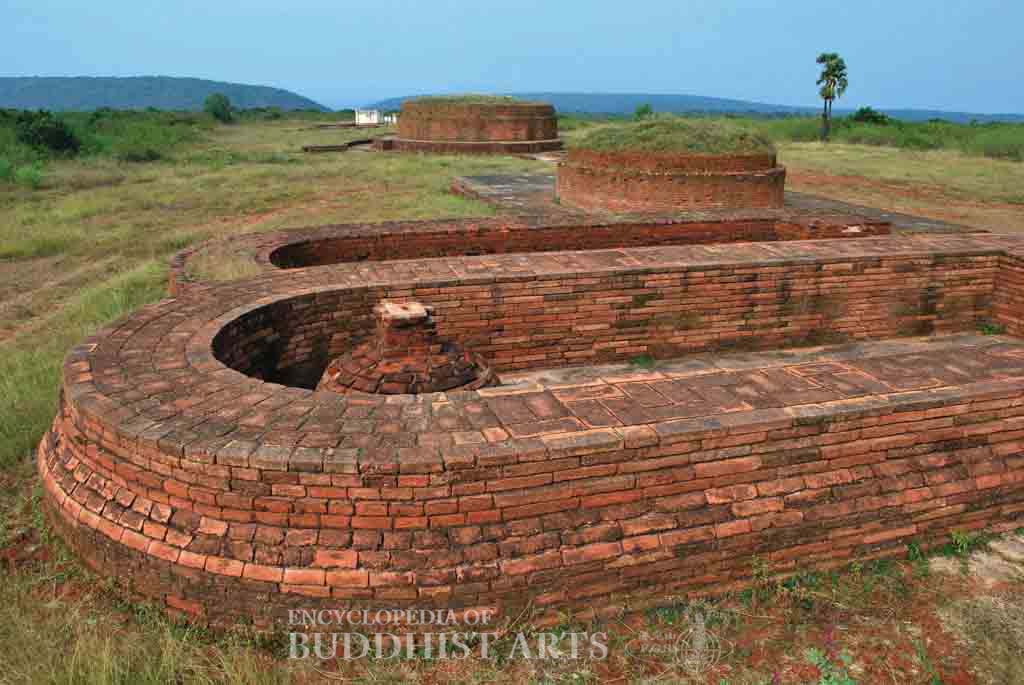
Bavikonda Monastery: Caitya
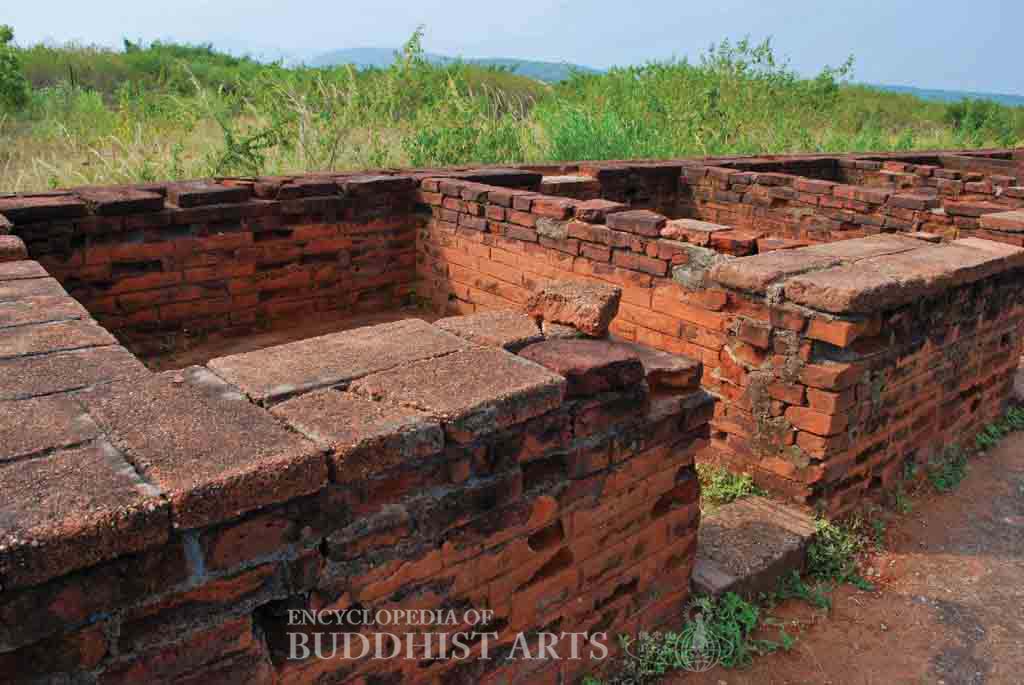
Bavikonda Monastery: Monastic Cells
Bavikonda Monastery
INDIA, Andhra Pradesh, Visakhapatnam
This monastery occupies about 16 ha and stands on a hill 130 m high and overlooking the sea about 16 km northeast of Visakhapatnam. It is believed that the monastery was most active between the 3rd century BCE and 2nd century CE, and was linked to the dissemination of Buddhism in Sri Lanka and Southeast Asia. Excavations were conducted between 1982 and 1992. The monastery consisted of 25 structures built in three phases. The major structures were the great stupa, the vihara with 51 rooms, some of which were monastic cells, a caitya, and a library. All that now remains of the great stupa is the base platform and part of the dome-shaped body. It is clear that the original stupa was a large, imposing structure. Parts of the smaller stupas with incomplete domes are also visible. The remains of the vihara, caitya, and other buildings consist of low walls. A bone relic discovered inside a reliquary was thought to belong to the Buddha. Among the excavated artifacts there were pottery, relic caskets, objects made of iron, three Roman (27 BCE–476 CE) coins, and a few Satavahana (circa 220 BCE–250 CE) coins.
For more details, go to the Encyclopedia of Buddhist Arts: Architecture A-F, page 62.
Cite this article:
author = Hsingyun and Youheng and Johnson, Peter and Mankuang and Lancaster, Lewis,
booktitle = {Encyclopedia of Buddhist Arts: Architecture A-F},
pages = 62,
title = {{Bavikonda Monastery}},
volume = 1,
year = {2016}}