
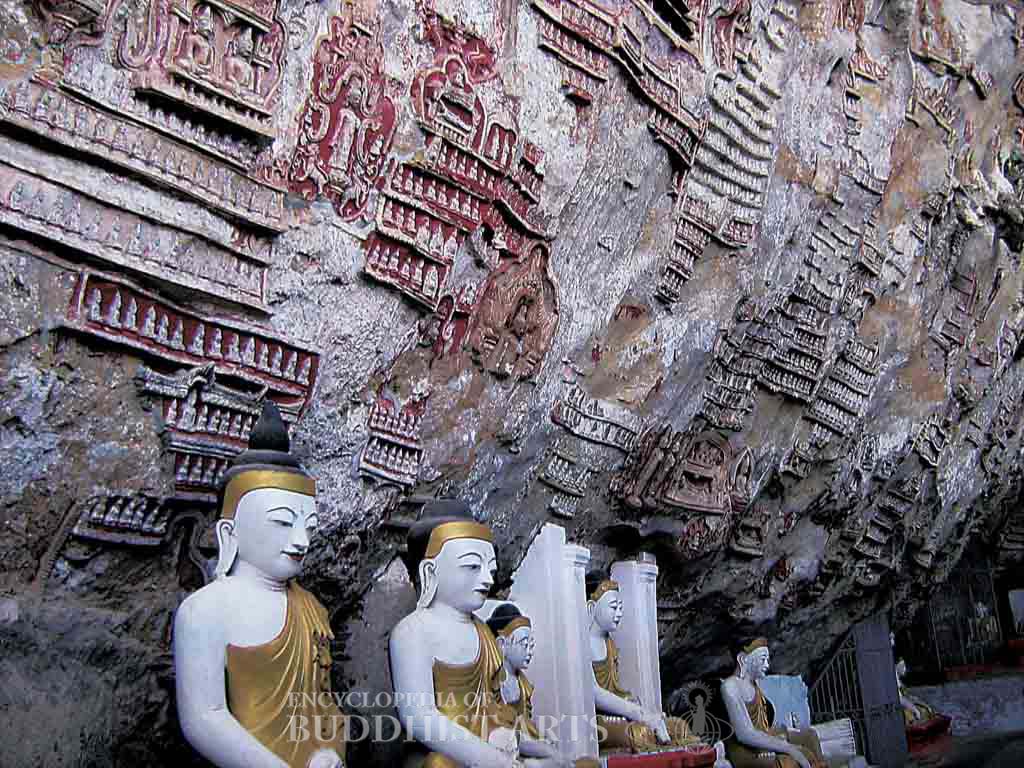
Kawgun Caves: Seated Buddhas and Reliefs
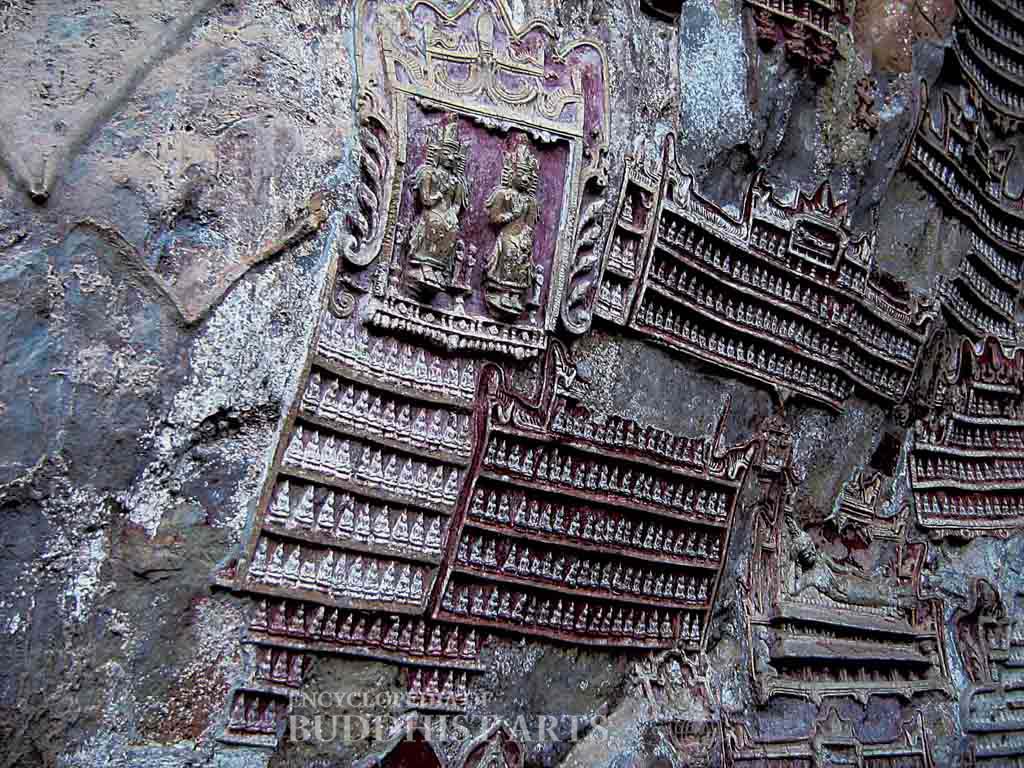
Kawgun Caves: Ten Thousand Buddhas (detail)
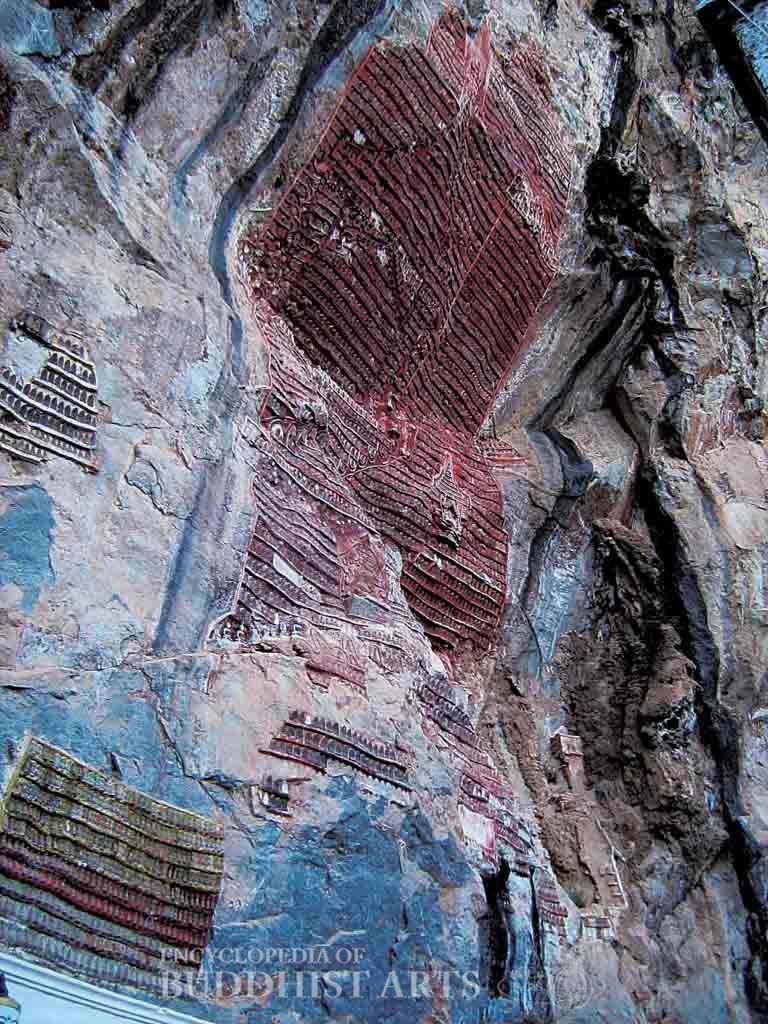
Kawgun Caves: Ten Thousand Buddhas (detail)
Kawgun Caves
MYANMAR, Kayin State, Hpa-An
This natural limestone cave, situated 2 km from Hpa-An city, is believed to have been established as a Buddhist site sometime prior to the 11th century. The cave is approximately 91 m deep and 60 m high. The most well-known feature are the Ten Thousand Buddha images.
These small Buddha images were created using ceramic molds and fixed onto the walls in organized rows with inscriptions engraved between them. Interspersed among the small seated or standing Buddha images are Buddhas in a variety of sizes and postures, varying in height from 10 cm to life-sized. Along the lower part of the walls are numerous freestanding Buddha images created from clay. The figures wear golden monastic robes and their hands form either the bhumisparsa (earth-touching) mudra or the dhyana (meditation) mudra. One notable feature of the cave is an inscription which names an empress as the donor and creator of one of the statues. In addition, there are a number of historically valuable inscriptions and palm-leaf manuscripts hidden in the walls and cavities in the ceiling.
For more details, go to the Encyclopedia of Buddhist Arts: Caves R-L, page 462.
Cite this article:
author = Hsingyun and Youheng and Johnson, Peter and Mankuang and Huntington, Susan and Edson, Gary and Neather, Robert,
booktitle = {Encyclopedia of Buddhist Arts: Caves R-L},
pages = 462,
title = {{Kawgun Caves}},
volume = 6,
year = {2016}}