
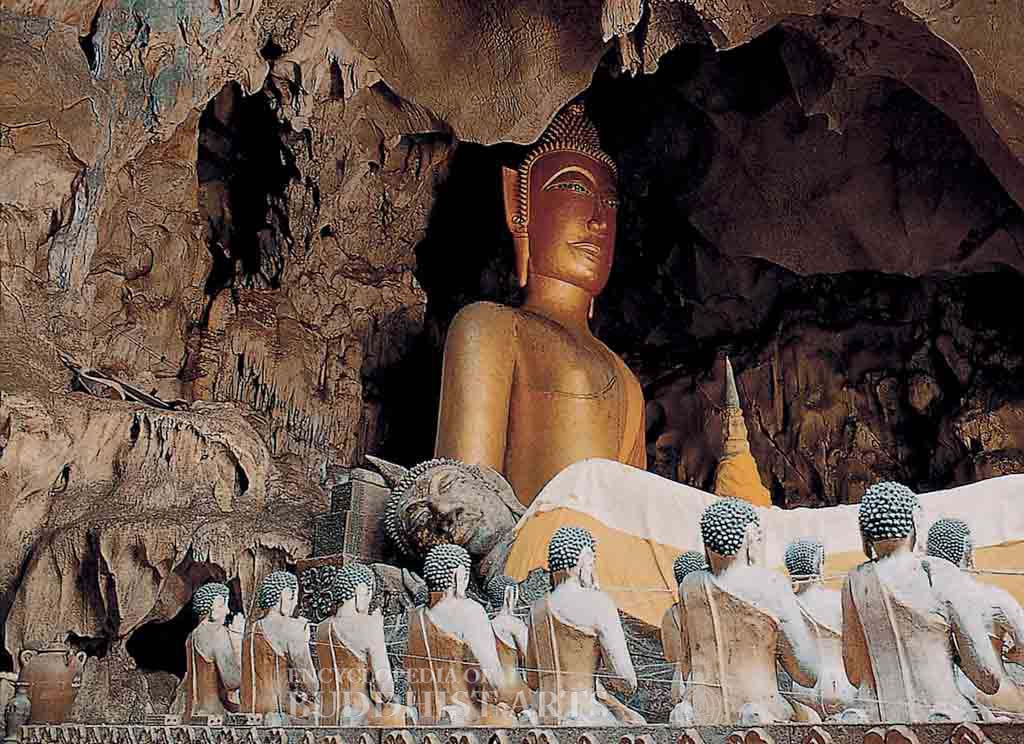
Tab Tao Caves: Pan Jek Cave
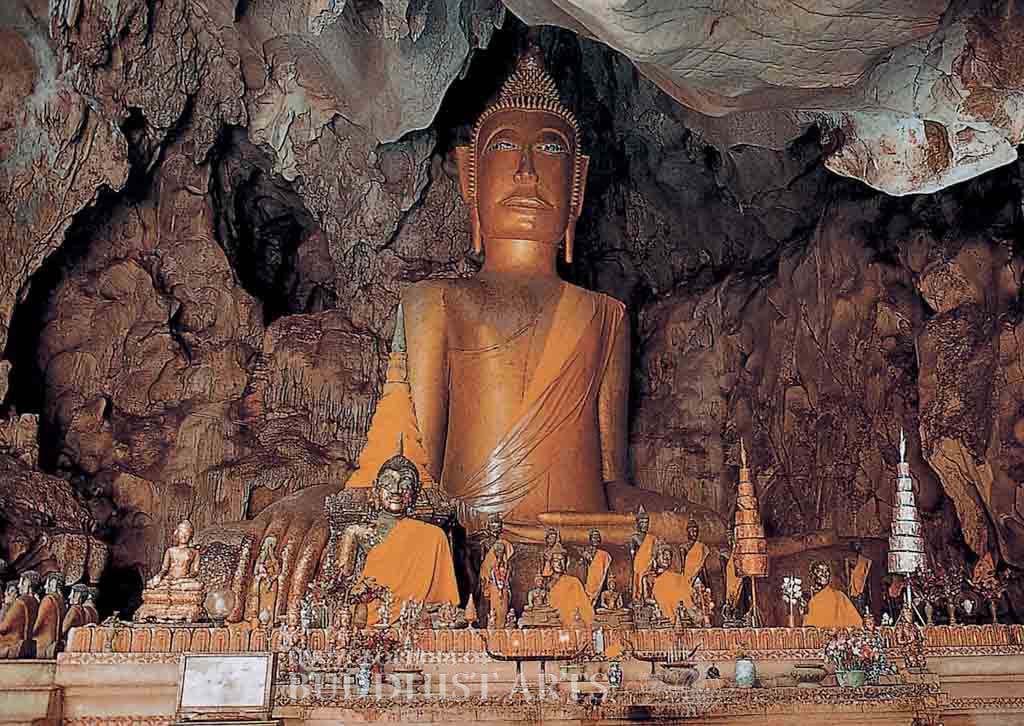
Tab Tao Caves: Pan Jek Cave
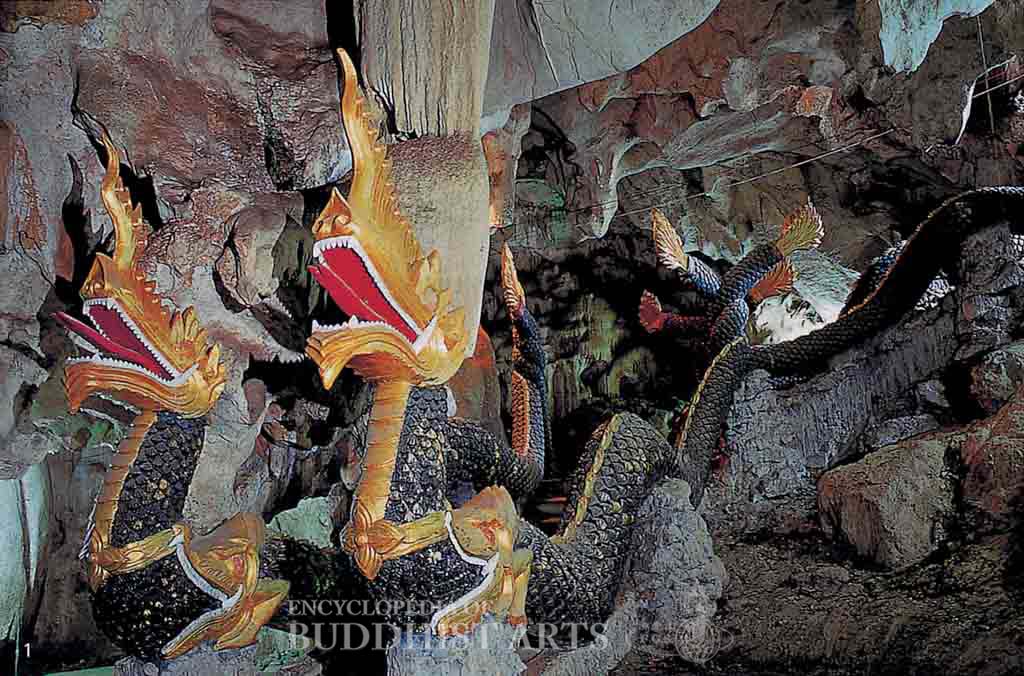
Tab Tao Caves: Naga Railings
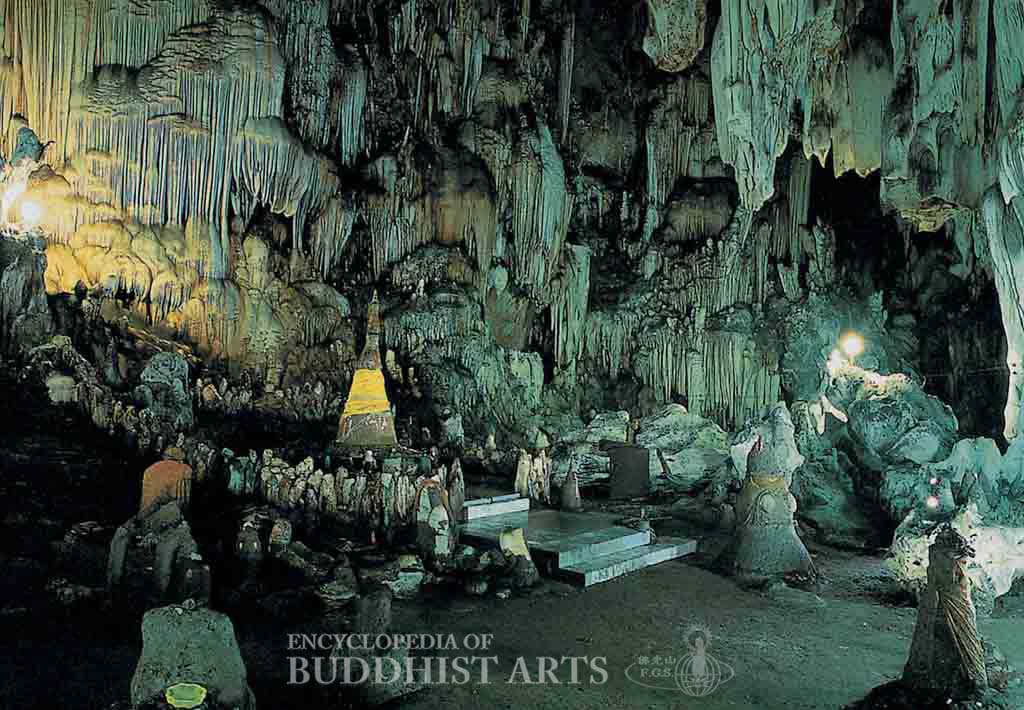
Tab Tao Caves: Pha Khuo Cave
Tab Tao Caves
THAILAND, Chiang Mai
The Tab Tao Caves were originally created by natural water erosion and are reputed to be over 1,000 years old. The caves consist of two chambers with separate entrances, connected by a back passageway.
The entrance to the right leads to the Pan Jek Cave, a single chamber which is illuminated by day through a hole in the ceiling. Inside the cave are two Buddhas, one seated and the other reclining. The large seated Buddha sits cross-legged with hands forming the bhumisparsa (earth-touching) mudra and is housed in a huge natural alcove. He is depicted with a prominent usnisa, a long narrow face, and elongated earlobes. The Buddha wears a tight fitting monastic robe, which leaves the right shoulder bare. Numerous smaller Buddha images are arranged in front of the large statue, rendered in various postures and sizes. A reclining Buddha to the left of the seated Buddha is made of brick. This Buddha is surrounded by a large group of disciples, all seated with palms joined.
The left side of the cave has a complex, tiered layout. A stairway with naga railings leads from the entrance to the first level, and opens to a 100 m passageway formed by natural stone. At the end of this passageway, there is an opening that leads to a large shrine with a small gap on the back wall. Through the gap and slightly below it is larger chamber; from here, a smaller space leads to the 100 m deep Pha Khuo Cave. The back wall of this cave is carved with a shrine featuring a stupa and a multitude of mud statues in advanced stages of decay.
For more details, go to the Encyclopedia of Buddhist Arts: Caves T-Z, page 1431.
Cite this article:
author = Hsingyun and Youheng and Johnson, Peter and Mankuang and Huntington, Susan and Edson, Gary and Neather, Robert,
booktitle = {Encyclopedia of Buddhist Arts: Caves T-Z},
pages = 1431,
title = {{Tab Tao Caves}},
volume = 9,
year = {2016}}