
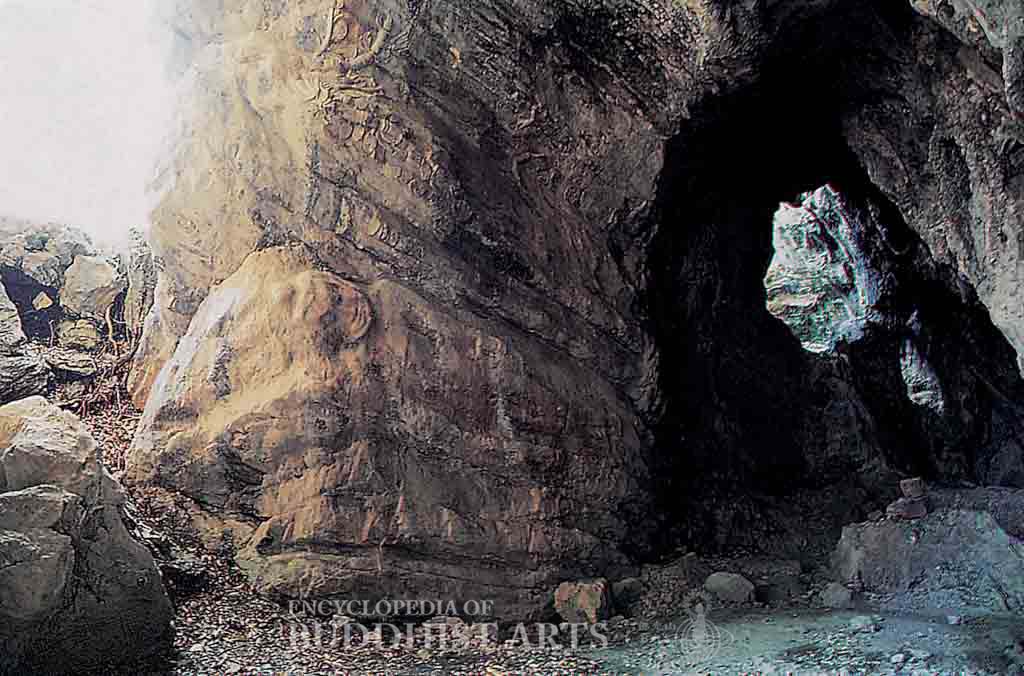
Khao Ngu Caves: Cham Cave
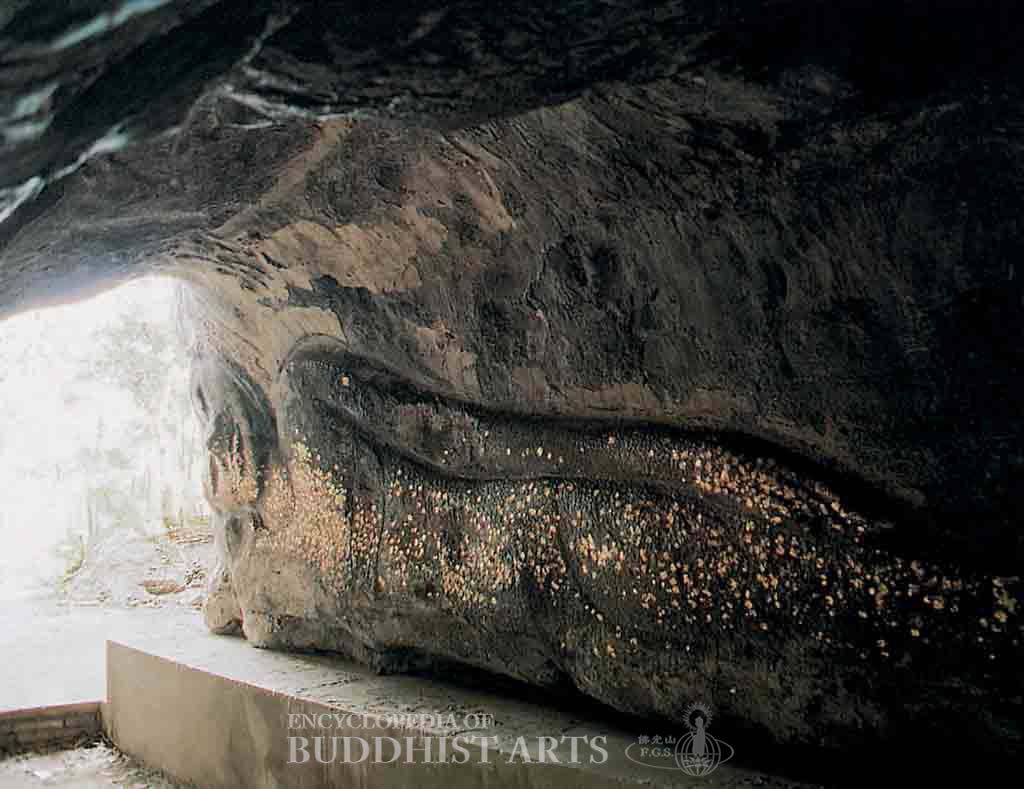
Khao Ngu Caves: Fa Tho Cave - Reclining Buddha
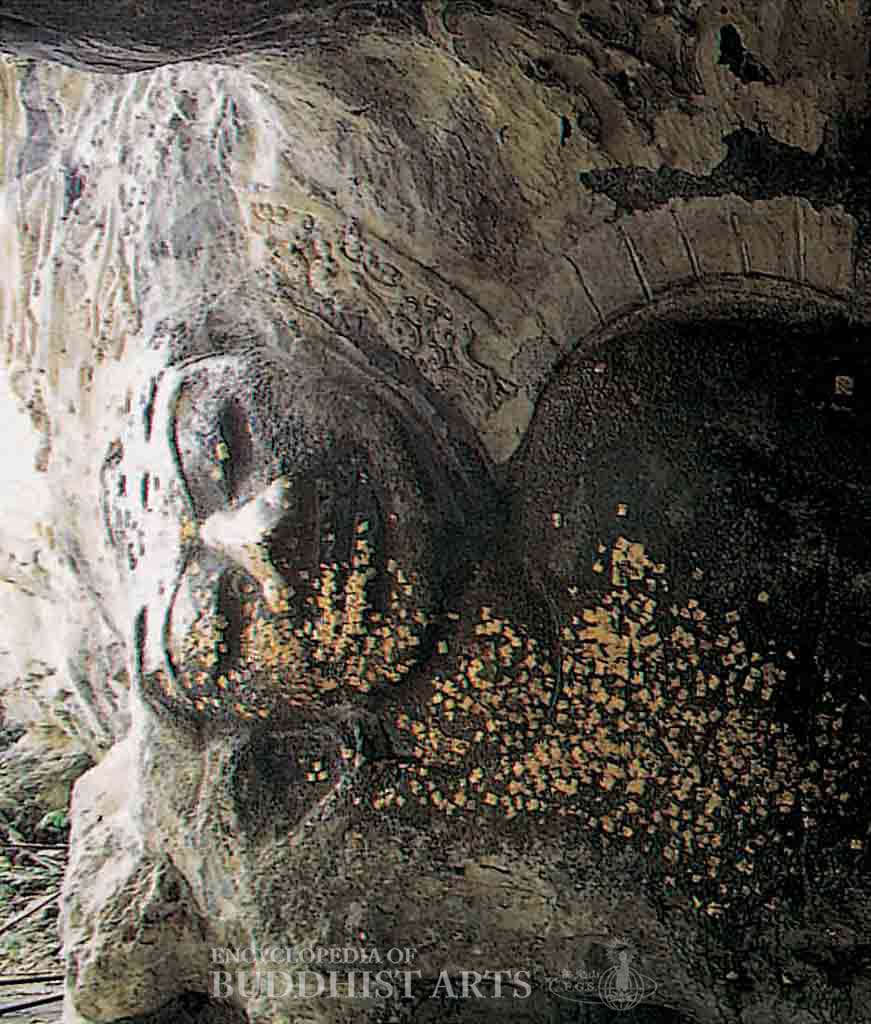
Khao Ngu Caves: Fa Tho Cave - Reclining Buddha (detail)
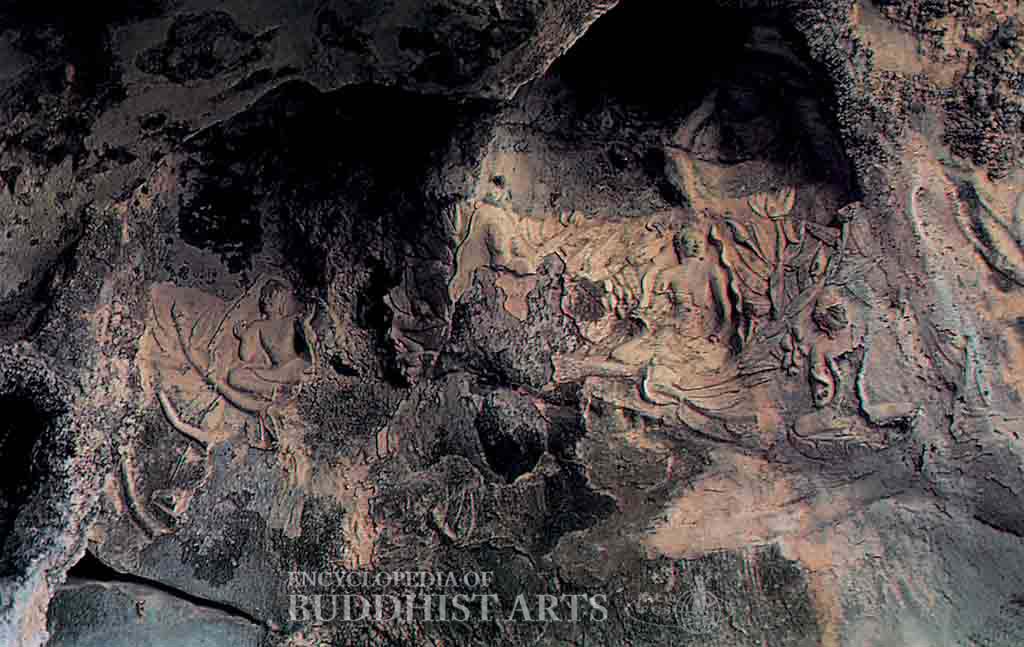
Khao Ngu Caves: Cham Cave - Thousand Buddhas
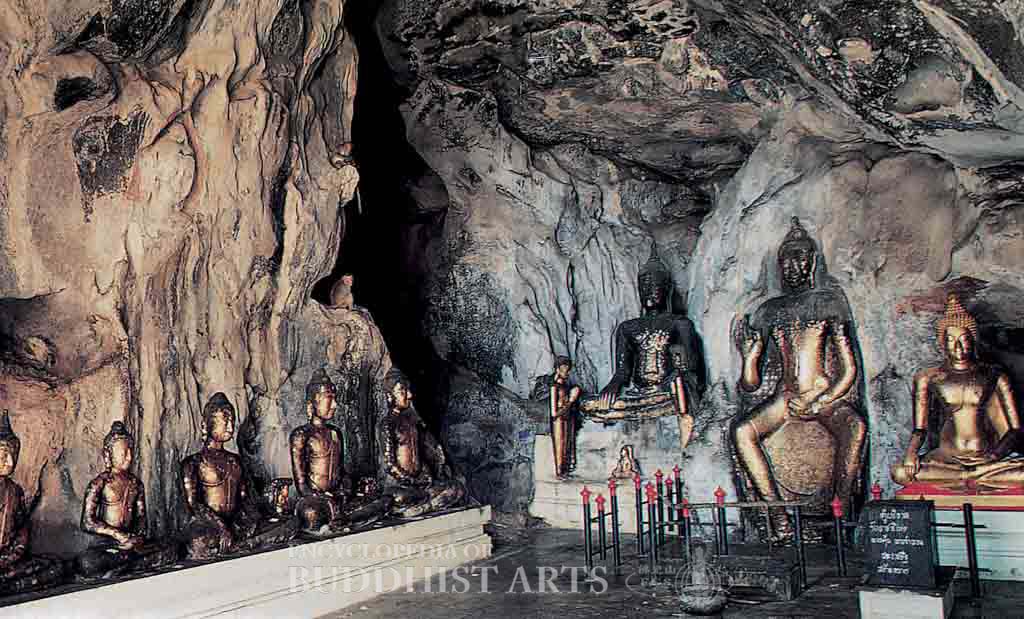
Khao Ngu Caves: Ruesi Cave
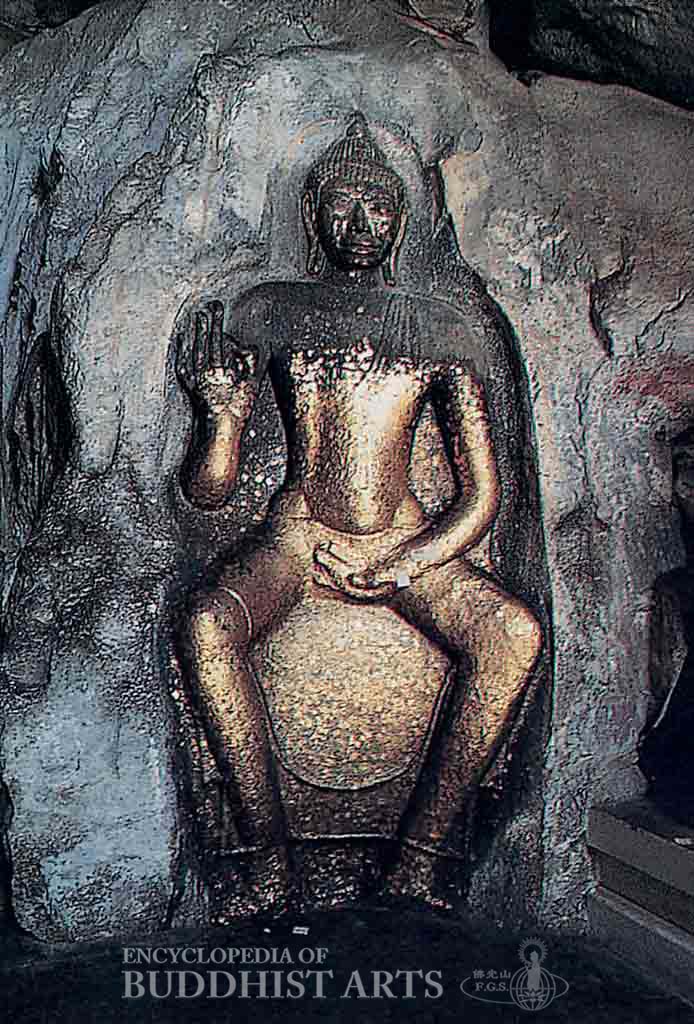
Khao Ngu Caves: Ruesi Cave - Seated Buddha
Khao Ngu Caves
THAILAND, Ratchaburi
During the 6th and 7th centuries, the Khao Ngu Caves served as a Buddhist religious site. They are now one of the oldest surviving Buddhist sites from the Dvaravati Kingdom (circa 6th–13th century) in Ratchaburi. The site consists of four natural caves: Ruesi Cave, Fa Tho Cave, Chin Cave, and Cham Cave.
On the cave wall facing the entrance of Ruesi Cave is a bas-relief image of a Buddha seated with legs pendent. Between the Buddha’s feet is a faint inscription noting that the image was carved in the 7th century by a hermit living in the cave. This Buddha measures 3.65 m in height and is entirely covered with an overlay of gold foil. His head and face are finely detailed, while the limbs and body are carved in a relatively simple style. The Buddha has a prominent usnisa, thin eyebrows, big eyes, and elongated earlobes. One hand is held in the vitarka (teaching) mudra, while the other is cupped in front of the abdomen. The Buddha’s monastic robe is rendered in delicate lines suggestive of thin, light fabric. To the left of the cave is a 3 m high bas-relief standing Buddha carved during the Ayutthaya Kingdom (circa 1350–1767). Several other nearby statues were brought into the cave during the Bangkok period (1782–present).
Fa Tho Cave has a T-shaped layout, separated into a front and rear cave. The front cave is 3 m wide, approximately 3 m to 4 m high, and 12 m deep. An 8.2 m long reclining Buddha is carved on the left wall with the head facing the entrance. Although the area around the head has been weathered, details such as a nimbus, twin Sala trees, and apsaras can still be faintly discerned. On the right wall, directly opposite the Buddha’s head, are three low-reliefs of standing donor figures.
Chin Cave features two carved Buddhas, which were repaired and repainted during the Ayutthaya period. Cham Cave contains a bas-relief of a reclining Buddha 4.1 m in length. It also features five groups of stucco paintings. The figures which can still be distinguished include the head of a naga, the arms and legs of a human, images of the Thousand Buddhas, fragments of aureoles, and twin Sala trees. These remaining fragments suggest that the original painting may have depicted key events in the Life of the Buddha, including First Meditation, Defeat of Mara and Enlightenment, the First Turning of the Dharma Wheel, and the Buddha's Parinirvana.
For more details, go to the Encyclopedia of Buddhist Arts: Caves R-L, page 463.
Cite this article:
author = Hsingyun and Youheng and Johnson, Peter and Mankuang and Huntington, Susan and Edson, Gary and Neather, Robert,
booktitle = {Encyclopedia of Buddhist Arts: Caves R-L},
pages = 463,
title = {{Khao Ngu Caves}},
volume = 6,
year = {2016}}