
Chiang Dao Caves

Chiang Dao Caves
Chiang Dao Caves: Bell
Chiang Dao Caves
THAILAND, Chiang Mai
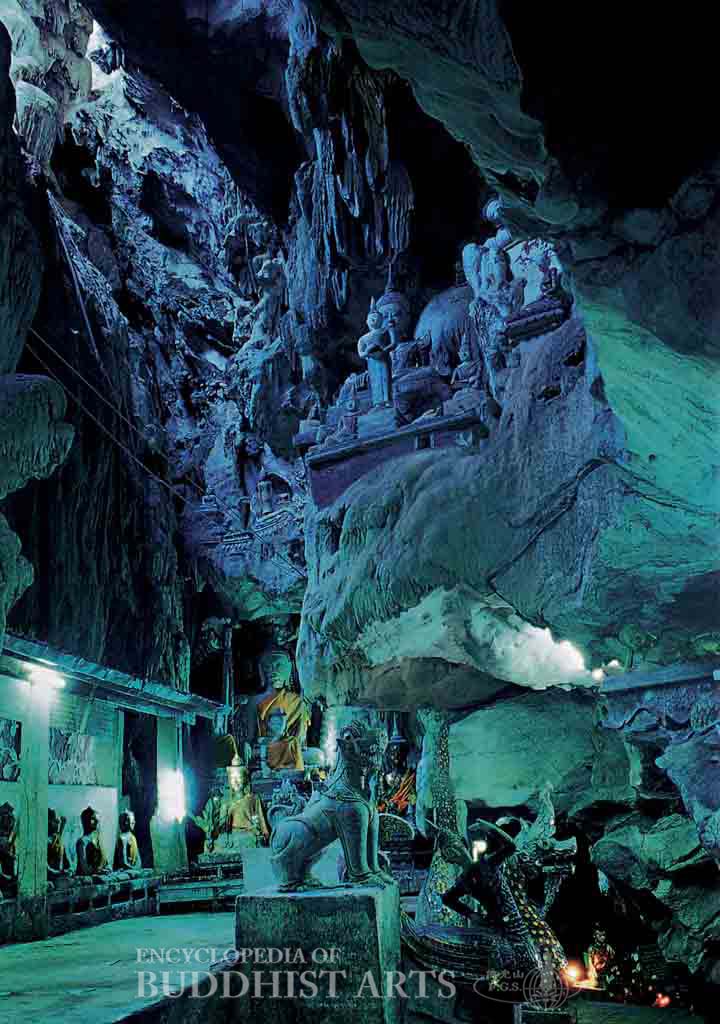
Situated in Doi Chiang Dao district of Chiang Mai province, the Chiang Dao Caves are the most famous and revered caves in Northern Thailand. These natural caves were originally created through water erosion, resulting in at least 5.19 km of twisted, maze-like interconnected passages. Several caves and passages which are now dry have been excavated as Buddhist shrines. Written records of the caves can be traced back over 300 years. Additional archaeological evidence indicates that Chiang Dao town, about 5 km away from the cave site, has been an important settlement since prehistoric times. It is therefore speculated that this cave may have been known to the local people for several thousand years.
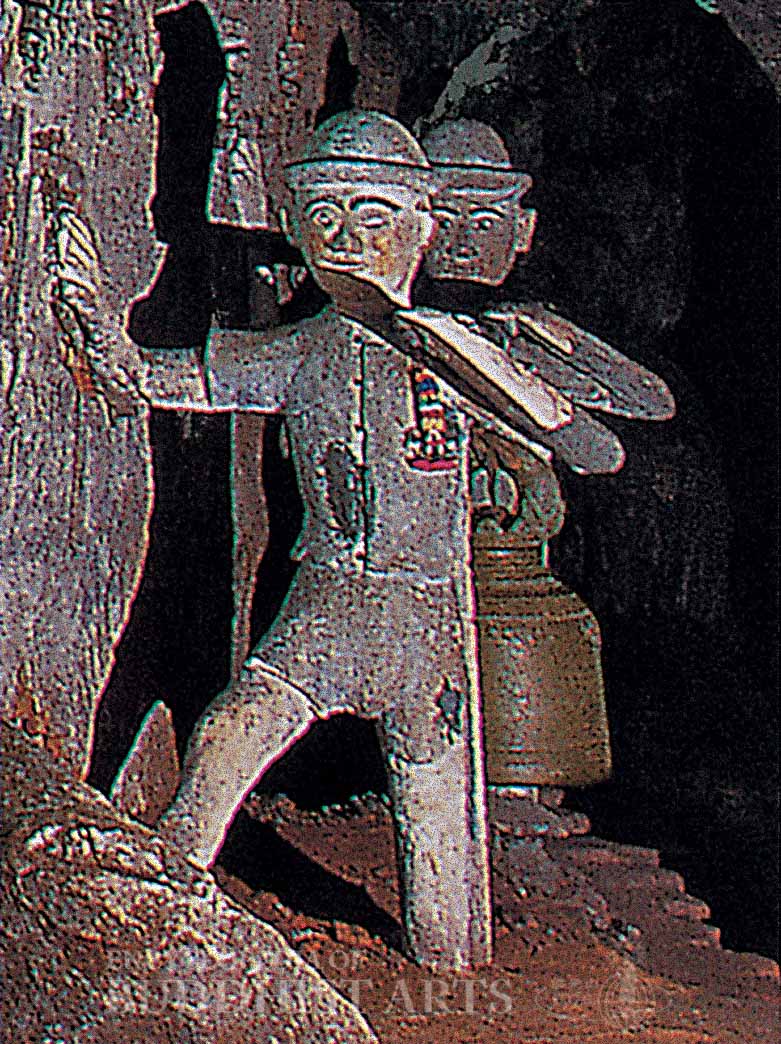
The most important shrine in the cave complex is a raised platform with a large collection of Buddha images, located 20 m from the entrance. The steps up to the platform are sculpted with lions, dragons, kinnaras, and others guardians. A natural platform protruding from the upper part of the cave wall has been carved with a Buddha image. About 10 m further down the passage is a 350-year-old inscribed bronze bell carried by two soldiers, which is the oldest surviving artifact in the cave. The rear part of the passage opens out into a wide space that leads to several additional shrines. A reclining Buddha, built in 1913, is visible about 350 m further inwards. This Buddha statue is relatively unique due to the fact that the Buddha is depicted lying on his back, rather than the traditional side position.
For more details, go to the Encyclopedia of Buddhist Arts: Caves A-E, page 203.
Cite this article:
author = Hsingyun and Youheng and Johnson, Peter and Mankuang and Huntington, Susan and Edson, Gary and Neather, Robert,
booktitle = {Encyclopedia of Buddhist Arts: Caves A-E},
pages = 203,
title = {{Chiang Dao Caves}},
volume = 5,
year = {2016}}