
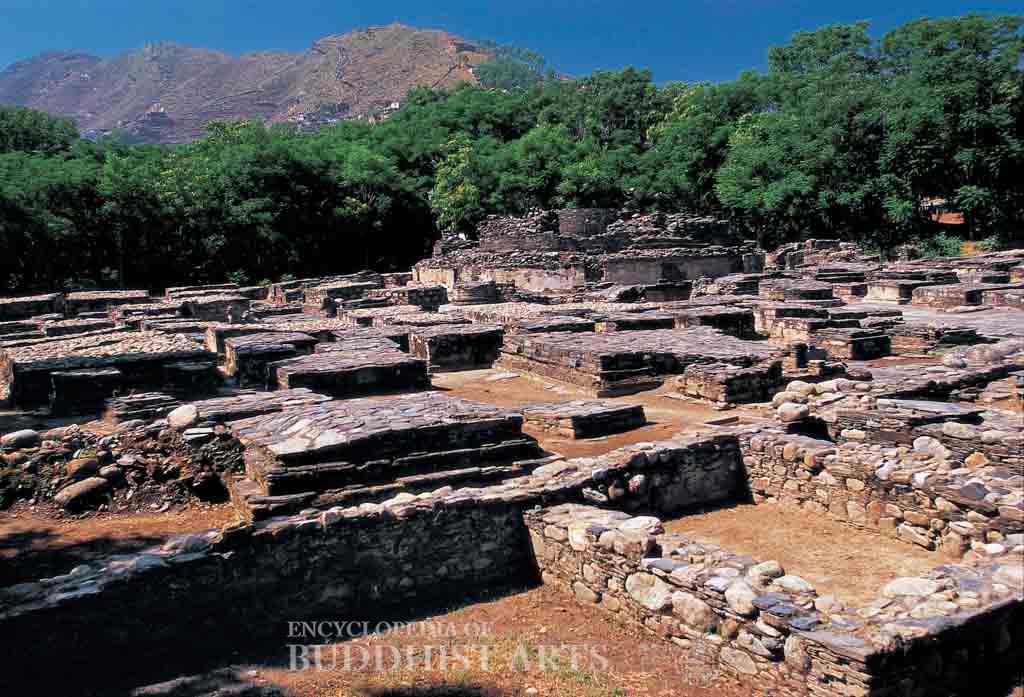
Butkara I
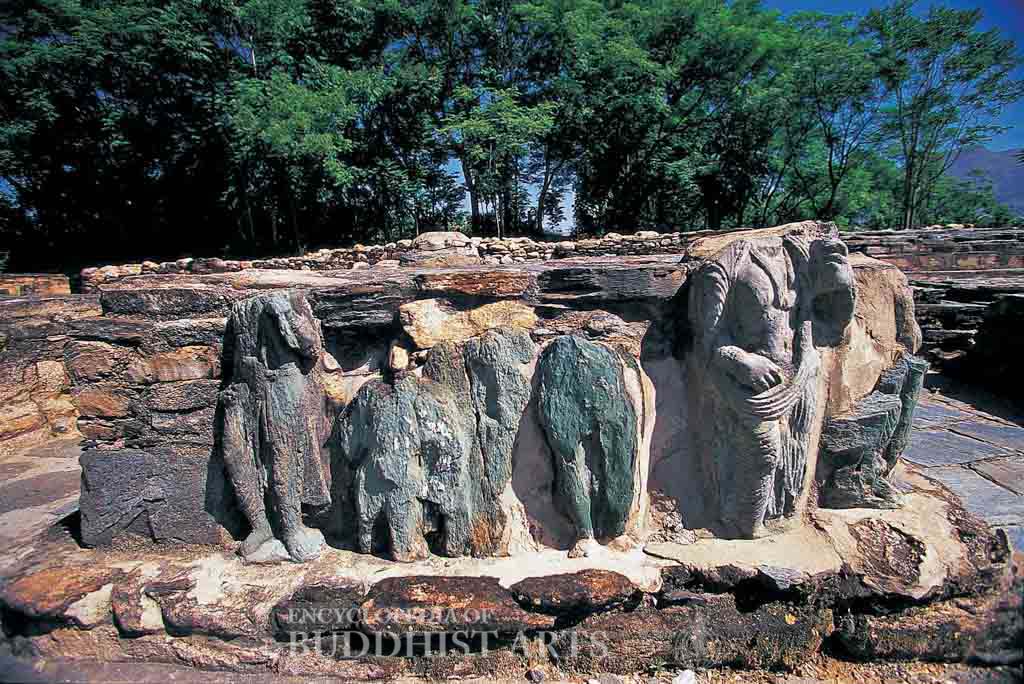
Butkara I: Reliefs
Butkara I
PAKISTAN, Khyber Pakhtunkhwa, Mingora
The ruins of the Buddhist complex are located to the east of Mingora. They are the most important Buddhist ruins within the lower valley of the Swat River. The complex was built in the 3rd century BCE and was renovated a number of times. It was abandoned during the 10th century. From 1956 to 1958, the site was excavated by Italian archaeologists with assistance from the Pakistan government. More than 7,000 statues were unearthed, including some reliefs which featured the Life of the Buddha. There were also numerous pottery shards and coins from the 3rd century BCE.
The main stupa is at the heart of the site, surrounded by the ruins of small stupas and viharas. The inverted bowl shape main stupa was built in the 3rd century BCE during the Maurya Empire (circa 321–185 BCE). The stupa was repaired twice during the 2nd century BCE and again in the 1st century BCE and in the 2nd century. Each time a new layer was added to the previous structure. These layers can clearly be seen in the existing structure. A number of artifacts and sculptures found during the excavation are kept in the Swat Museum.
For more details, go to the Encyclopedia of Buddhist Arts: Architecture A-F, page 115.
Cite this article:
author = Hsingyun and Youheng and Johnson, Peter and Mankuang and Lancaster, Lewis,
booktitle = {Encyclopedia of Buddhist Arts: Architecture A-F},
pages = 115,
title = {{Butkara I}},
volume = 1,
year = {2016}}