
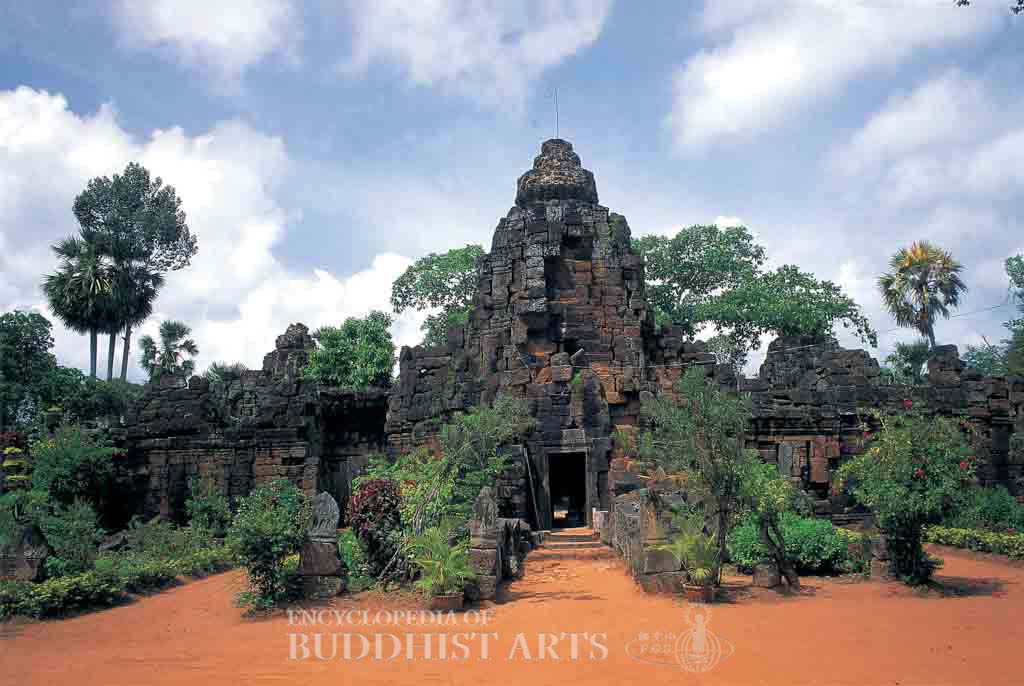
Ta Prohm Temple
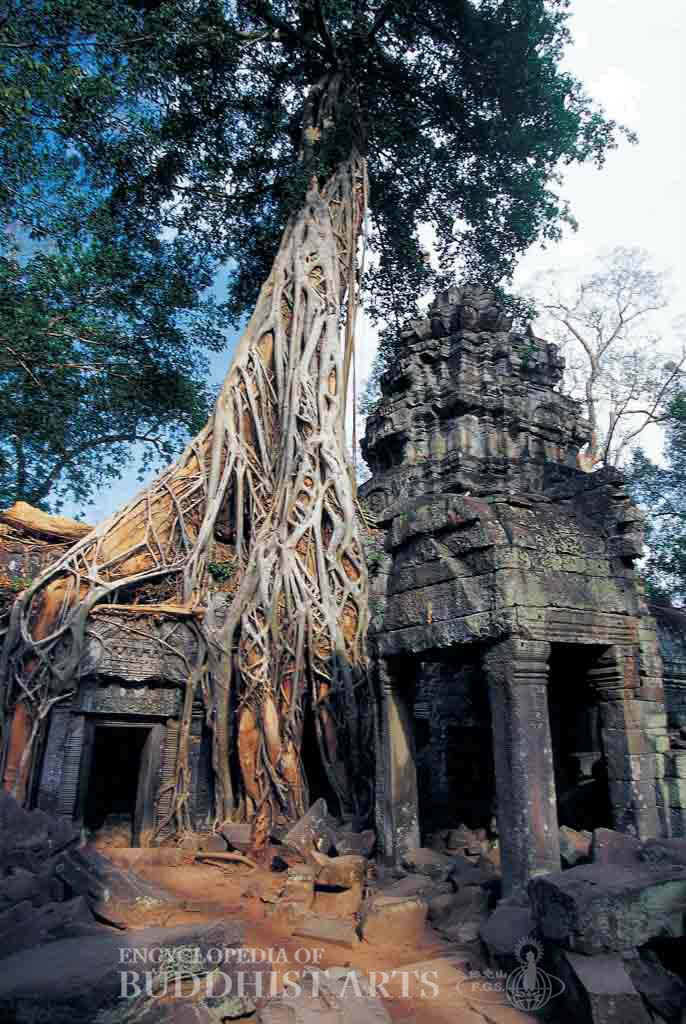
Ta Prohm Temple
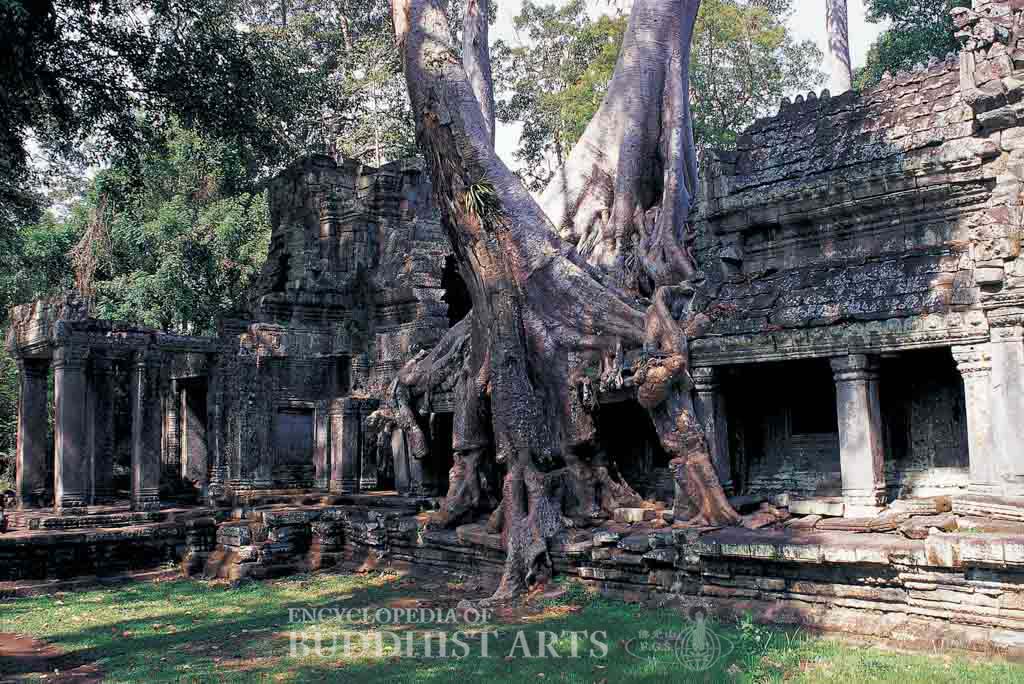
Ta Prohm Temple
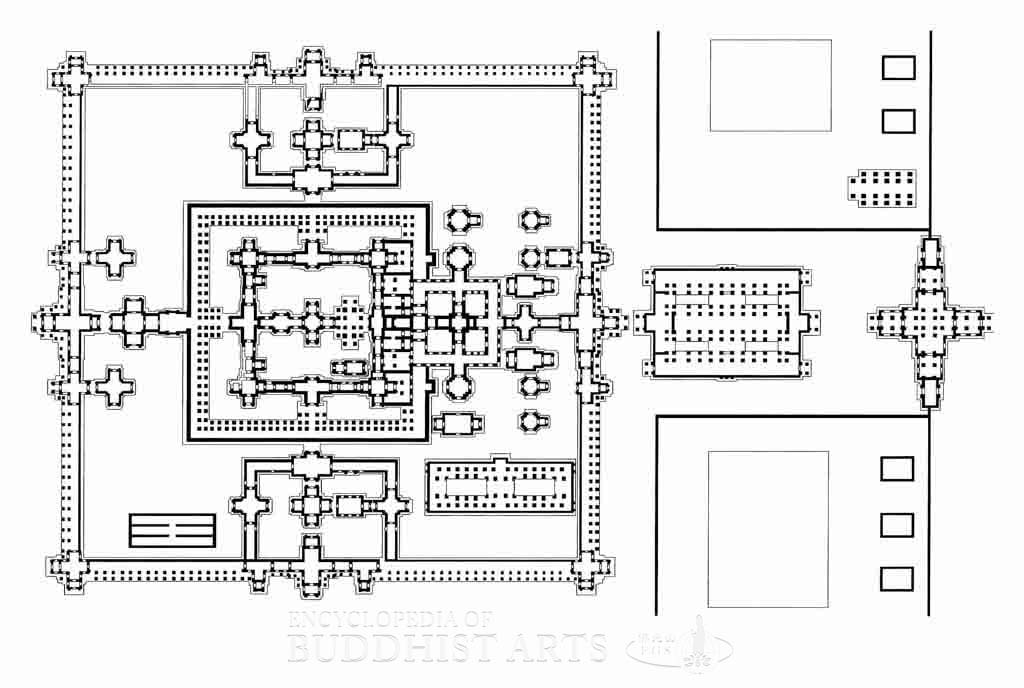
Ta Prohm Temple (site layout)
Ta Prohm Temple
CAMBODIA, Siem Reap, Angkor Thom
Ta Prohm means Old Brahma. The temple was originally called Rajavihara, which means Royal Temple. It was built in 1186 by King Jayavarman VII (reigned circa 1181–1220) in memory of his mother. According to a stele inscription excavated at the site, the temple was akin to a small city as it housed more than 12,000 people, some of whom were eminent monks and officials. After the fall of the Khmer Empire (circa 9th–15th century), Ta Prohm Temple was abandoned and became hidden in the jungle. It was not until the mid-19th century that French explorers discovered the ruins, but the buildings had merged with the jungle, with the tree trunks and roots interlocked with the structures, so it was difficult to carry out repairs. Hence, the temple has been left as it is.
The temple faces east and occupies 65 ha. It is surrounded by five rectangular enclosures with a total of 39 stupas. There are two trenches along the sides of the central core, while gateways are erected at the four cardinal points. The central axis is aligned east-west, and both the east and west gateways serve as main entrances. The layout of the central section is similar to that of Angkor Wat, with corridors connecting nine stupas. The central stupa has a cruciform shape, which is a typical Khmer architectural layout. Inside the stupa, the evenly spaced holes in the wall suggest a covering of wood, stucco, or metal. The corridors are carved with many stone reliefs depicting Buddhist stories. The stupa is dedicated to Prajnaparamita Bodhisattva, whose name means Perfection of Wisdom.
Despite the structural damage as a result of aging and weathering, the site retains some of its past grandeur, which can be seen in the intricate sculptural works.
For more details, go to the Encyclopedia of Buddhist Arts: Architecture T-Z, page 1073.
Cite this article:
author = Hsingyun and Youheng and Johnson, Peter and Mankuang and Lancaster, Lewis,
booktitle = {Encyclopedia of Buddhist Arts: Architecture T-Z},
pages = 1073,
title = {{Ta Prohm Temple}},
volume = 4,
year = {2016}}