
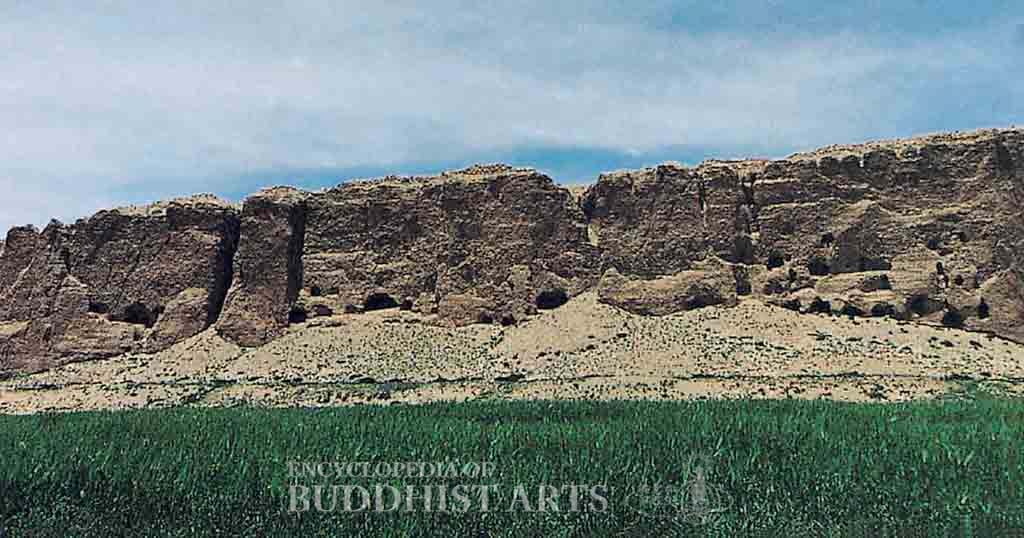
Kaepu Caves
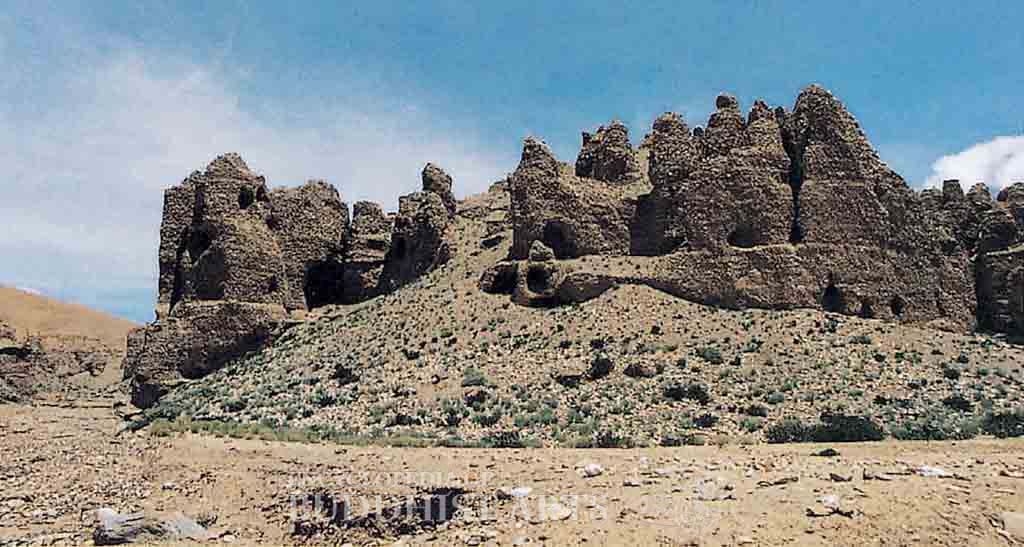
Kaepu Caves: Shrine Cave
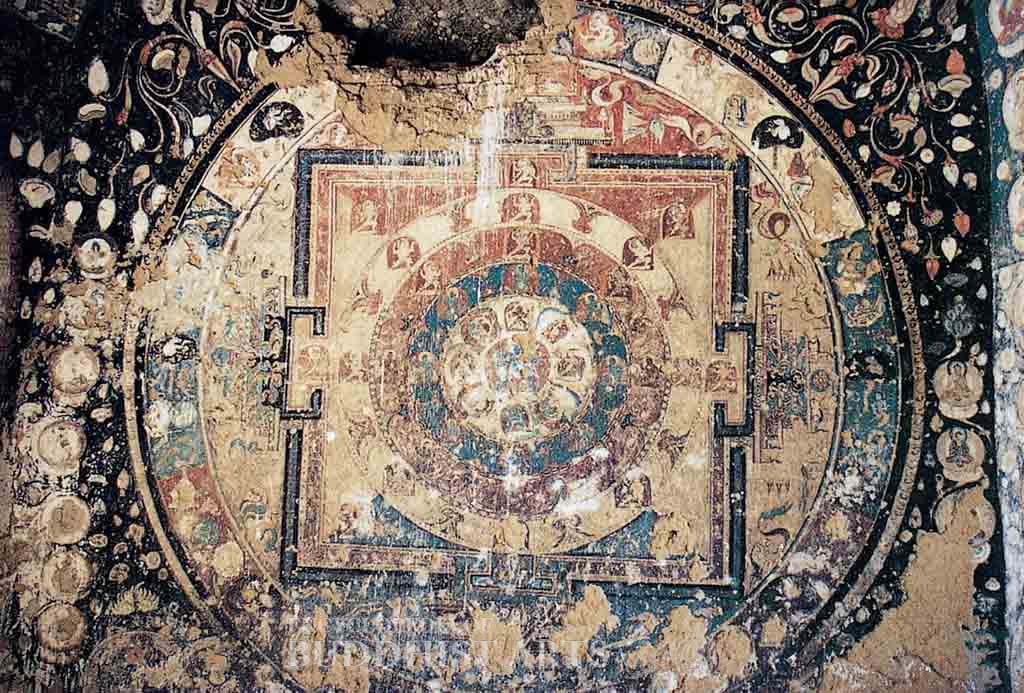
Kaepu Caves: Shrine Cave - Mandala (west wall)
Kaepu Caves
CHINA, Tibet, Ngari
Situated in Xiangba village, in the basin of the Langqen River in Zanda, Ngari, the Kaepu Caves were created between the late 10th and early 13th centuries. The site consists of over 20 south-facing caves of varying sizes, the majority of which are vihara caves.
Burial caves and a shrine cave are located on the left side of the cliff, while vihara caves and the Dharma Protector Cave are situated in the center of the mountain ridge. The shrine cave contains murals dating to between the 11th and 13th centuries, and the Dharma Protector Cave is painted with murals that dates from the 19th century. These murals feature Vajrayana Buddhist themes such as mandalas and images of Variocana Buddha and Dharma protectors; they are similar to the murals seen in Tabo and Alchi monasteries in India.
Figures seen in one mural wear long robes with large upturned collars and high boots, which was a typical style found in western Tibet during this time. Another mural exhibits a decorative pattern featuring water birds with pearls in their mouths and are reminiscent of patterns seen in Kashmiri temples, a stylistic feature that may have resulted from the spread of Buddhism and construction of temples by the Tibetan translator, Rinchen Zangpo.
For more details, go to the Encyclopedia of Buddhist Arts: Caves R-L, page 446.
Cite this article:
author = Hsingyun and Youheng and Johnson, Peter and Mankuang and Huntington, Susan and Edson, Gary and Neather, Robert,
booktitle = {Encyclopedia of Buddhist Arts: Caves R-L},
pages = 446,
title = {{Kaepu Caves}},
volume = 6,
year = {2016}}