
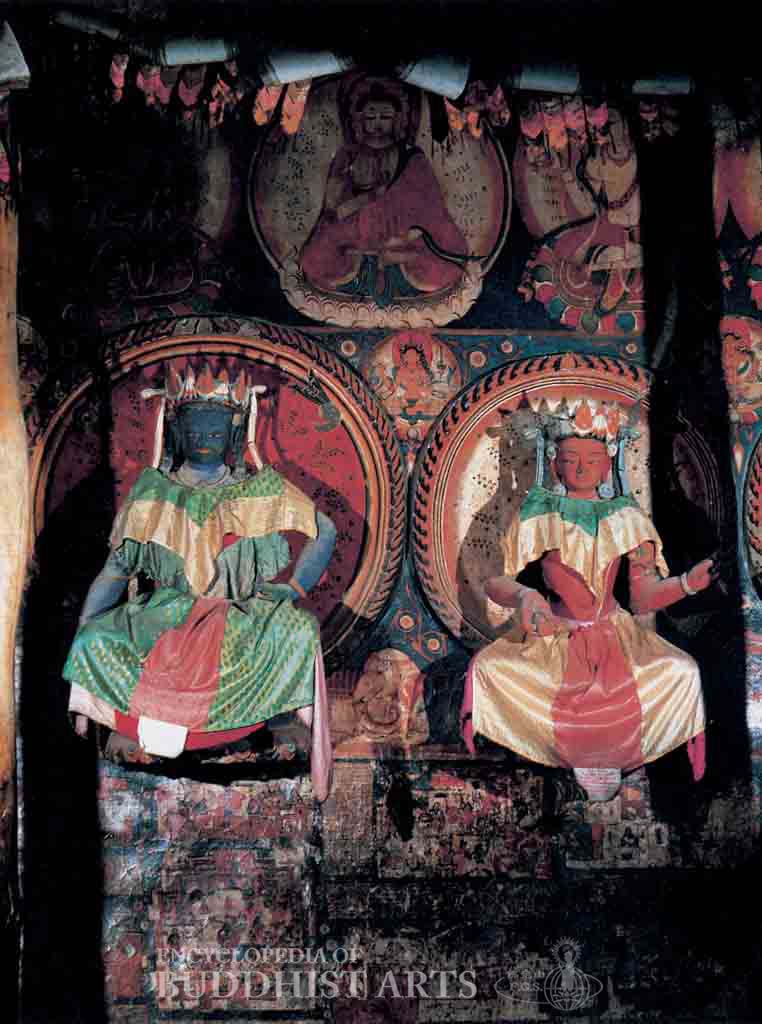
Tabo Monastery Central Hall Murals: Assembly Hall (south wall)
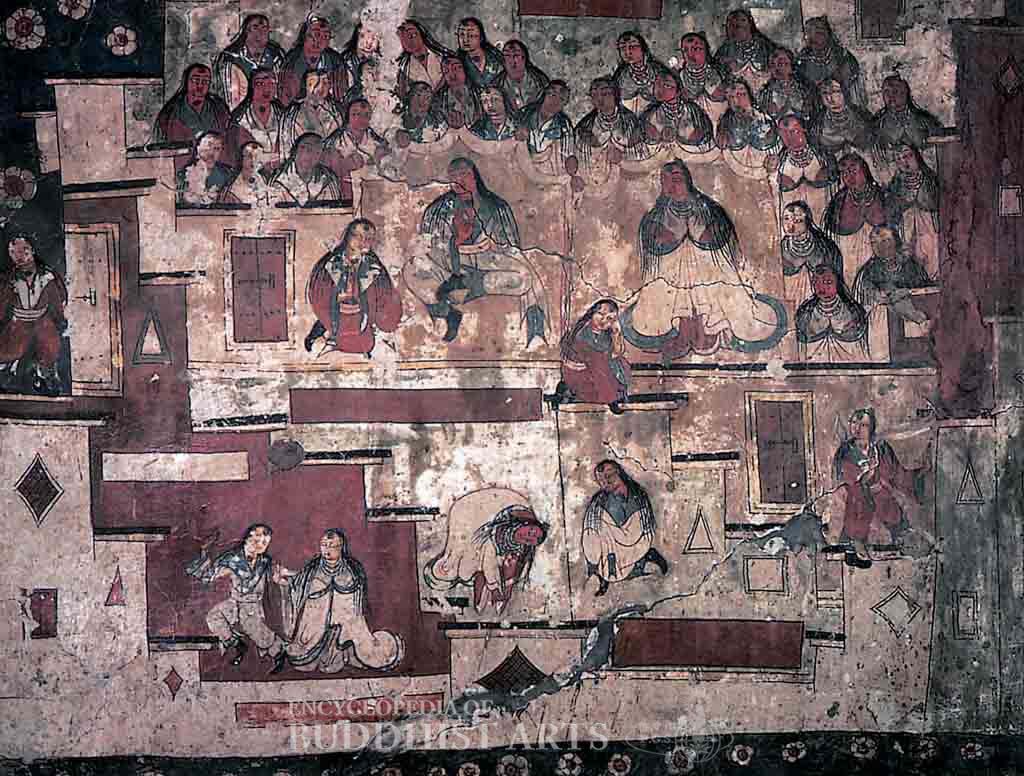
Tabo Monastery Central Hall Murals: Assembly Hall - Fifty-Three Visits of Sudhana (south wall, lower register)
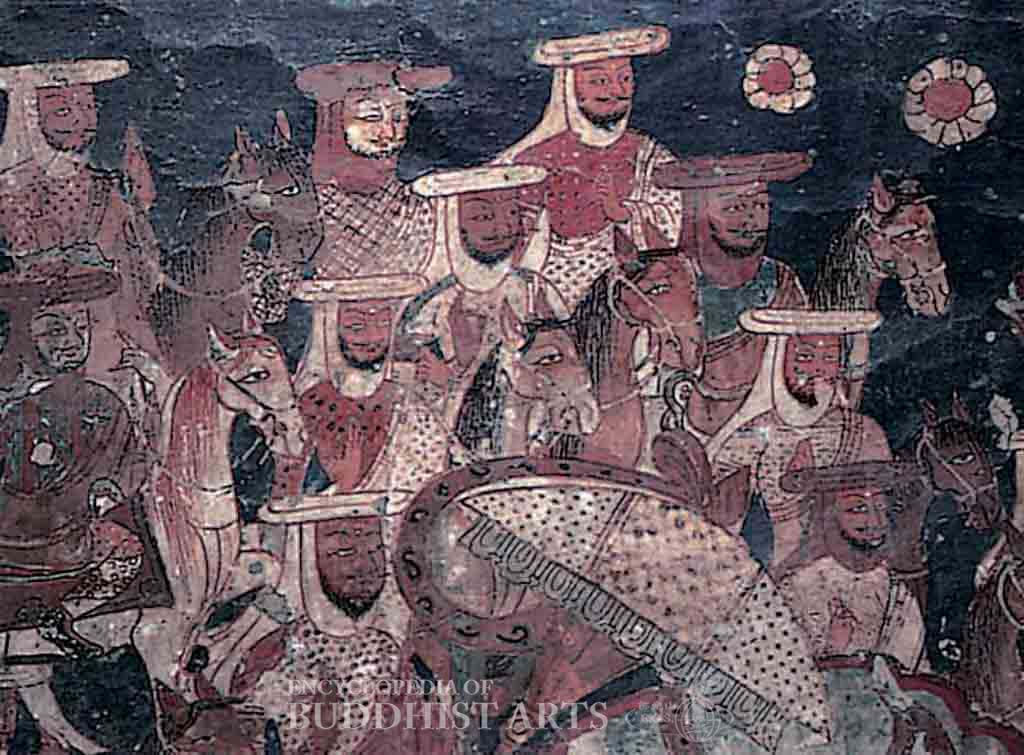
Tabo Monastery Central Hall Murals: Assembly Hall - Life of the Buddha (north wall, left side, lower register)
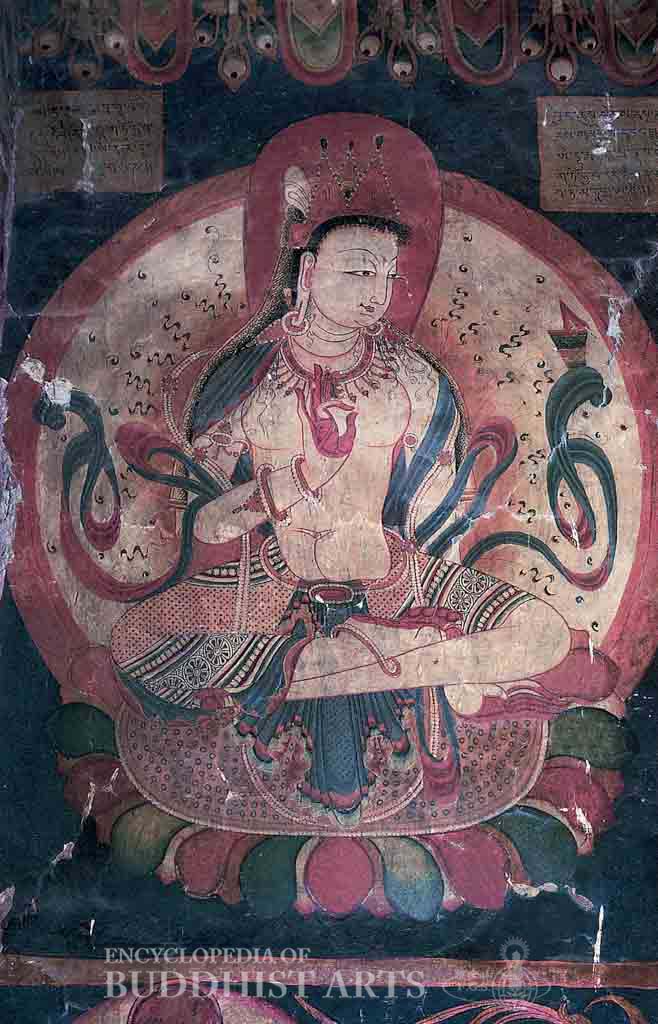
Tabo Monastery Central Hall Murals: Assembly Hall - Avalokitesvara (north wall, upper register)
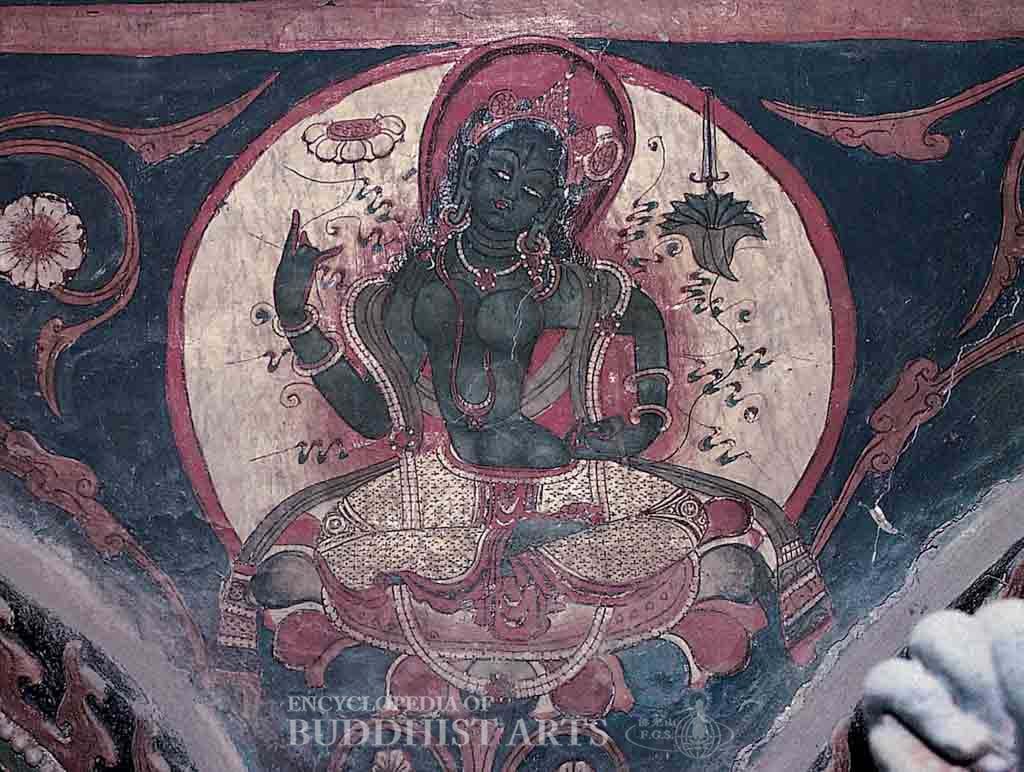
Tabo Monastery Central Hall Murals: Assembly Hall - Female Figure (north wall, middle register)
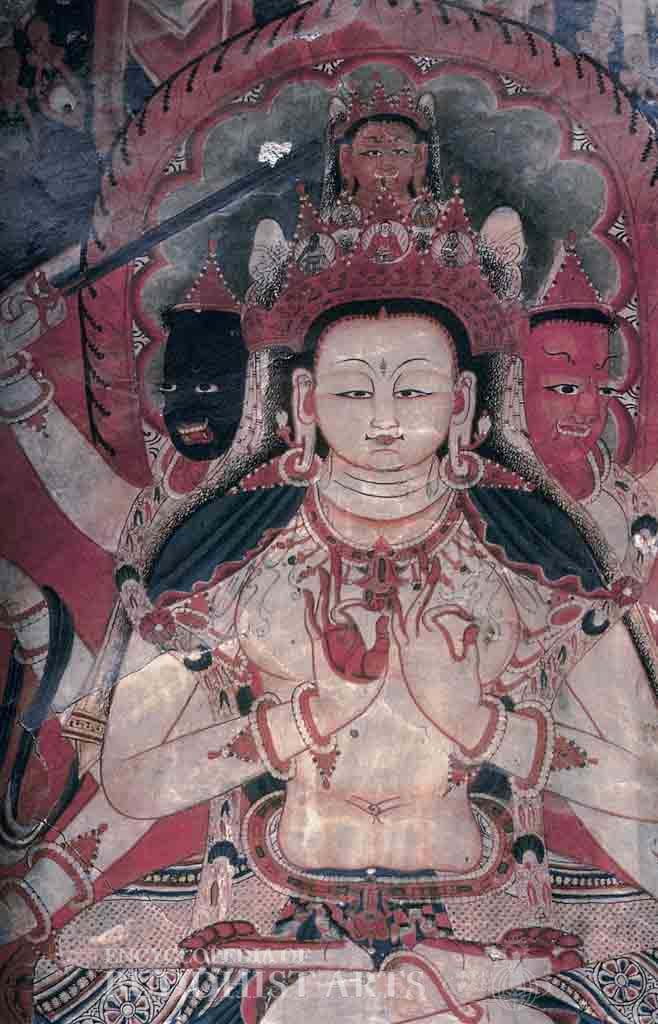
Tabo Monastery Central Hall Murals: Assembly Hall - Manjusri Mandala (west wall, upper register)
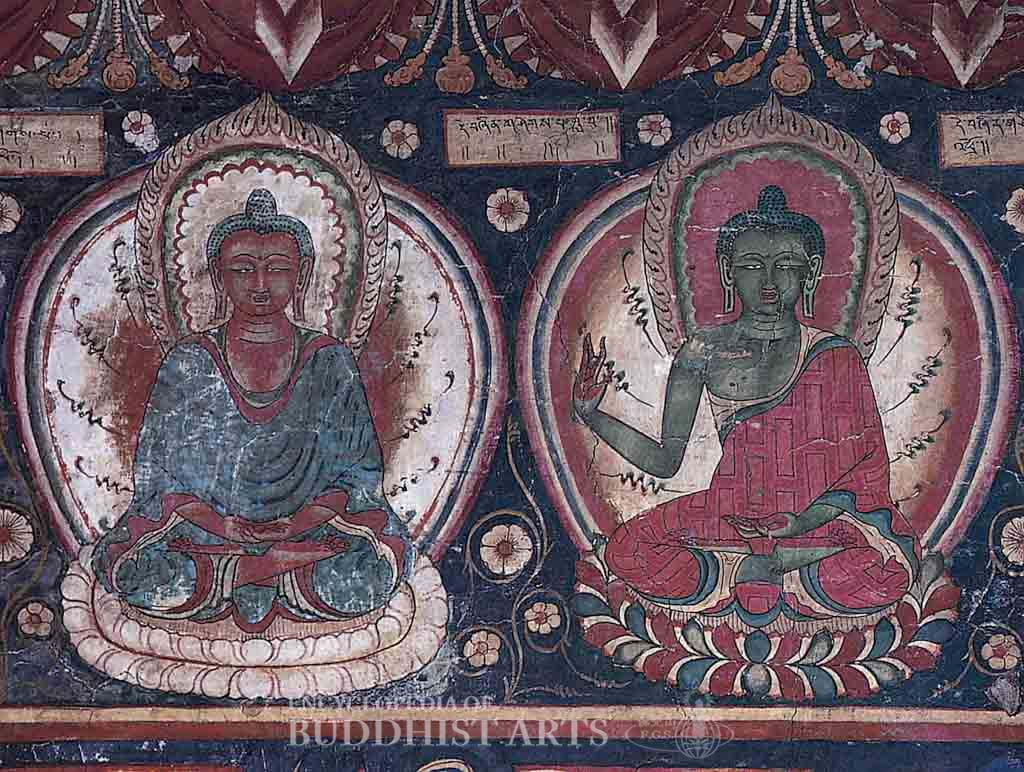
Tabo Monastery Central Hall Murals: Ambulatory - Buddhas in the Bhadrakalpika Sutra (south wall, upper register)
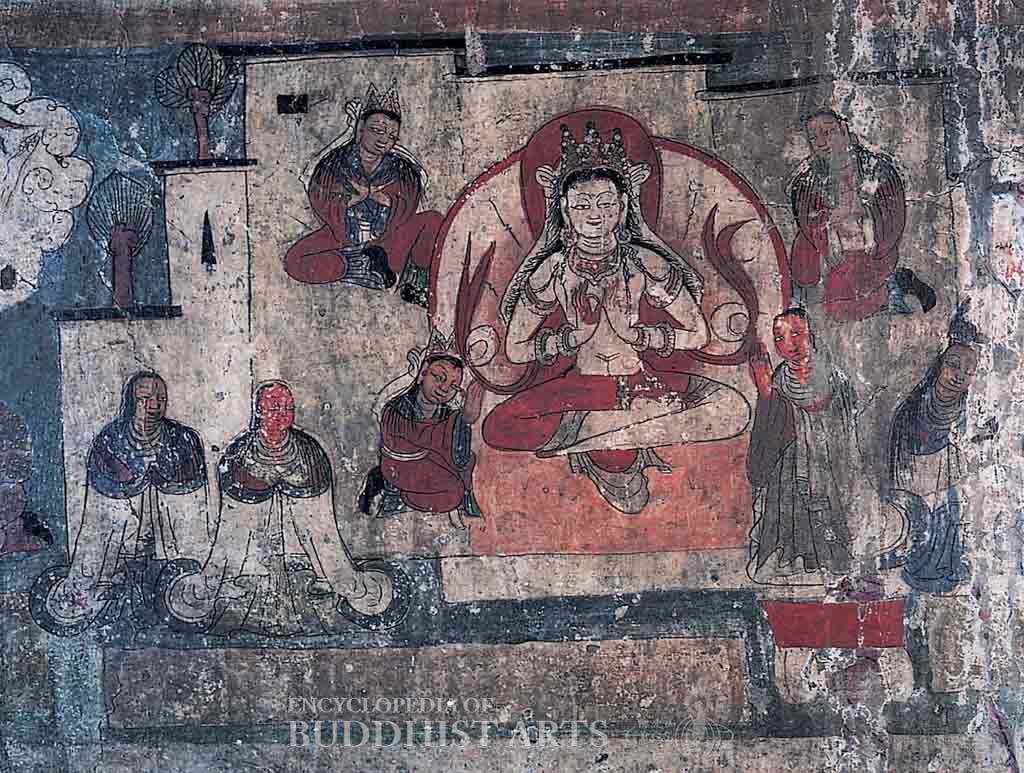
Tabo Monastery Central Hall Murals: Ambulatory - Narrative Story (north wall, lower register)
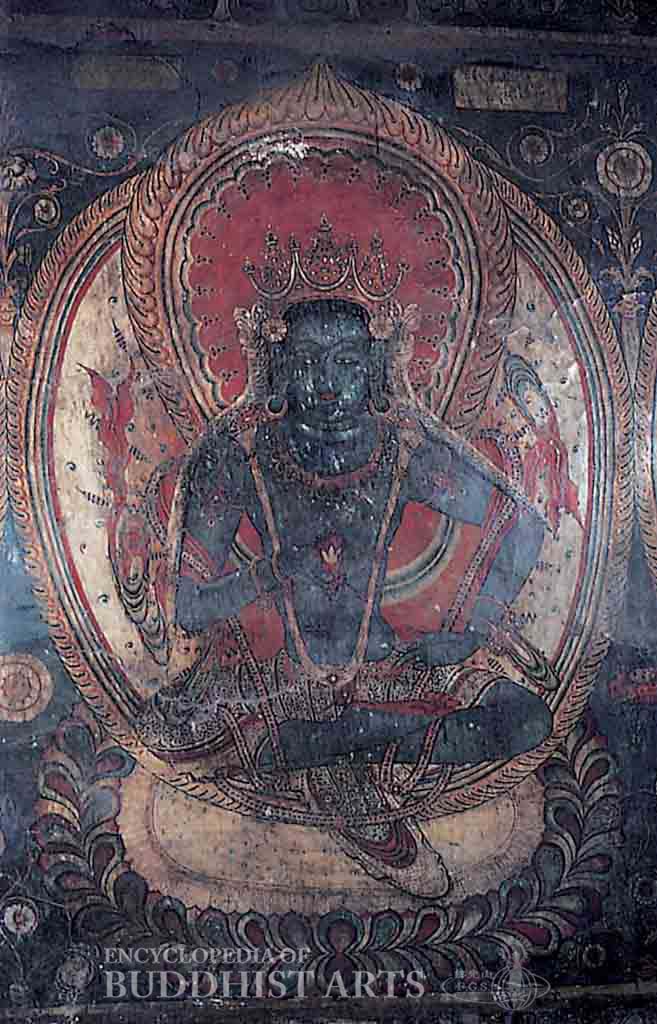
Tabo Monastery Central Hall Murals: Ambulatory - Bodhisattva (south wall, middle register)
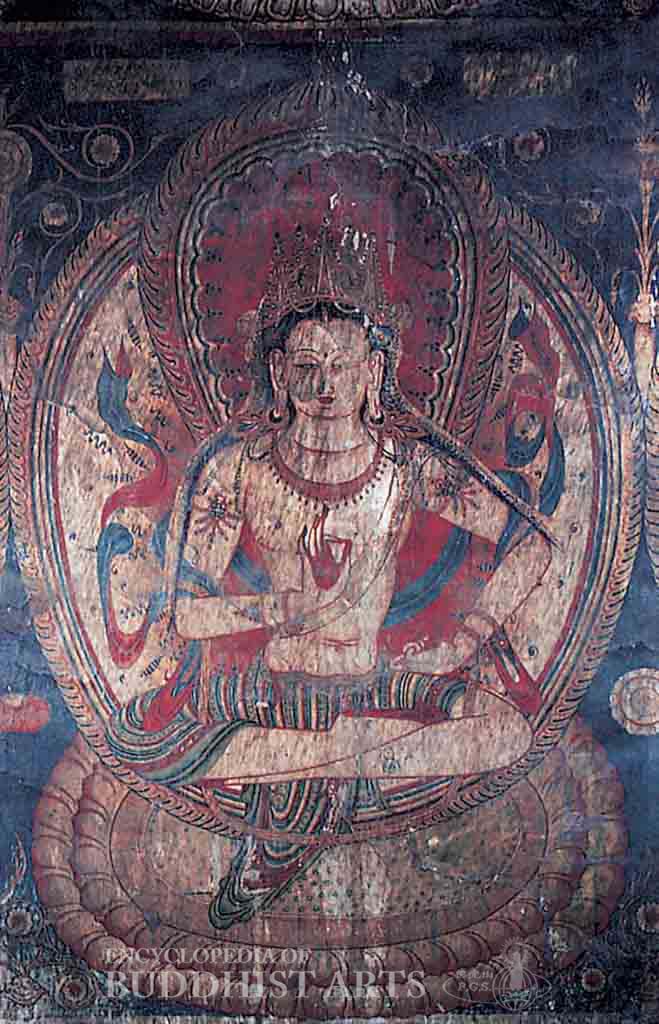
Tabo Monastery Central Hall Murals: Ambulatory - Bodhisattva (south wall, middle register)
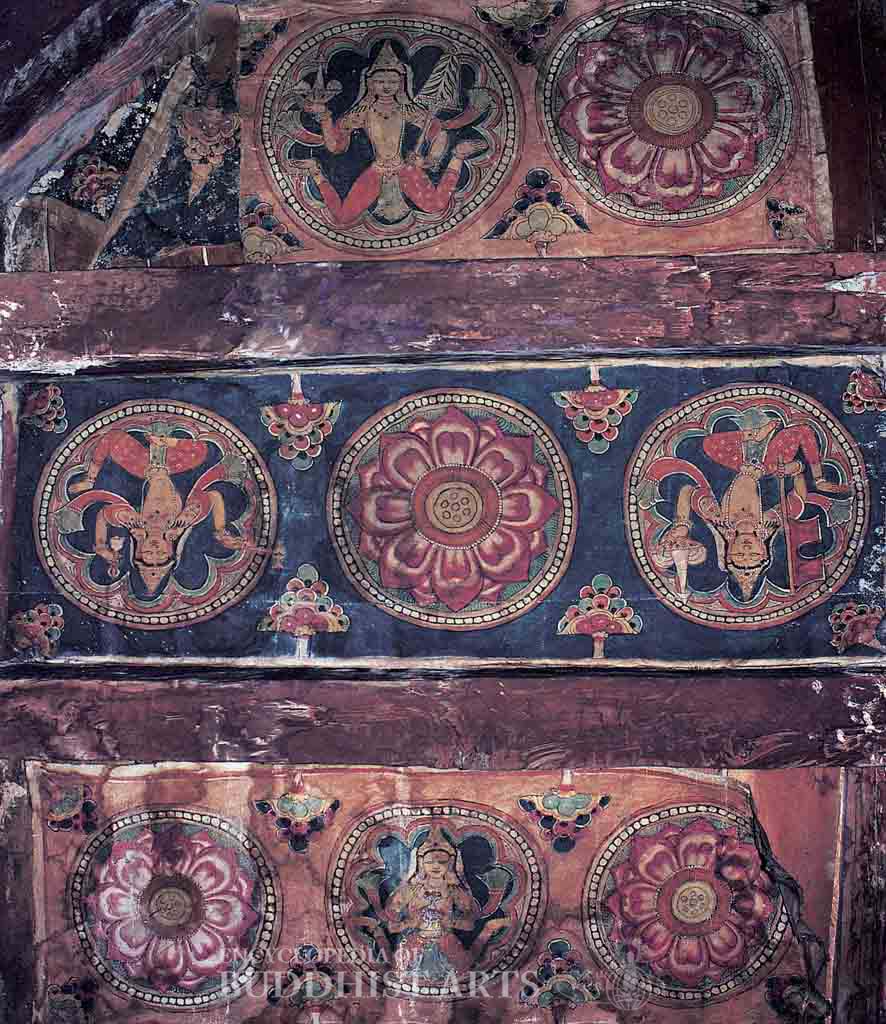
Tabo Monastery Central Hall Murals: Ambulatory - Ceiling
Tabo Monastery Central Hall Murals
INDIA, Himachal Pradesh
Tabo Monastery was built in 996 by Yeshe O, a king and royal lama of the Guge Kingdom (circa 10th–17th century), and was later renovated by his grandnephew Jangchub O in 1042. The central hall of the monastery consists of both a new and an old entrance halls, an assembly hall, the Protector Shrine, and an inner shrine which is surrounded by an ambulatory.
Murals, inscriptions, and the text of sutras are painted on the four walls of the rectangular assembly hall. Buddha Triads cover the upper register of the south and north walls. On the lower section of all four walls, there are illustrations of the Fifty-Three Visits of Sudhana described in the Avatamsaka Sutra. The text of the sutra is written between the illustrations. Scenes from the Life of the Buddha adapted from accounts in the Lalitavistara Sutra are painted on the north wall and the right side of the west wall. Some of the scenes, such as Queen Maya at Lumbini Garden, are rarely shown in Indian Buddhist paintings. On the upper east and upper west walls leading to the entrance of the inner shrine, Dharma protectors and Bodhisattvas stand below a Buddha Triad. A mandala with Manjusri at the center occupies the upper register of the right side of the west wall. In the middle register, there are many seated female figures and auspicious creatures; these images blend well with the sculptures in front of the wall.
More murals are painted within the inner shrine and on the walls of the ambulatory. The left wall of the entrance to the shrine is decorated with an image of a monk teaching the Dharma and illustrations of major events in the history of the monastery. On the upper section of the walls of the ambulatory, the Buddhas listed in the Bhadrakalpika Sutra are depicted. They have varied skin colors, wear monastic robes that cover one or both shoulders, and form mudras. Each is identified by an inscription within a cartouche. The middle section of the passage is painted with 32 seated Bodhisattvas arranged in two rows. In the lower register, there are numerous scenes from Buddhist sutras. Some of the scenes are thought to depict parts of the Avatamsaka Sutra, and others have not been identified. Seated Buddhas and figures making offerings are painted on three of the inner walls of the shrine. The murals represent a unique fusion of artistic styles from Kashmir, Eastern India, western Tibet, and Central Asia.
For more details, go to the Encyclopedia of Buddhist Arts: Painting P-Z, page 882.
Cite this article:
author = Hsingyun and Youheng and Youlu and Wilson, Graham and Manho and Mankuang and Huntington, Susan,
booktitle = {Encyclopedia of Buddhist Arts: Painting P-Z},
pages = 882,
title = {{Tabo Monastery Central Hall Murals}},
volume = 16,
year = {2016}}