
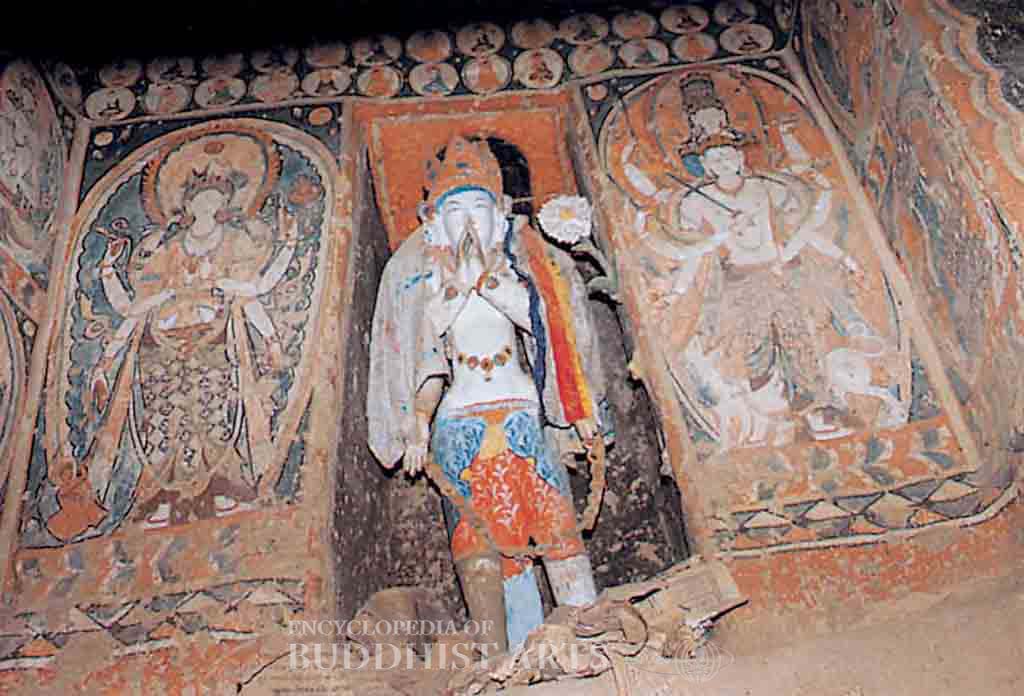
Mangyu Gateway Stupa Murals (east wall)
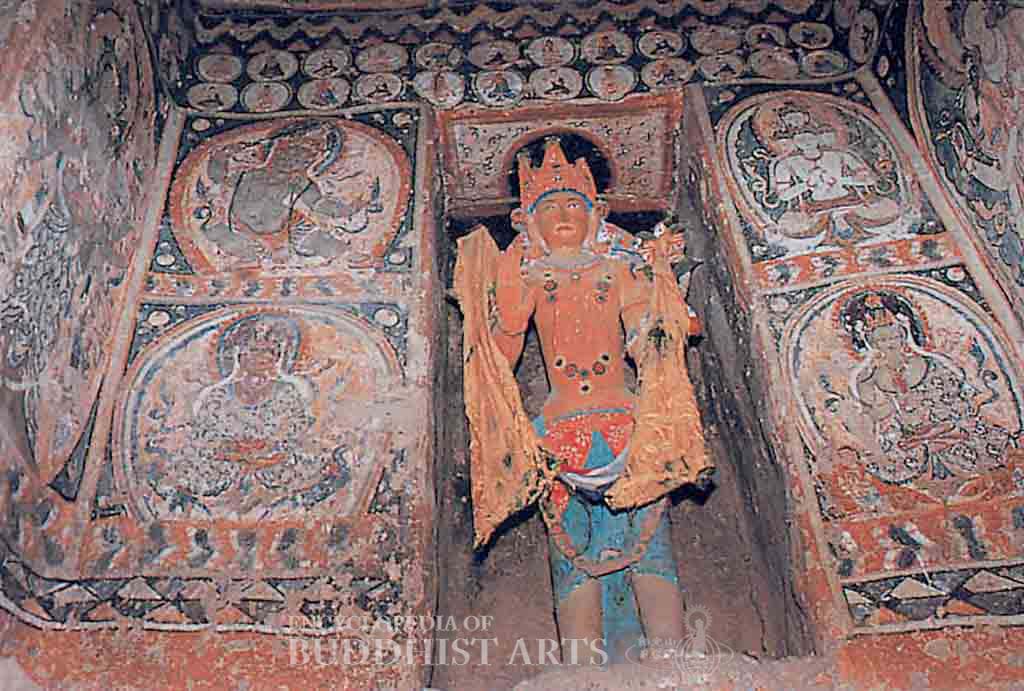
Mangyu Gateway Stupa Murals (north wall)
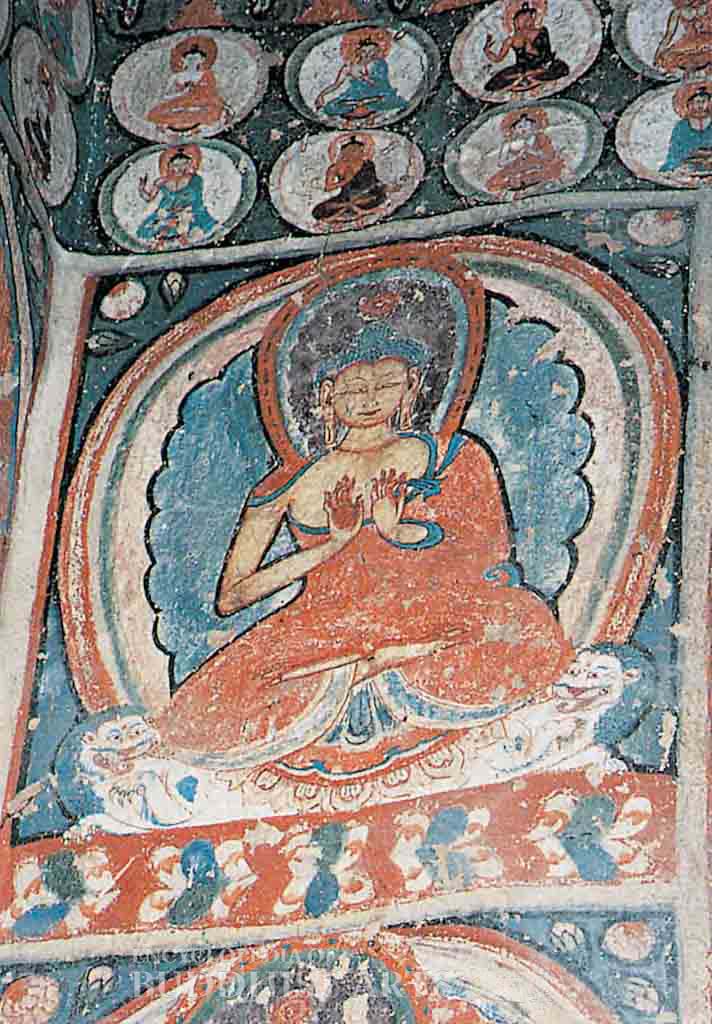
Mangyu Gateway Stupa Murals: Sakyamuni Buddha (south wall, left side)
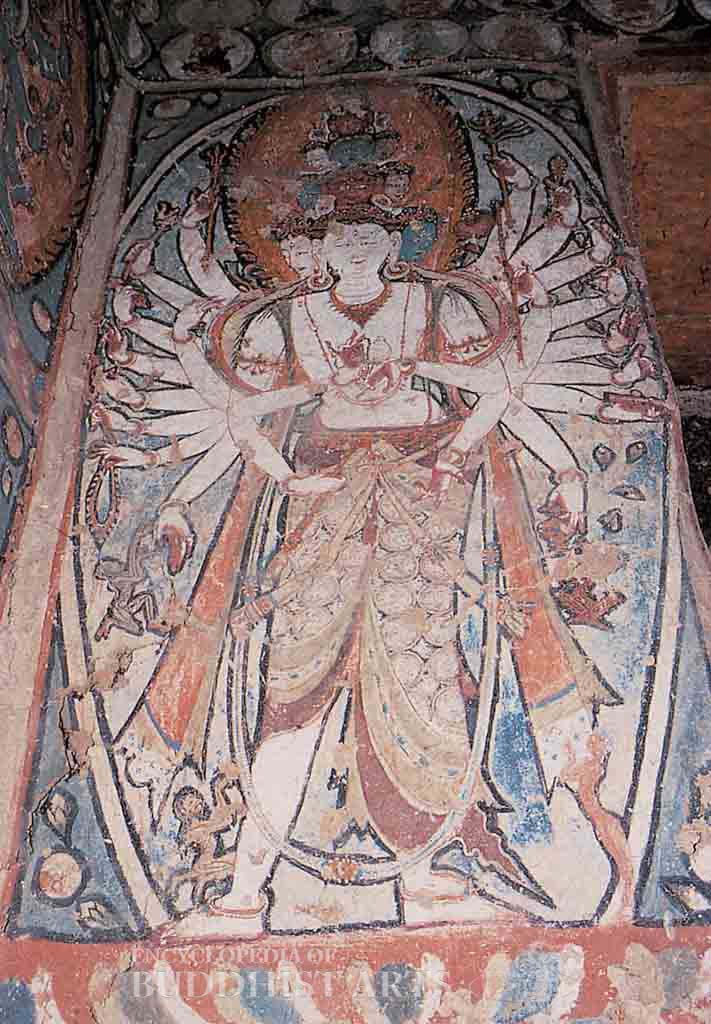
Mangyu Gateway Stupa Murals: Eleven-Headed, Twenty-Two-Armed Avalokitesvara Bodhisattva (west wall)
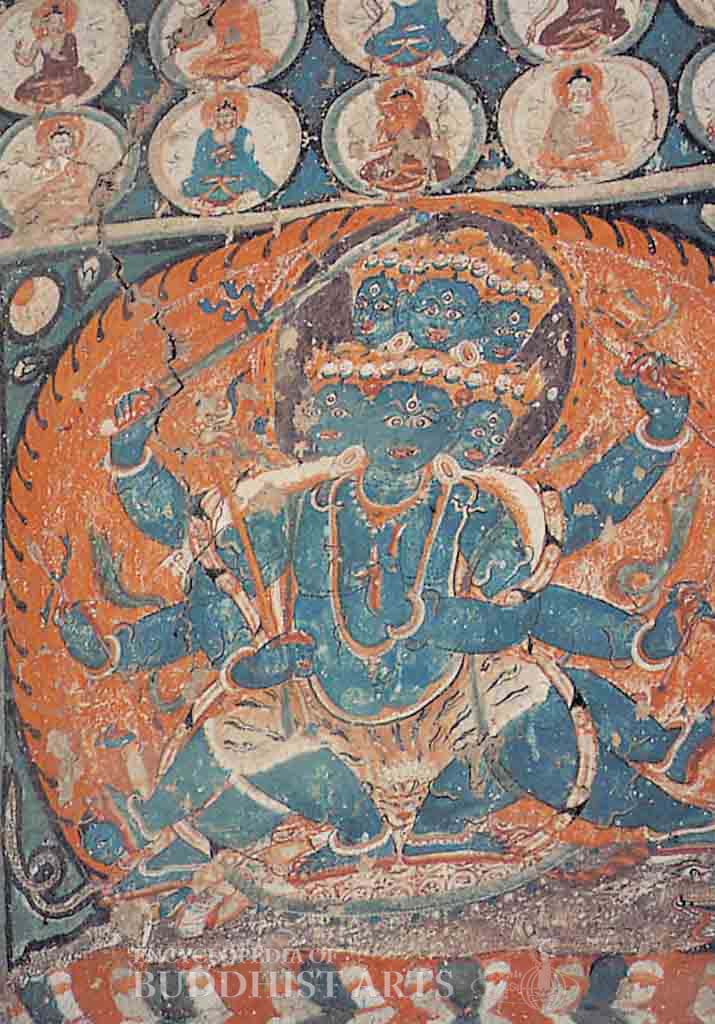
Mangyu Gateway Stupa Murals: Yamantaka (south wall, right side)
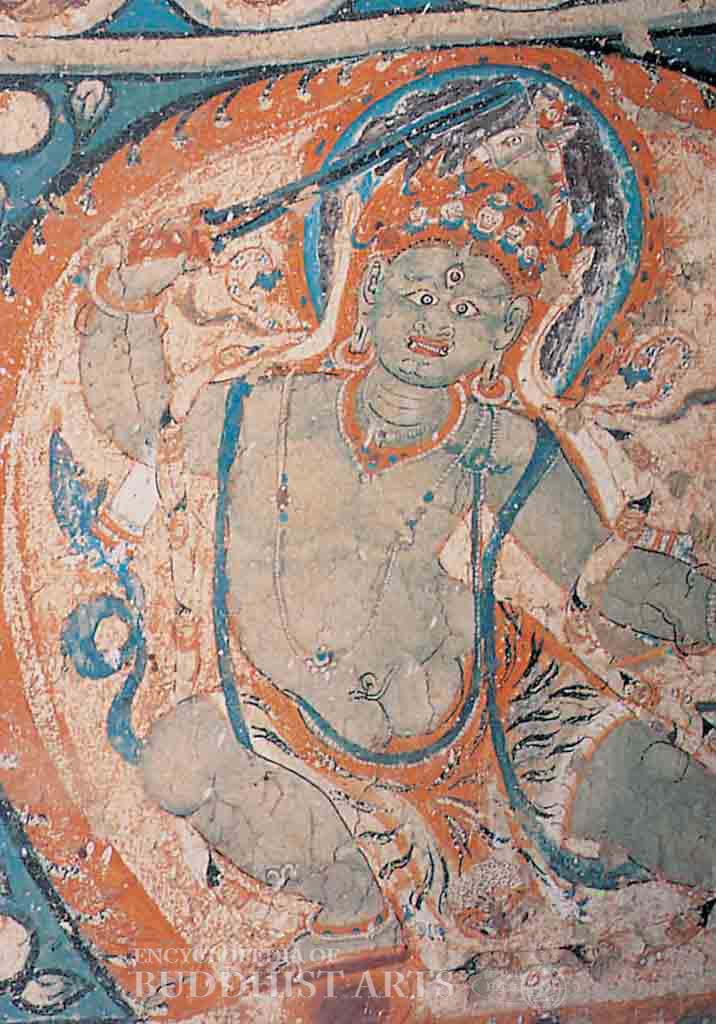
Mangyu Gateway Stupa Murals: Hayagriva (north wall, left side)
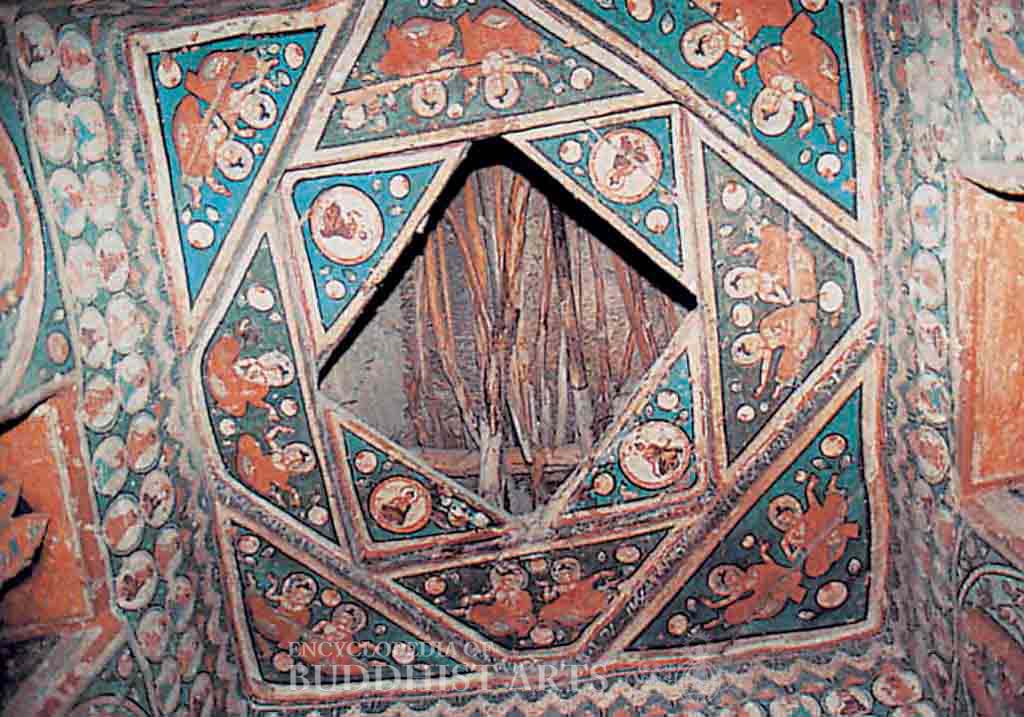
Mangyu Gateway Stupa Murals: Ceiling
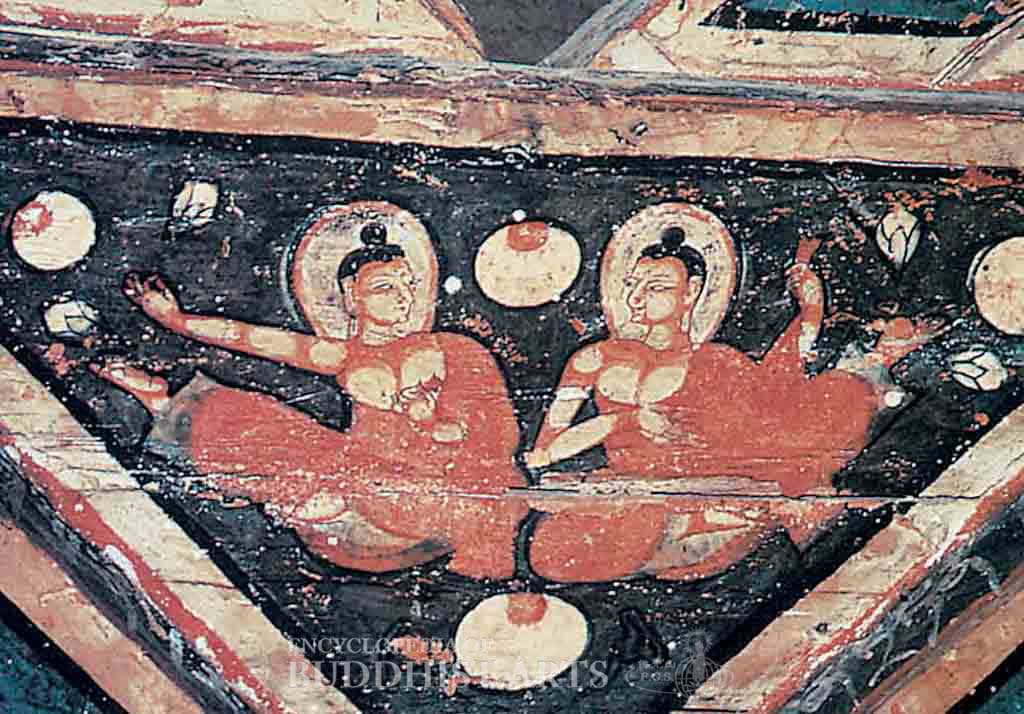
Mangyu Gateway Stupa Murals: Ceiling - Flying Buddhas
Mangyu Gateway Stupa Murals
INDIA, Jammu and Kashmir, Ladakh
The Gateway Stupa is located in the hills at Mangyu beside a number of other stupas. It has a plain exterior, but the interior is decorated with many detailed murals that are some of the finest Buddhist artworks in the region. The style and content of the murals are similar to those painted in the Three Story Hall at Alchi Monastery. It is thought that both sets of murals were painted by the same group of artists at the beginning of the 13th century. The illustrations are well preserved, indicating that the stupa was not used to host religious ceremonies, which can often cause damage with incense smoke. Some sutra manuscripts were found in the niche on the east wall, suggesting that the stupa might have been a place to store damaged sacred manuscripts that could not be discarded.
There is a square opening in the middle of the ceiling of the internal chamber of the stupa. It is surrounded by progressively larger painted squares, forming a series of triangles, within which are painted Buddha images. In the four corners of the inner square, there are seated Buddhas surrounded by white mandorlas. Pairs of unusual flying Buddhas are painted in the corners of the other squares. Murals cover all four walls of the inner chamber. Beside the niche on the east wall, there are images of Five-Headed, Eight-Armed Manjusri Bodhisattva and Six-Armed Prajnaparamita. Both of these figures symbolize wisdom, and both hold the Prajnaparamita Sutra in their hands. To the sides of the niche on the west wall, Eleven-Headed, Twenty-Two-Armed Avalokitesvara Bodhisattva and Eight-Armed Green Tara are depicted.
On the left side of the south wall, Sakyamuni Buddha is painted in the upper register and Aksobhya Buddha is shown in the lower register. Ratnasambhava Buddha is depicted in the lower register on the right side of the wall, below an image of the fierce Dharma protector Yamantaka. On the right side of the north wall, there is an illustration of Four-Headed Vairocana Buddha, while below, Amoghasiddhi Buddha is shown. On the left side of the wall, there are depictions of Amitabha Buddha in the lower register, and Hayagriva in the upper register. These images are representations of the vajra, lotus, and Buddha divisions in early Vajrayana Buddhism.
For more details, go to the Encyclopedia of Buddhist Arts: Painting I-O, page 503.
Cite this article:
author = Hsingyun and Youheng and Youlu and Wilson, Graham and Manho and Mankuang and Huntington, Susan,
booktitle = {Encyclopedia of Buddhist Arts: Painting I-O},
pages = 503,
title = {{Mangyu Gateway Stupa Murals}},
volume = 15,
year = {2016}}