
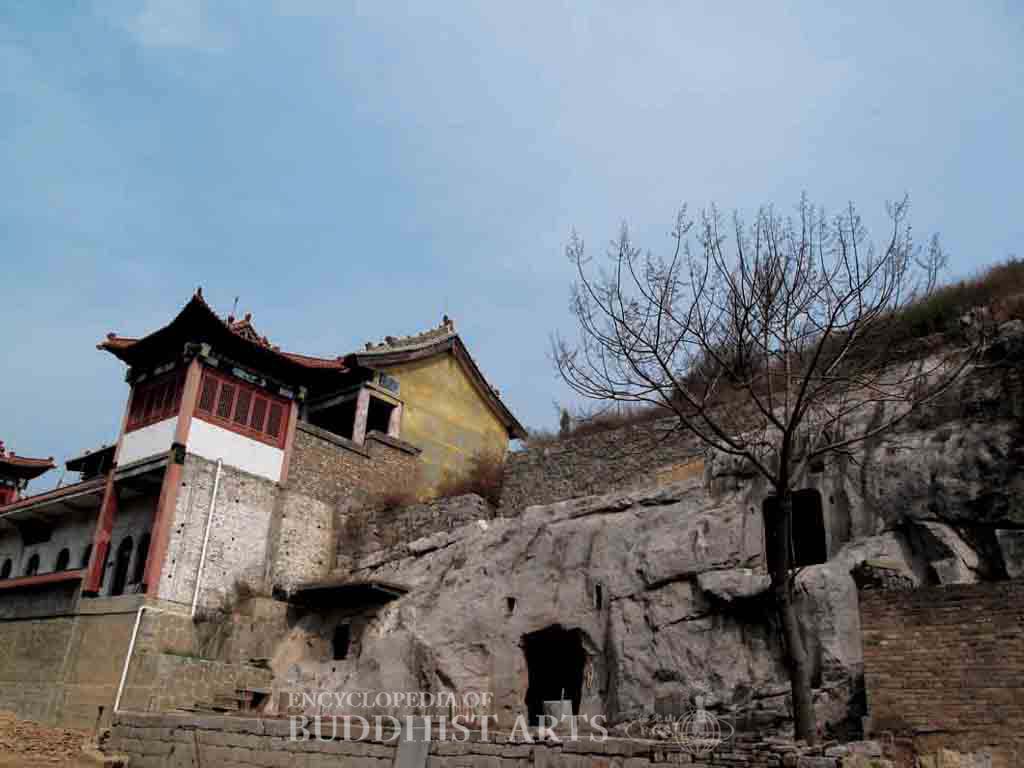
Biluo Temple Caves
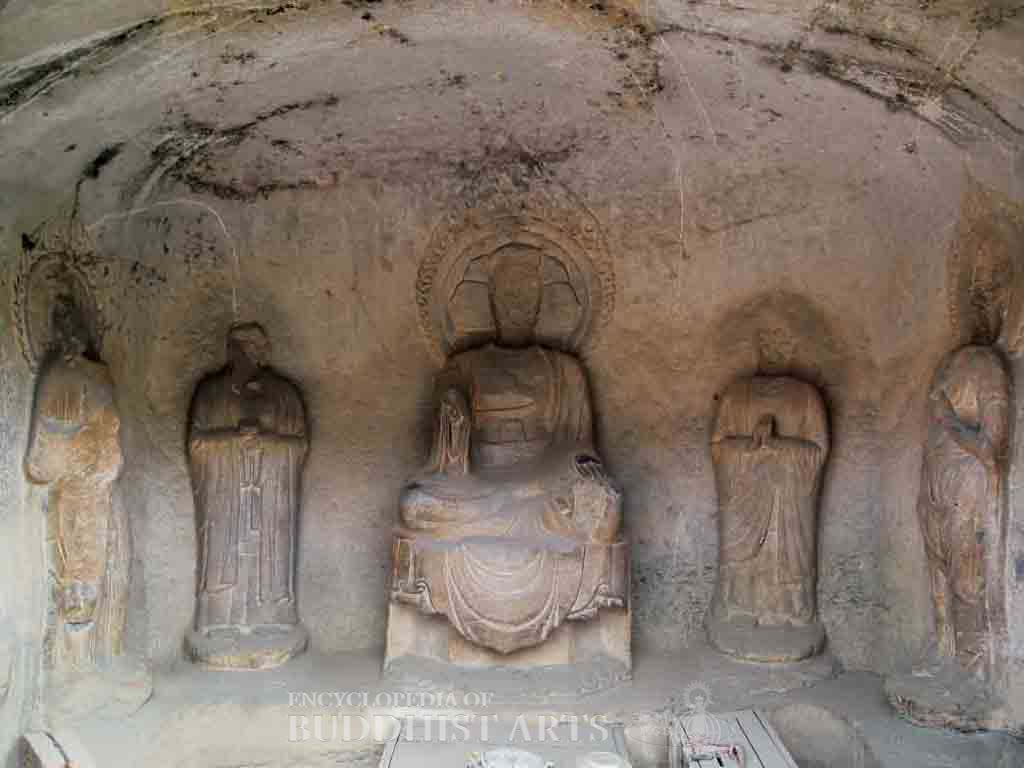
Biluo Temple Caves: East Cave
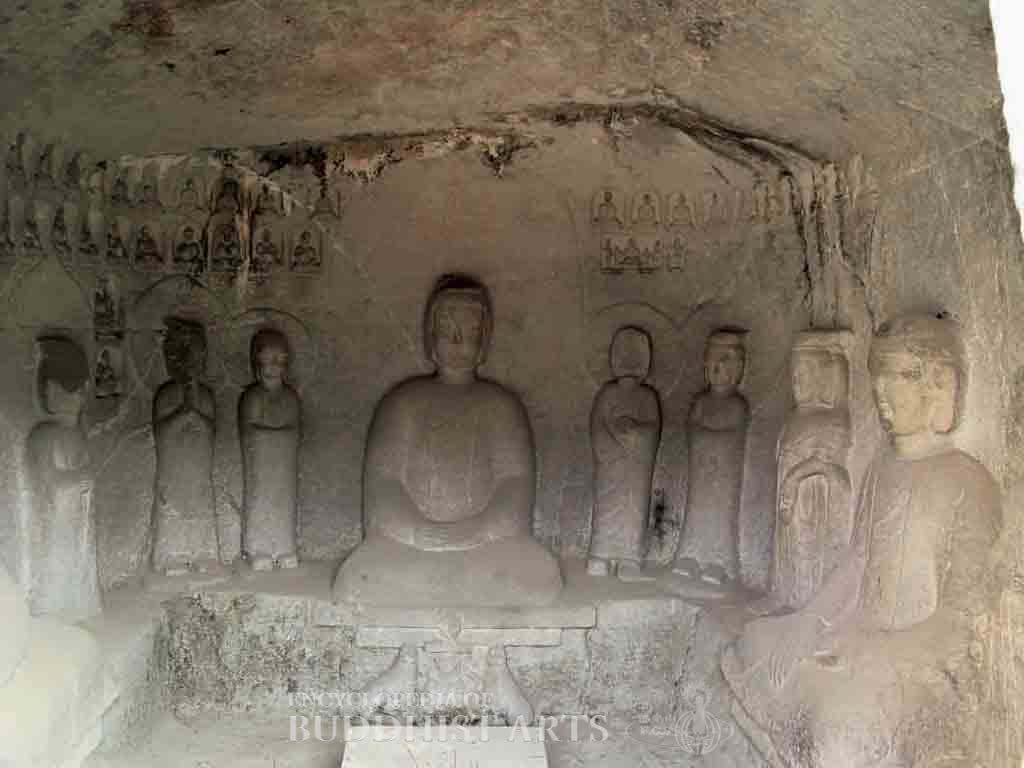
Biluo Temple Caves: West Cave
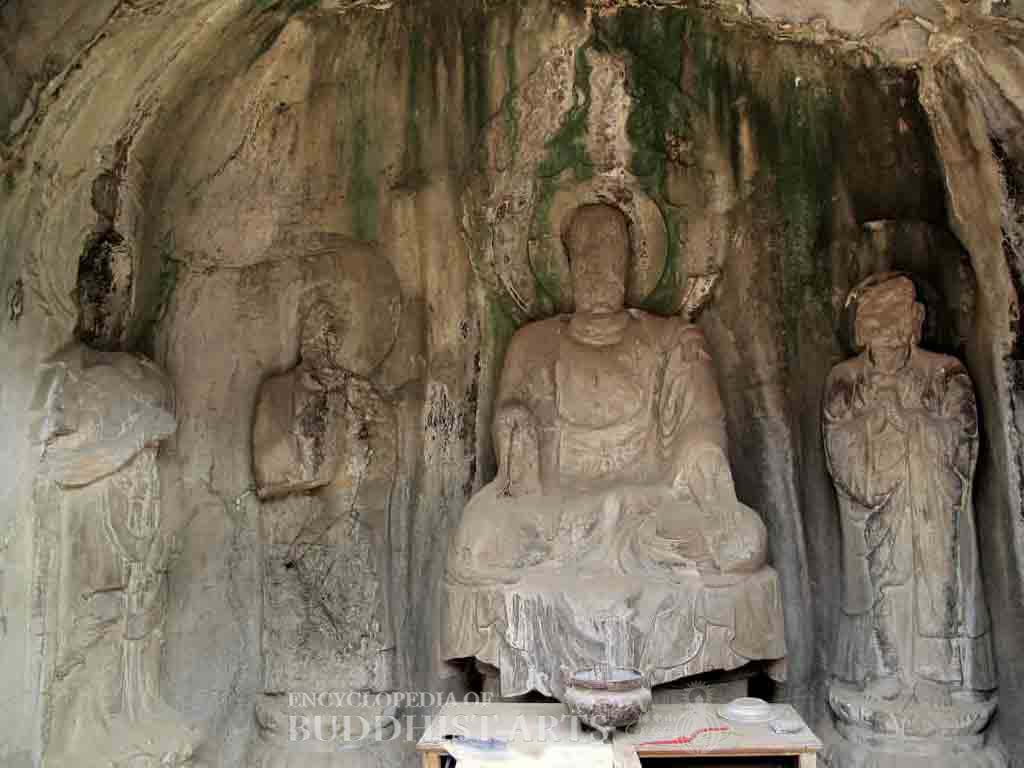
Biluo Temple Caves: Central Cave
Biluo Temple Caves
CHINA, Shanxi, Jincheng
The Biluo Temple Caves are located in the vicinity of East Biluo Temple in Nanlianshi village, 8 km northwest of Jincheng city. Three caves were constructed on the mountain, known as the West Cave, Central Cave, and East Cave. According to the inscriptions, the West Cave was the first to be constructed, dating it to the year 576. From the inscriptions and sculptural style, the Central Cave is believed to have been constructed during the rule of Emperor Gaozong (reigned 649–683) of the Tang dynasty. The East Cave was constructed shortly after the Central Cave, and has a slightly back-set facade which is 72 cm further into the cliff than that of the Central Cave. A row of stone column bases constructed during the Ming (1368–1644) and Qing (1644–1911) dynasties remain outside the caves. The Biluo Temple Caves were listed as a National Cultural Heritage Site in 2006.
The West Cave is rectangular with a pyramidal ceiling. There are altars on three walls inside, supporting carvings. The altar on the north (back) wall has a Buddha, two disciples, and two Bodhisattvas, while the altars on the side walls each has a Buddha and two Bodhisattvas. The Buddha statue on the east wall is intricately carved, although the head is damaged. In comparison, the Buddha statues on the back and west walls seem to be incomplete; though the surfaces were polished, they do not have any fine detailing such as clothing folds. The overall features of the Buddhas in this cave are similar to the sculptures of the Xiangtangshan Grottoes constructed during the Northern Qi dynasty (550–577). The top part of the cave walls still retains a large number of line engravings of donor figures and inscriptions.
The Central Cave is the largest cave, with a trapezoidal layout, a pyramidal ceiling, and altars on the back, east, and west walls. Each wall has a Buddha, two disciples, two Bodhisattvas, and two Heavenly Kings. The Zezhou Prefectural Gazetteer records Biluo Temple as having a “stone Buddha pavilion” and “cliff inscriptions.” The record was written by Li Zhuan, son of Li Yuanjia, the Prince of Han from the Tang dynasty. Based on this record, it is believed that the Central Cave may have been constructed by the sons of Li Yuanjia for their mother.
The East Cave is smaller in scale than the Central Cave. The carvings consist of a Buddha, two disciples, two Bodhisattvas, and two Heavenly Kings on the back, east, and west wall altars.
The sculptures of the Central and East Caves are not only larger in size than those in the West Cave, but also more neatly organized, demonstrating a style typical of Buddhist sculptures constructed during the Tang dynasty (618–907) and the Wu Zhou period (684–705). The sculptures bear a stylistic resemblance to the temple caves in Chang’an (present day Xi’an) and Luoyang Temple Caves.
For more details, go to the Encyclopedia of Buddhist Arts: Caves A-E, page 151.
Cite this article:
author = Hsingyun and Youheng and Johnson, Peter and Mankuang and Huntington, Susan and Edson, Gary and Neather, Robert,
booktitle = {Encyclopedia of Buddhist Arts: Caves A-E},
pages = 151,
title = {{Biluo Temple Caves}},
volume = 5,
year = {2016}}