
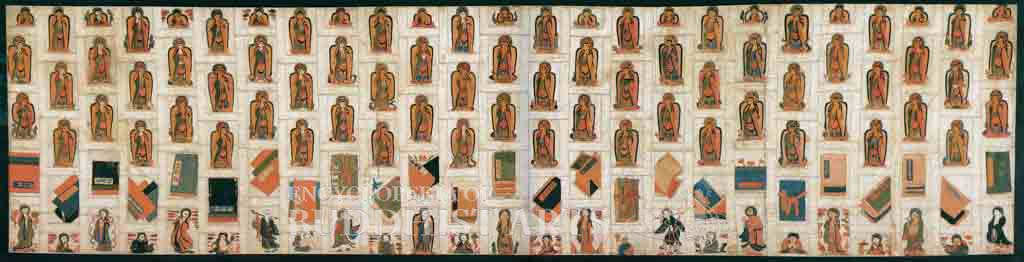
Embroidered Robe
Silk
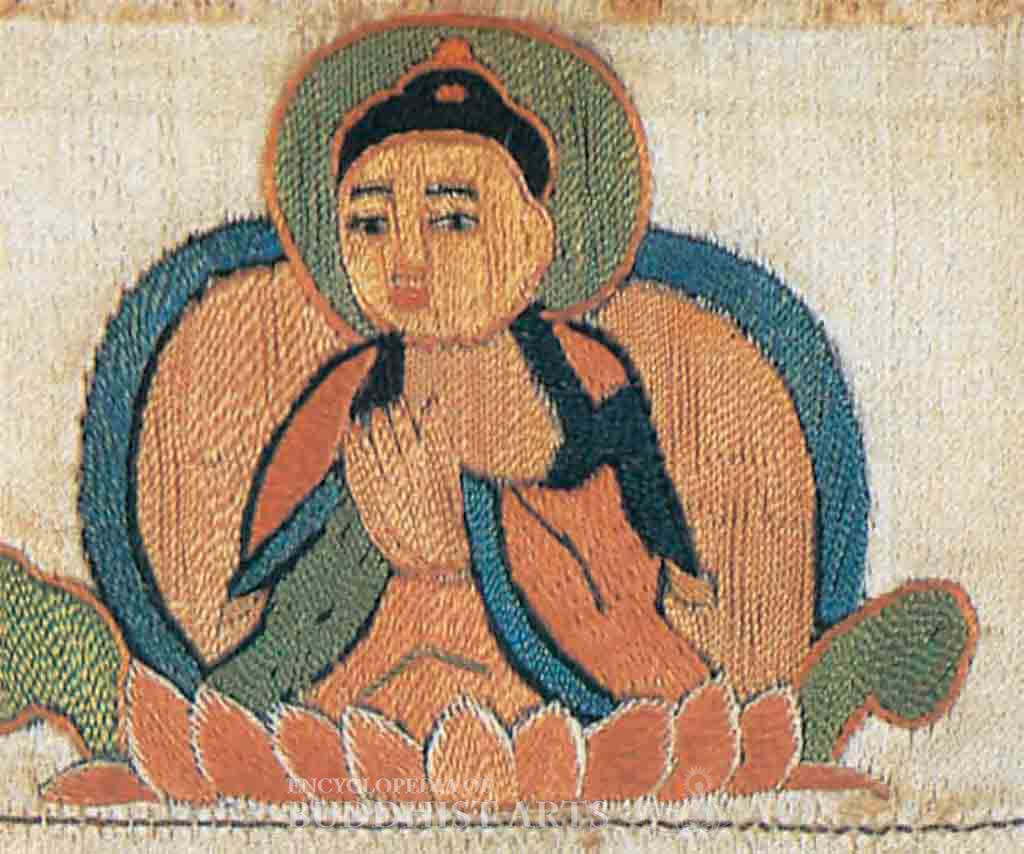
Embroidered Robe - Seated Buddha
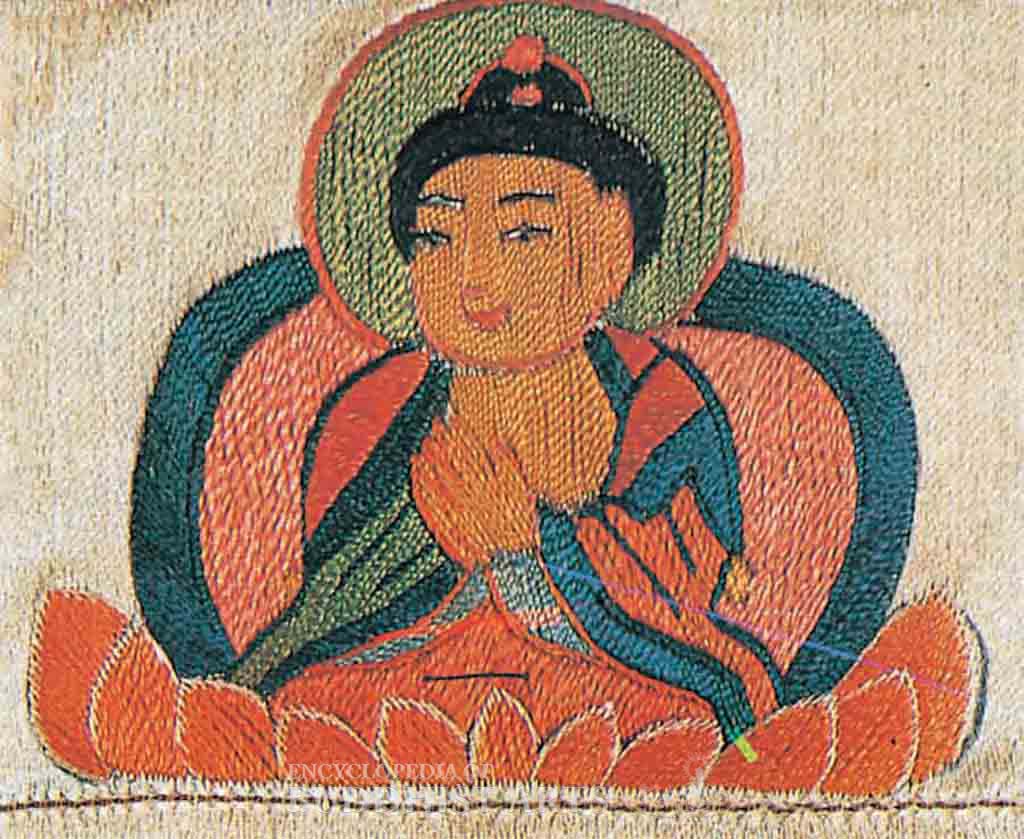
Embroidered Robe - Seated Buddha
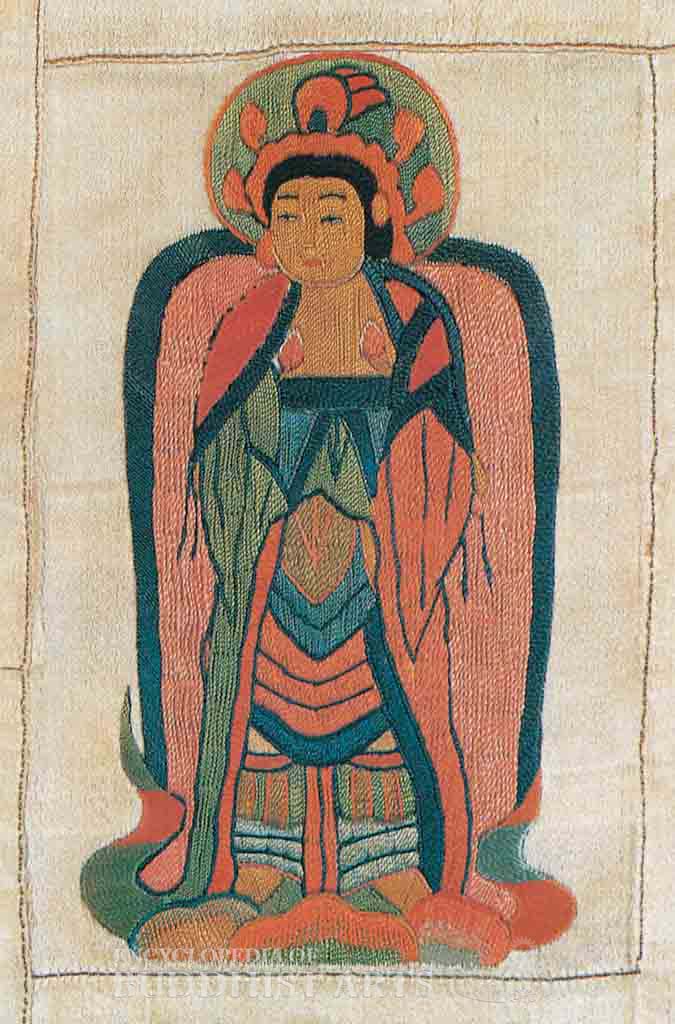
Embroidered Robe - Standing Bodhisattva
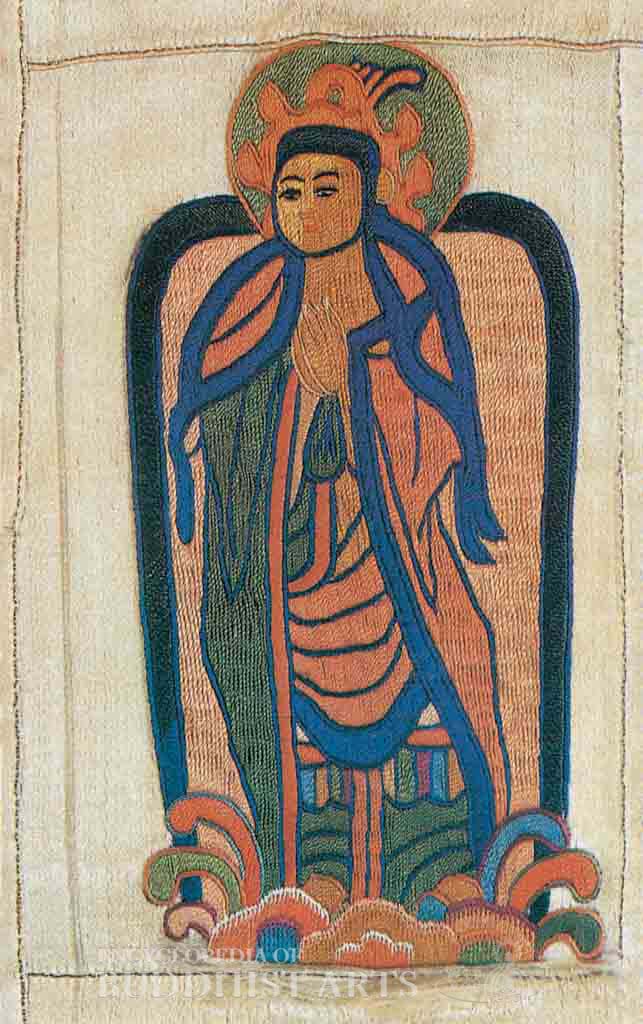
Embroidered Robe - Standing Bodhisattva
Embroidered Robe
KOREA; Joseon dynasty
This embroidered robe was created in Korea in the 18th century. It was listed as Treasure No. 654 in 1979.
The robe is divided into 25 vertical strips, each made up of five panels, four long, and one short. The first panel has images of Buddhas either sitting or standing, and the second and the third panels have an image of a standing Bodhisattva. The fourth panel has Buddhist texts, and the fifth panel has images of seated or standing Arhats. Notes on the back of the robe state that it was an offering from a female devotee with the family name Piao.
Embroidered onto pure white satin, the robe’s images are formed by flat stitch with fine silk threads, which are sewn inside of outlines stitched in thicker silk. The overall piece was created using sophisticated embroidery techniques with great attention to detail. It can be considered a representative of 18th century Korean Buddhist embroidery.
For more details, go to the Encyclopedia of Buddhist Arts: Artifacts, page 67.
Cite this article:
author = Hsingyun and Youheng and Youji and Pokorski, Stefanie and Mankuang and Fan, Wen,
booktitle = {Encyclopedia of Buddhist Arts: Artifacts },
pages = 67,
title = {{Embroidered Robe}},
volume = 18,
year = {2016}}