
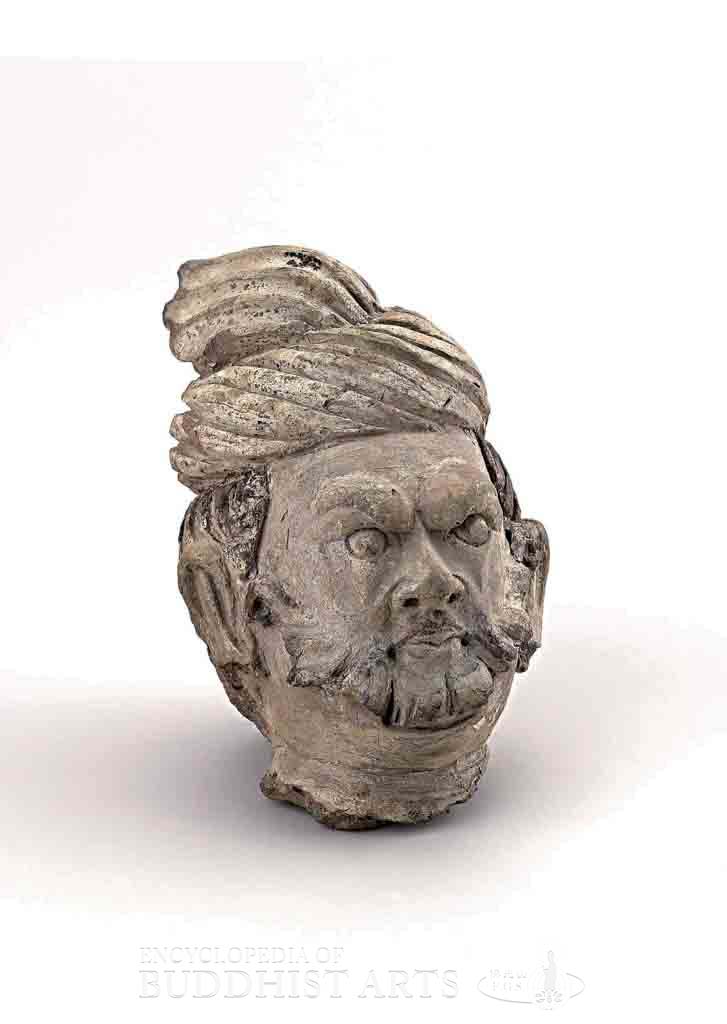
Qigxin Sculptures: Head of Male Figure
Clay
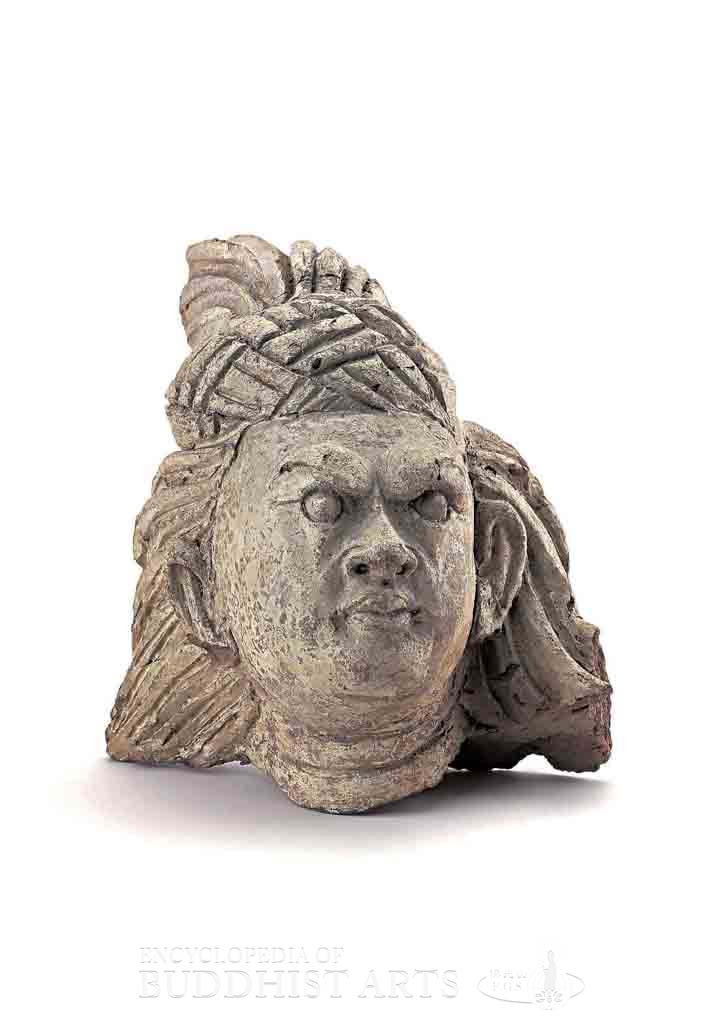
Qigxin Sculptures: Head of Male Figure
Qigxin Sculptures
CHINA, Xinjiang, Bayingolin
Qigxin was given a number of names by the varied peoples of this Central Asian area. The Chinese version of its name means Seven Stars Temple and refers to a large ruined monastic site in what used to be the Kingdom of Karasahr on the northern Silk Road. Buddhism was highly regarded and Buddhist art flourished here.
The site was investigated by various archaeological expeditions between 1905 and 1910. The statues found there are notable for mixing Indo-Iranian elements with Chinese styles. The heads in particular seem to have been produced by pressing clay into a mold, giving some a balloon-shaped appearance. Other sculptural elements such as hair and ears were added to individualize the heads.
The heads illustrated here are part of the series found in 1907 by the archaeologist Aurel Stein. The facial structures of both are basically the same: furrowed brows over wide staring eyes, paired with a prominent nose and slightly pursed mouth, giving a dynamic sense of emotion. The bearded male figure wears a simple turban with the loose end of the cloth pulled through the draw to create a flying crest. Where the folds on this might be molded, those on the turban of the clean-shaven man seem to have been created by cross incisions into the clay. The ringed neck sections are where the heads, possibly created separately, were joined to the body. One head has been turned to the right; the other looks straight ahead.
For more details, go to the Encyclopedia of Buddhist Arts: Sculpture N-Sr, page 848.
Cite this article:
author = Hsingyun and Youheng and Lovelock, Yann and Chou, Yuan and Huntington, Susan and Edson, Gary and Neather, Robert,
booktitle = {Encyclopedia of Buddhist Arts: Sculpture N-Sr},
pages = 848,
title = {{Qigxin Sculptures}},
volume = 12,
year = {2016}}