
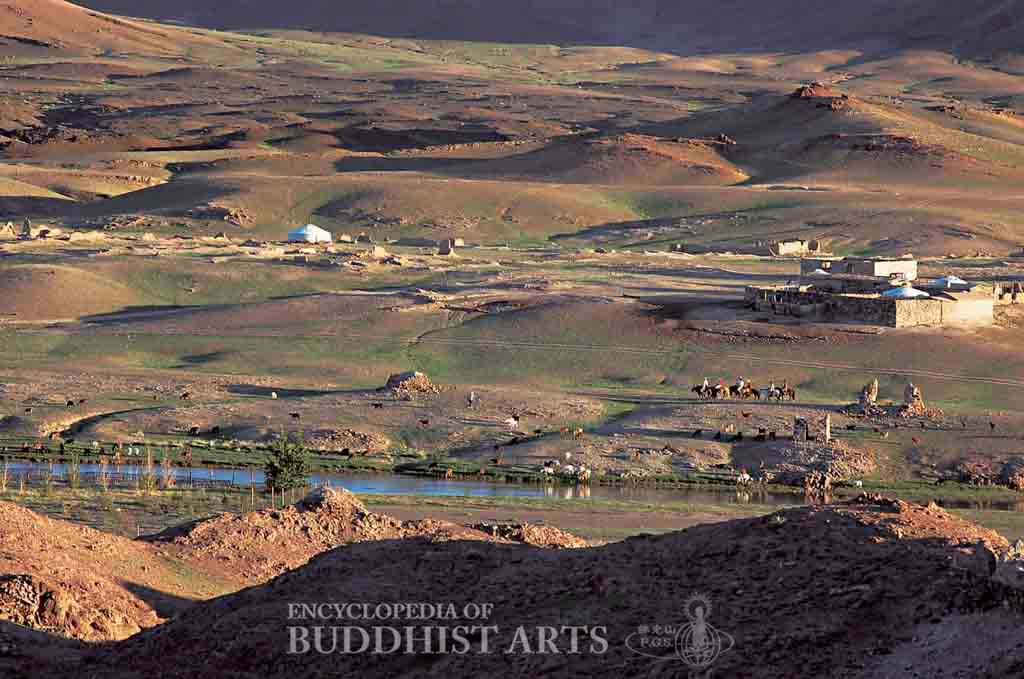
Ongiin Monastery (aerial view)
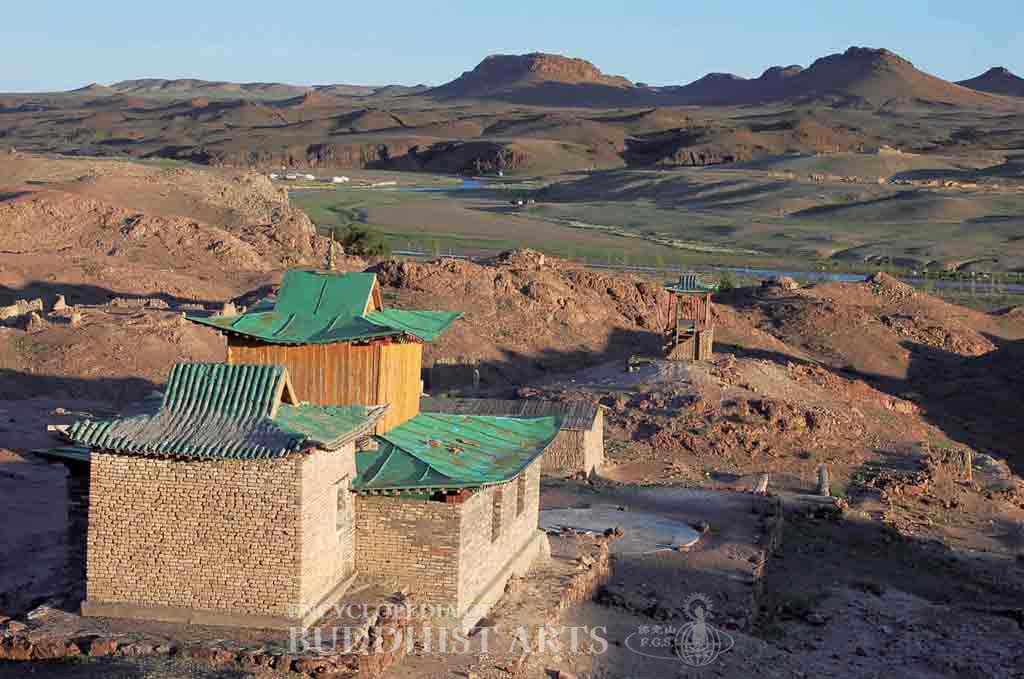
Ongiin Monastery
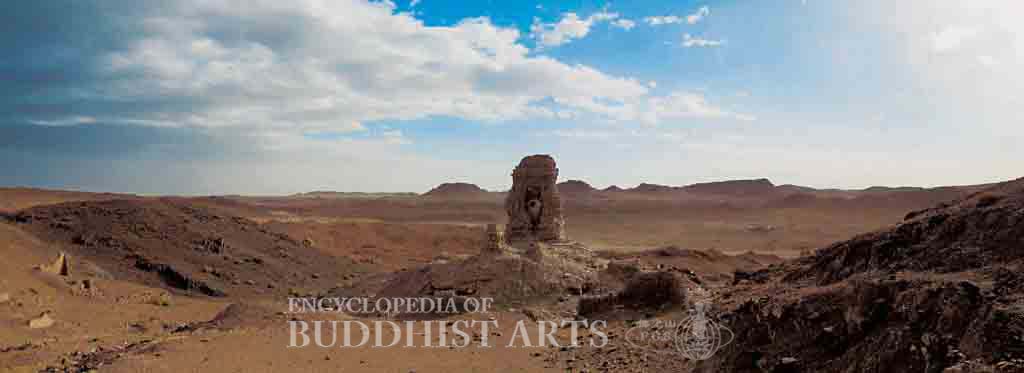
Ongiin Monastery: Stupa
Ongiin Monastery
MONGOLIA, Dundgovi
The ruins of this monastery are situated on the banks of the Ongiin River. It is the site of one of the oldest and largest monasteries in the country. It is divided into two sections: the Barlim Monastery in the north and the Khutagt Monastery in the south. It originally consisted of 28 buildings. It was very popular in the 18th century and was the residence of about a 1,000 monks. In the late 1930s it was destroyed during the persecution of Buddhism. It is mainly in ruins but some reconstruction of the monastery has recently begun. There is a monastic school, a museum and a stupa.
The museum is the original ger in which the founder of the monastery lived. It contains writings, clothes and the Dharma instruments of past resident monks. Among the exhibits there is a drawing of a Chinese-style monastic complex. The drawing shows halls, schools and monastic quarters, and provides a glimpse of the historical exchange between Chinese and Mongolian monasteries.
For more details, go to the Encyclopedia of Buddhist Arts: Architecture M-S, page 802.
Cite this article:
author = Hsingyun and Youheng and Johnson, Peter and Mankuang and Lancaster, Lewis,
booktitle = {Encyclopedia of Buddhist Arts: Architecture M-S},
pages = 802,
title = {{Ongiin Monastery}},
volume = 3,
year = {2016}}