
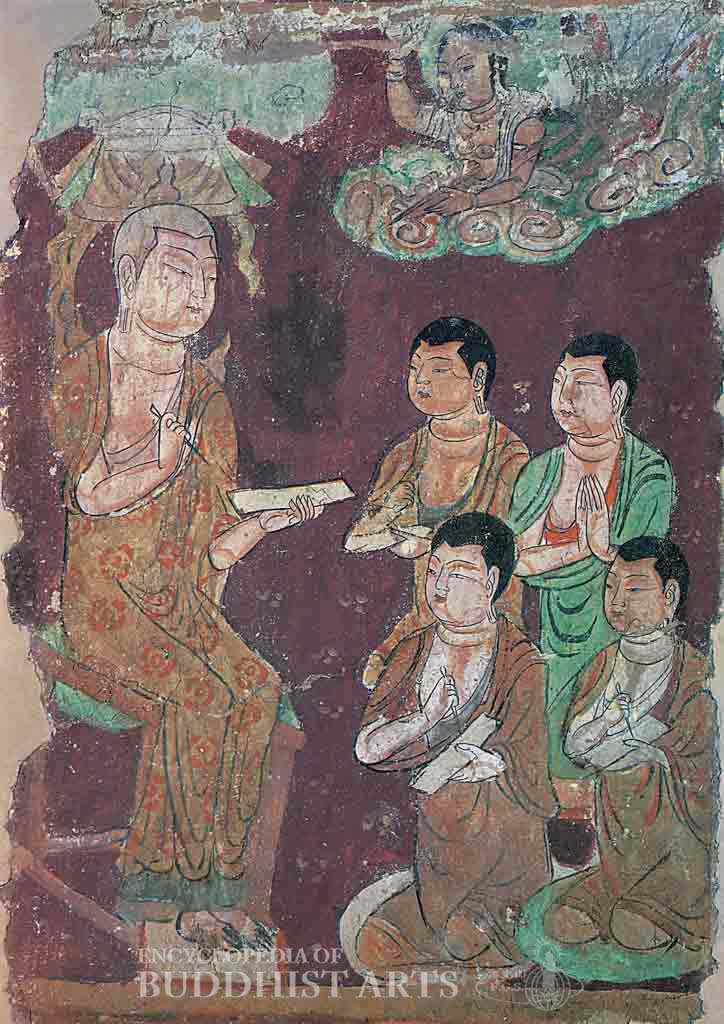
Qigxin Xorqu Buddhist Temple: Monastic Life (first fragment)
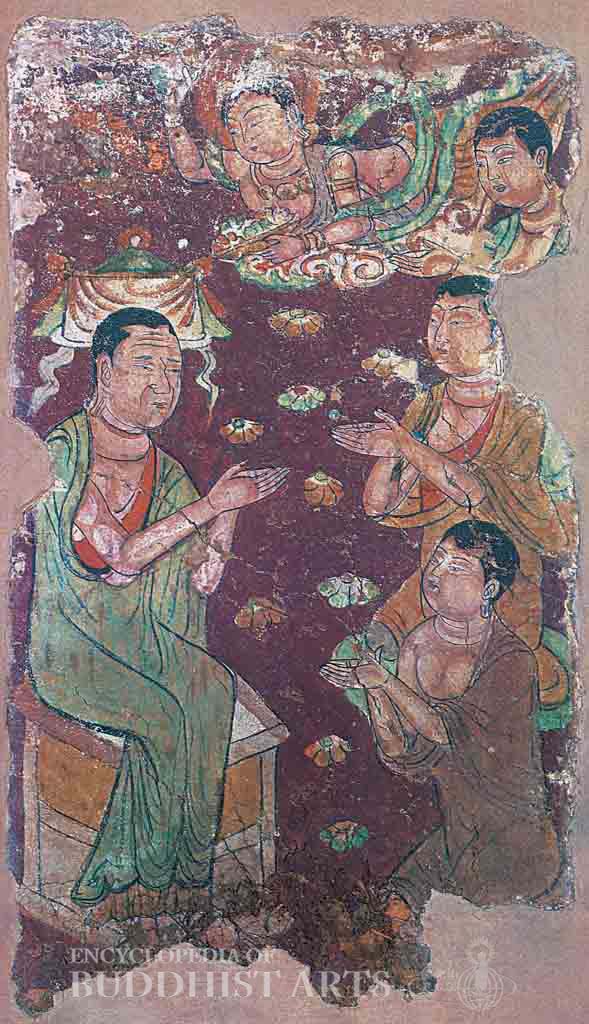
Qigxin Xorqu Buddhist Temple: Monastic Life (second fragment)
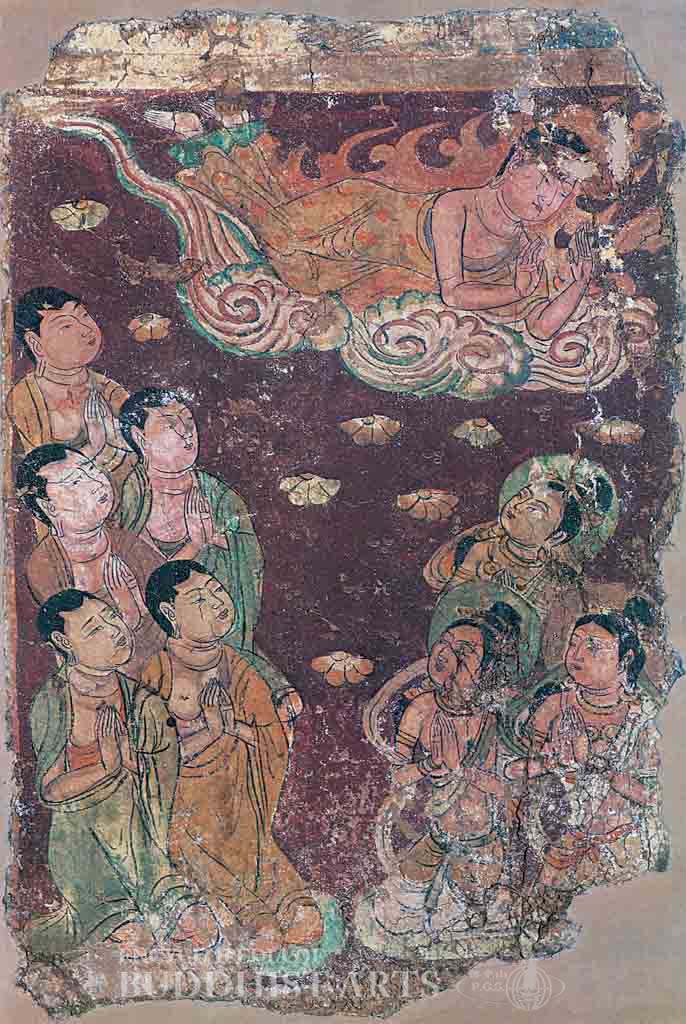
Qigxin Xorqu Buddhist Temple: Monastic Life (third fragment)
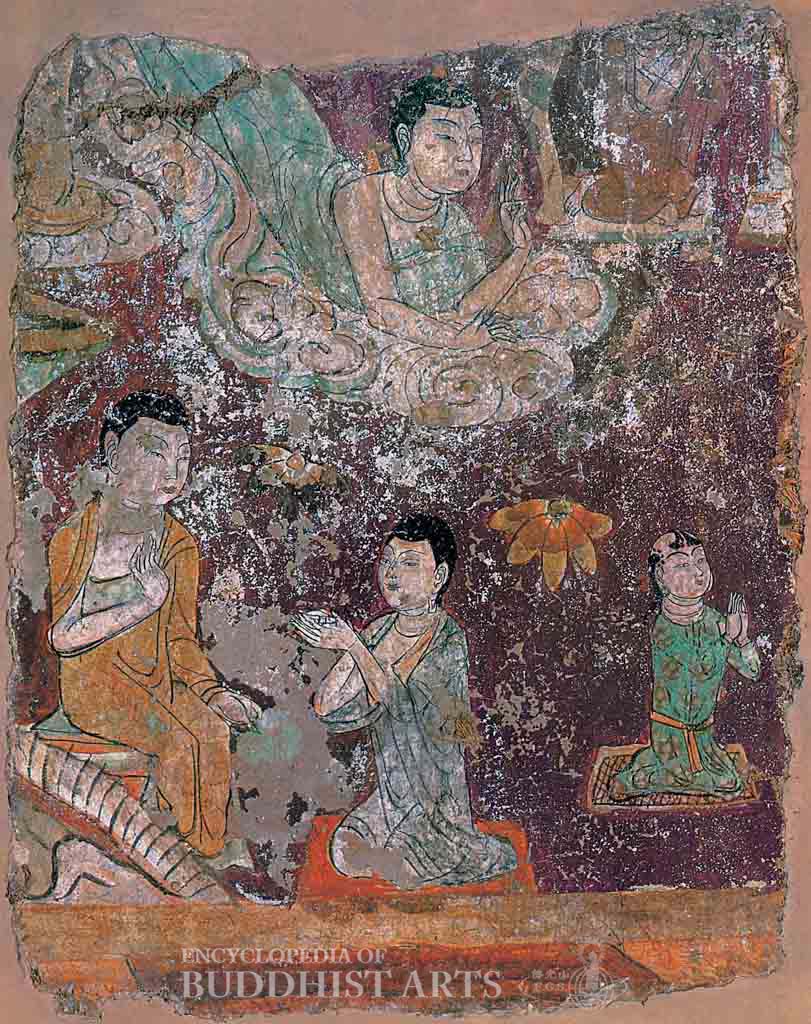
Qigxin Xorqu Buddhist Temple: Monastic Life (fourth fragment)
Qigxin Xorqu Buddhist Temple: Monastic Life (fifth fragment)
Qigxin Xorqu Buddhist Temple: Monastic Life (sixth fragment)
Qigxin Xorqu Buddhist Temple: Monastic Life (seventh fragment)
Qigxin Xorqu Buddhist Temple: Monastic Life (eighth fragment)
Qigxin Xorqu Buddhist Temple: Monastic Life
CHINA, Xinjiang, Bayingolin
These mural fragments were discovered in the ruins of Xorqu Buddhist Temple in Qigxin by Aurel Stein. Though the temple was destroyed by fire, the eleven fragments that Stein brought back to England are well-preserved.
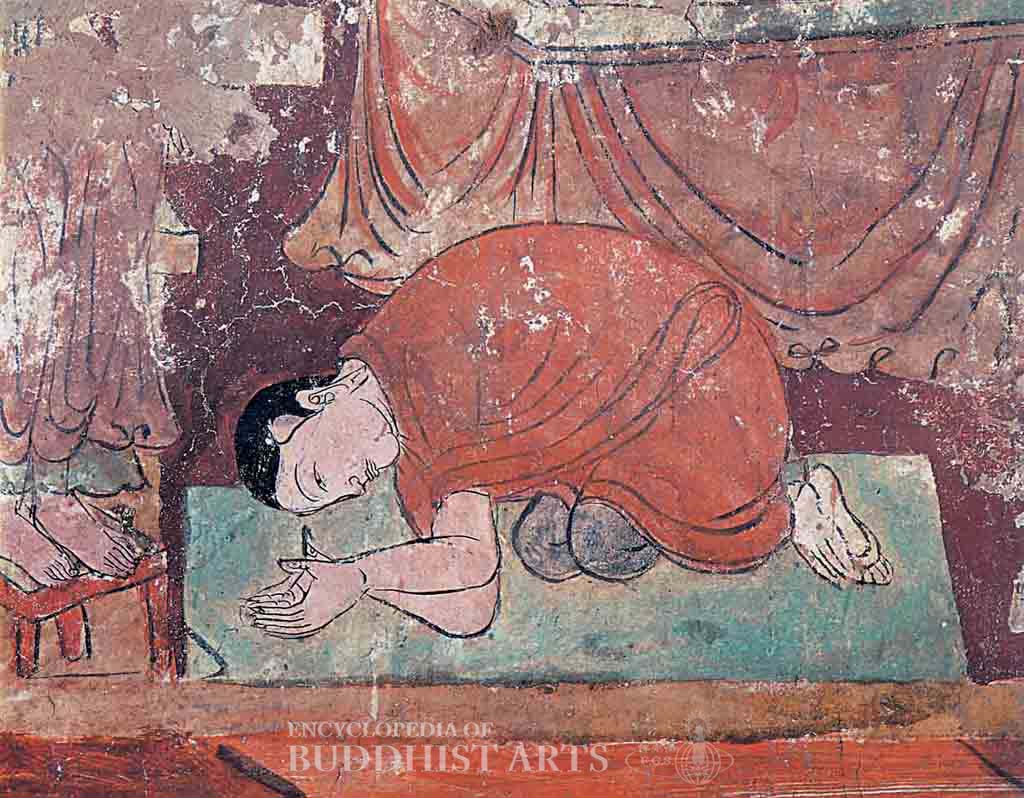
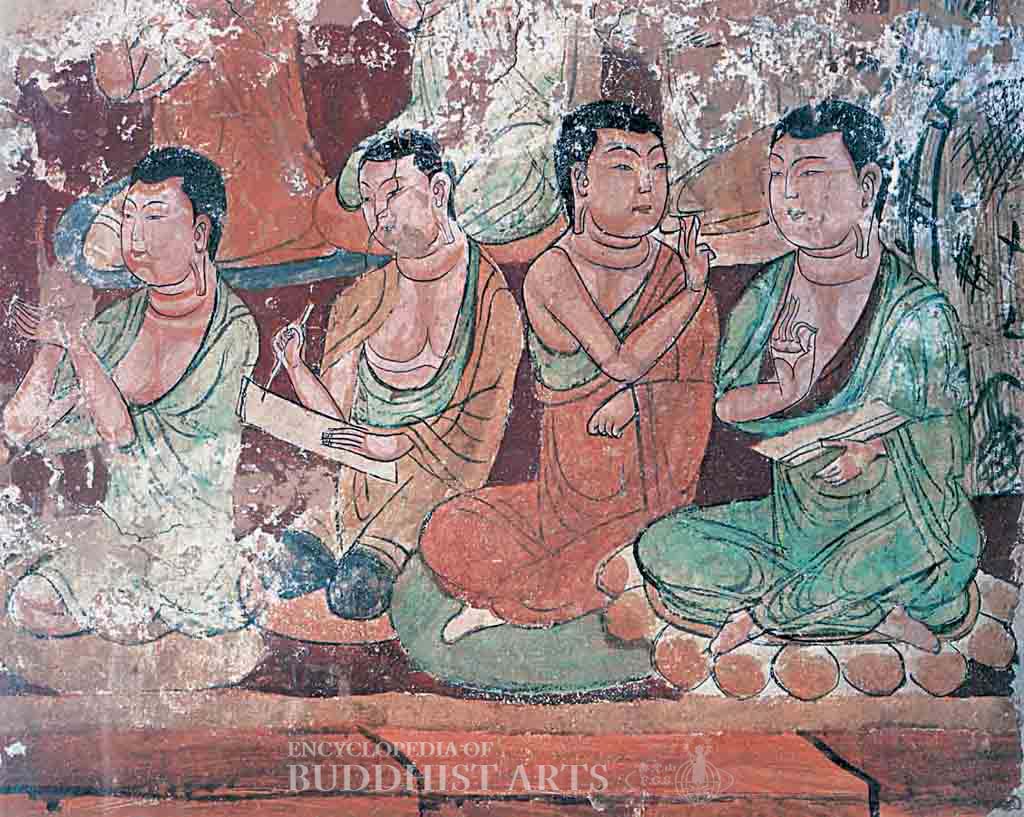
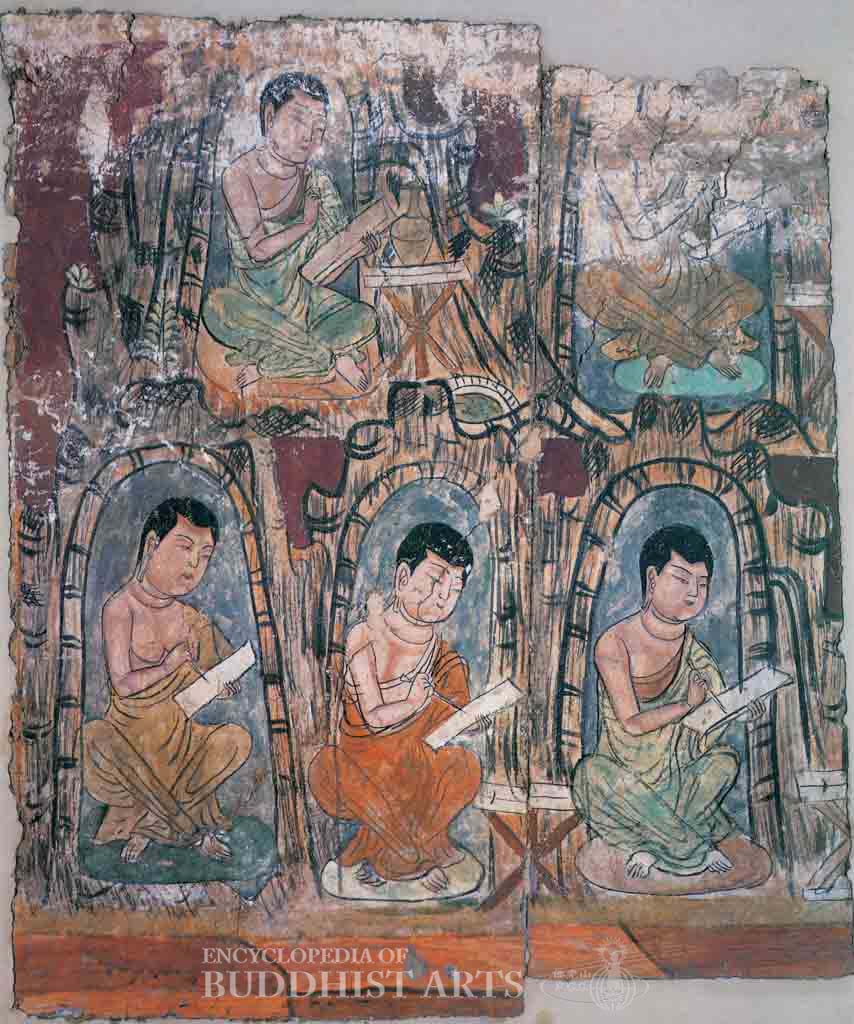
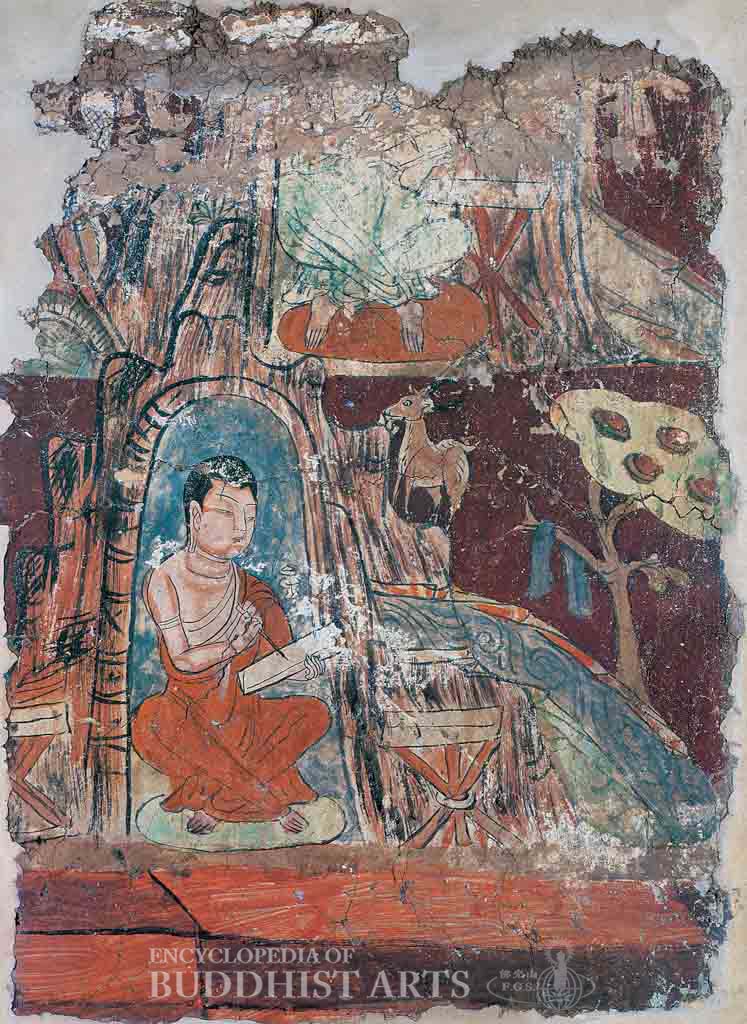
Eight of the pieces are shown here. The first four feature images of monks teaching the Dharma, while the last four depict monks worshipping, studying scriptures, writing, and conversing. On the first fragment, an aged monk is shown teaching four younger students. The senior monk is dressed in a monastic robe decorated with floral patterns. He holds a brush and appears to be writing. The four disciples join their palms or write as they listen to the teachings. A heavenly being holding a basket of flowers rests on clouds in the upper register. The second piece of the mural is similar to the first. An elder monk teaches three disciples as a heavenly being descends on a cloud from the skies above. In the upper register on the third fragment, a monk lies on a colorful cloud, surrounded by a flame-patterned glow. Below the cloud, five disciples and three Bodhisattvas gaze upwards and join their palms respectfully. In the lower right corner of the fourth fragment, a youth dressed in Uighur costume kneels and joins his palms. In the upper left corner, a monk descends on a cloud, while below a seated monk teaches the Dharma to his disciple. The Uighur clothing worn by the youth in this fragment suggests that these murals date from between the 9th and 10th centuries.
The remaining fragments are painted with colorful scenes of monks kneeling in prayer, discussing the Dharma, and writing. In one image, monks sit in caves writing and meditating. The caves are shown within mountains depicted in a simplistic style with curving lines. Mountains illustrated in this symbolic rather than realistic way can also be seen in the murals in the nearby Kizil Caves.
For more details, go to the Encyclopedia of Buddhist Arts: Painting P-Z, page 758.
Cite this article:
author = Hsingyun and Youheng and Youlu and Wilson, Graham and Manho and Mankuang and Huntington, Susan,
booktitle = {Encyclopedia of Buddhist Arts: Painting P-Z},
pages = 758,
title = {{Qigxin Xorqu Buddhist Temple: Monastic Life}},
volume = 16,
year = {2016}}