

Sixteen Arhats - Pindolabharadraja
Ink and color on silk
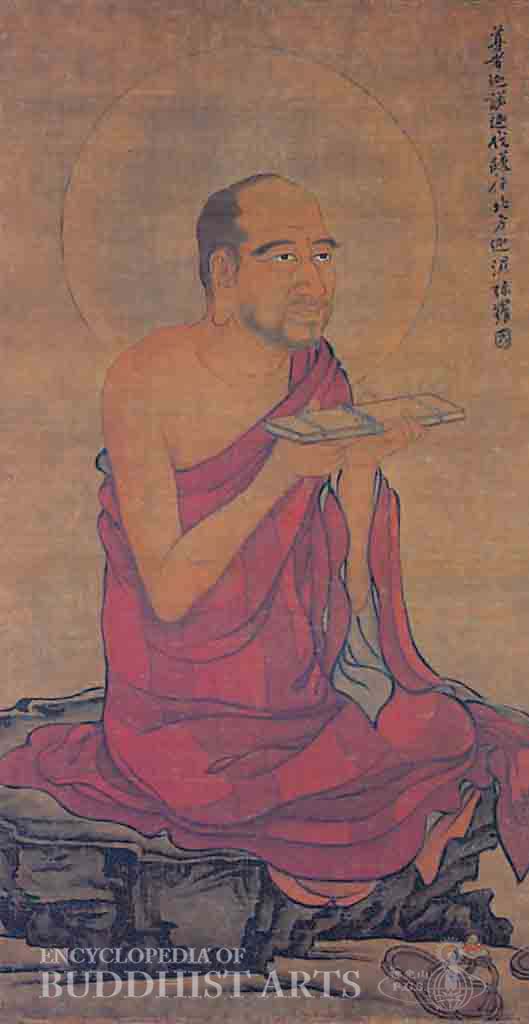
Sixteen Arhats - Kanakavatsa
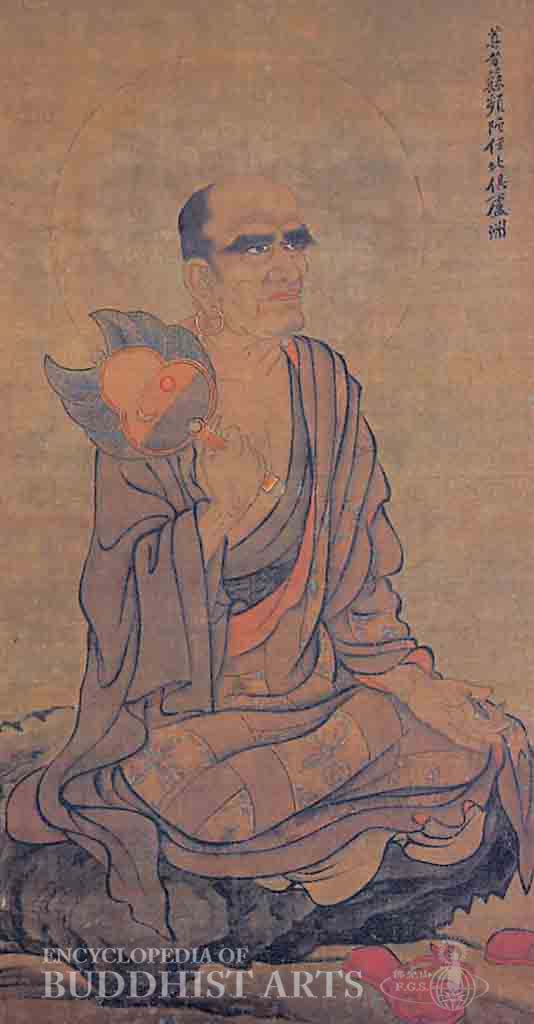
Sixteen Arhats - Subinda

Sixteen Arhats - Bhadra

Sixteen Arhats - Rahula
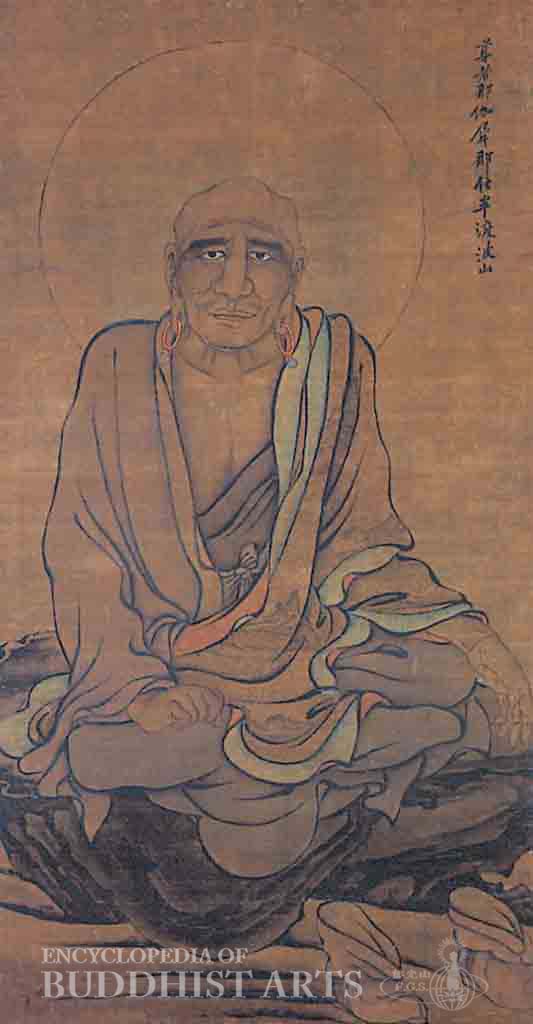
Sixteen Arhats - Nagasena

Sixteen Arhats - Ajita

Sixteen Arhats - Cudapanthaka
Sixteen Arhats
CHINA; Yuan dynasty
This set of paintings of the Sixteen Arhats was brought to Japan from China. The signature of the artist “Caishan Li Xu” is written on the rock seat of the first Arhat, a common practice during the Song dynasty (960–1279). “Caishan” might refer to a mountain or a place. Although this artist is not mentioned in Chinese records, the Japanese Kundaikan Sauchoki states that he lived in the Yuan dynasty. The ninth picture in the set was repainted during the Edo period (1615–1868).
All of the Arhats wear monastic robes and sit on rocks. Many of them have a distinctly Indian appearance, but they do not have the exaggerated facial features seen in the Arhat paintings by Guanxiu. Instead, their faces are realistically depicted with delicate lines. Thick flowing lines are used to portray the folds in their robes. The pictures were clearly made by a highly skilled artist well-versed in the elegant, scholarly painting style of the Southern Song dynasty (1127–1279). Inscriptions on each picture, thought to have been added later, state the name of the Arhat depicted. The alternating positions of the inscriptions and directions that the Arhats face suggest that the paintings could have been designed to hang in pairs.
For more details, go to the Encyclopedia of Buddhist Arts: Painting P-Z, page 851.
Cite this article:
author = Hsingyun and Youheng and Youlu and Wilson, Graham and Manho and Mankuang and Huntington, Susan,
booktitle = {Encyclopedia of Buddhist Arts: Painting P-Z},
pages = 851,
title = {{Sixteen Arhats}},
volume = 16,
year = {2016}}