
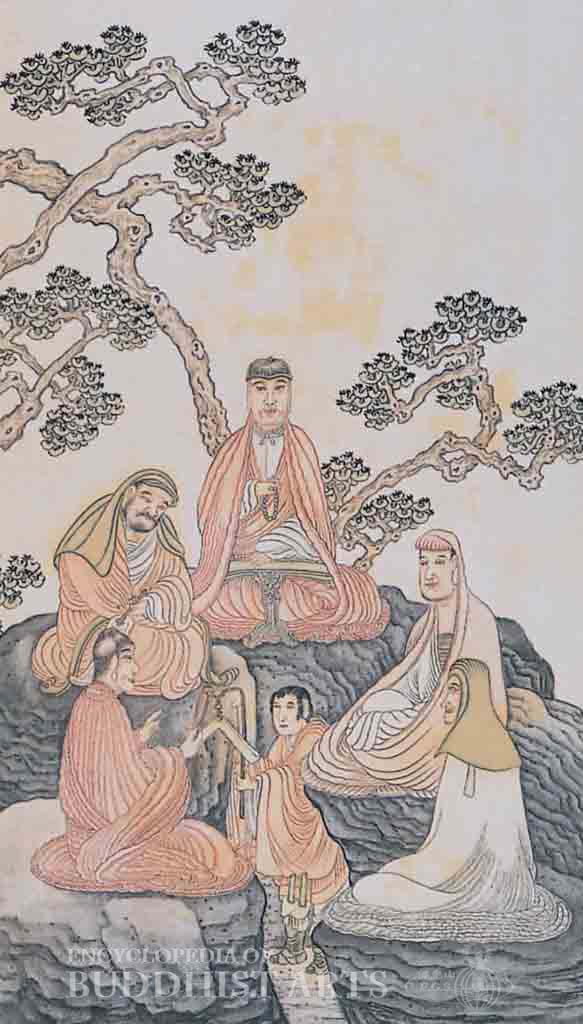
Twenty-Five Kinds of Perfect Understanding from the Surangama Sutra - Kaundinya
Ink and color on paper
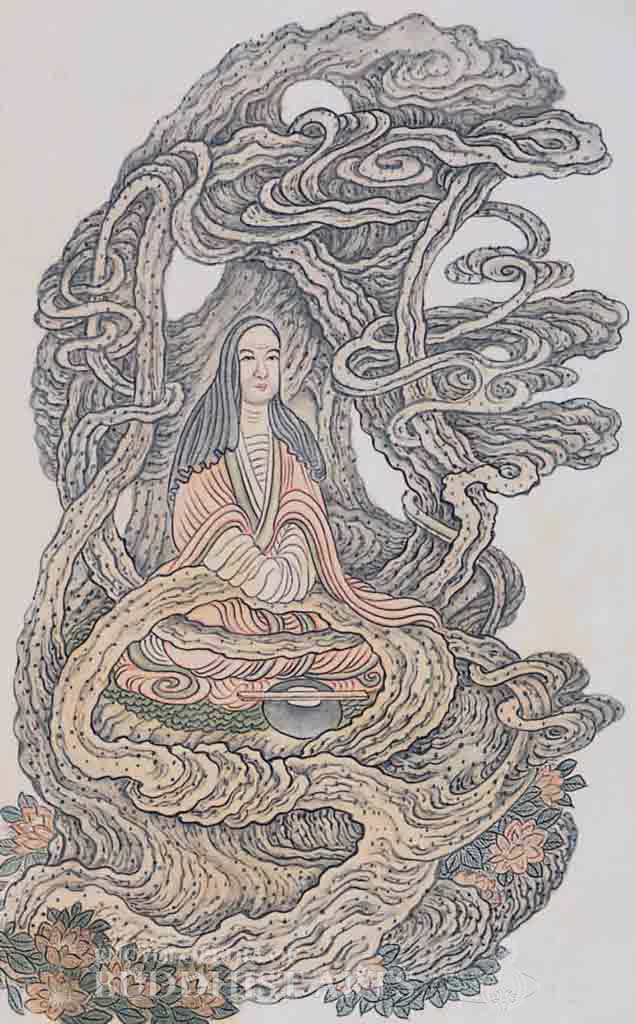
Twenty-Five Kinds of Perfect Understanding from the Surangama Sutra - Gavampati
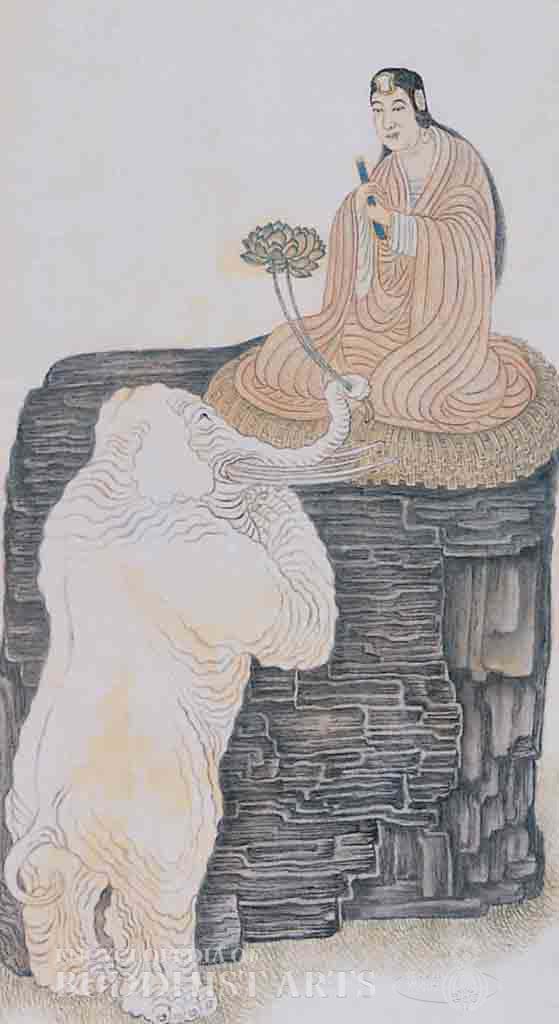
Twenty-Five Kinds of Perfect Understanding from the Surangama Sutra - Samantabhadra
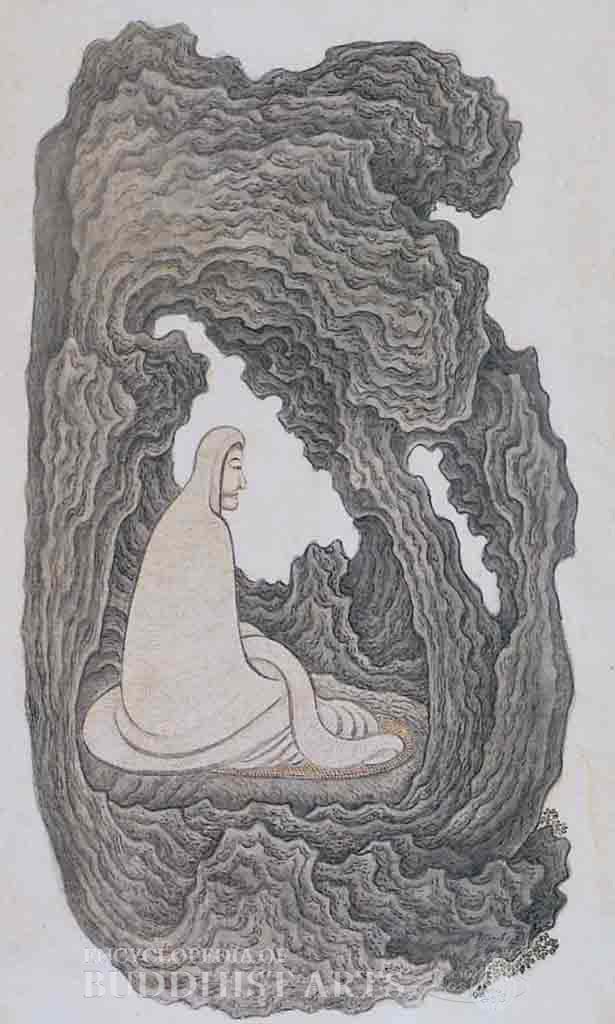
Twenty-Five Kinds of Perfect Understanding from the Surangama Sutra - Bodhidharma
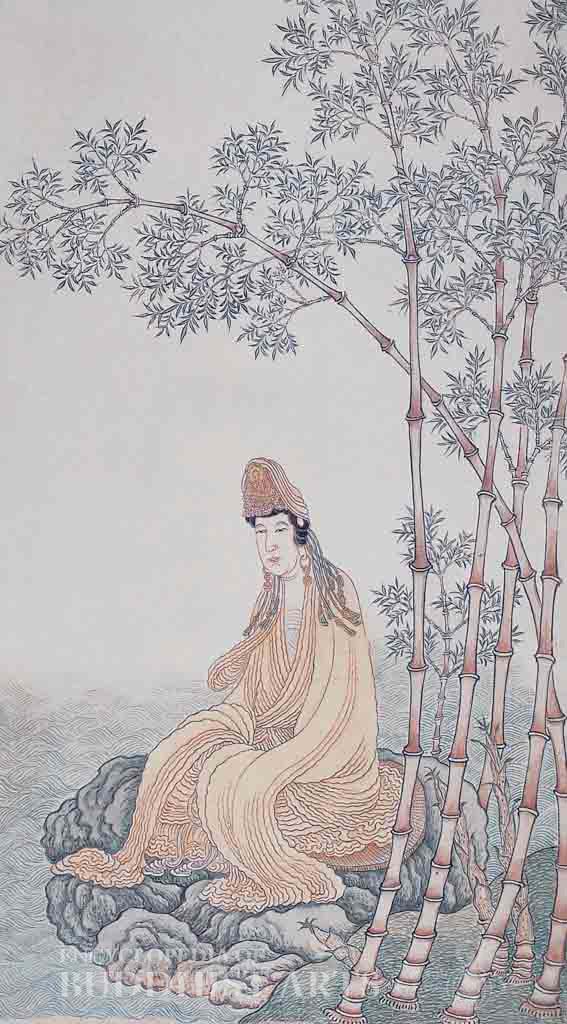
Twenty-Five Kinds of Perfect Understanding from the Surangama Sutra - Avalokitesvara
Twenty-Five Kinds of Perfect Understanding from the Surangama Sutra
CHINA; Ming dynasty
These pictures are part of an album containing 25 paintings that portray the Twenty-Five Kinds of Perfect Understanding described in the Surangama Sutra. Perfect understanding refers to complete and unobstructed mastery of the truth. The Twenty-Five Kinds of Perfect Understanding come from a question posed by the Buddha to Bodhisattvas and disciples: “What is the method for achieving perfect understanding?” Avalokitesvara, Samantabhadra, and other Bodhisattvas, along with Arhats such as Maudgalyayana and Mahakasyapa, each answered by describing their own method of attaining perfect understanding. The twenty-five approaches each make use of one of the six sense organs, the six senses, the six consciousnesses, or the seven elements.
In the upper right corner of each picture, there is a paper label with the names of the Buddhas, Bodhisattvas, Arhats and other figures appearing in the illustration. An appendix to the album by Chen Jiru and Dong Qichang states that the pictures were painted by the renowned Ming dynasty artist Wu Bin.
The paintings generally follow the descriptions in the sutra, but with minor deviations. For example, depictions of the Amitabha Buddha, representing the Pure Land, and Bodhidharma, representing Chan, both of whom are not mentioned in the sutra, appear at the beginning and end of the album respectively, possibly because of the popularity of the combined practice of Pure Land and Chan at the time.
The first picture depicts the first five disciples of the Buddha, including Kaundinya, and their attainment of perfect understanding through sound. The five monks sit on rocks, facing one another. The attendant standing in the center holding a chime symbolizing sound is not mentioned in the sutra.
The 9th picture shows Gavampati, who attained perfect understanding through the tongue. This is represented by the bowl and chopsticks placed in front of him. The 12th picture is of Samantabhadra, who attained perfect understanding through auditory consciousness. The Bodhisattva sits on mat atop a high rock, holding a scroll with both hands. The ears are clearly visible outside the hair. Below, a white elephant with six tusks stands on its hind legs, grasping two lotuses in its trunk and raising them in offering.
In the 22nd picture, Avalokitesvara Bodhisattva is shown attaining perfect understanding through the ears. Wearing a golden robe and a headdress topped with a Buddha image, the Bodhisattva sits serenely on a rock beside a river. In the 25th picture, Bodhidharma meditates in a cave. His robe is depicted with smooth lines that contrast with the rough stone.
Varied lines painted with expert technique result in highly nuanced images. Pale, elegant coloring allows the beautiful brushwork to stand out. The folds in the robe of each figure are depicted differently, and the surrounding vegetation and rocks are deliberately exaggerated or distorted, typical of Wu Bin’s innovative style.
For more details, go to the Encyclopedia of Buddhist Arts: Painting P-Z, page 950.
Cite this article:
author = Hsingyun and Youheng and Youlu and Wilson, Graham and Manho and Mankuang and Huntington, Susan,
booktitle = {Encyclopedia of Buddhist Arts: Painting P-Z},
pages = 950,
title = {{Twenty-Five Kinds of Perfect Understanding from the Surangama Sutra}},
volume = 16,
year = {2016}}