
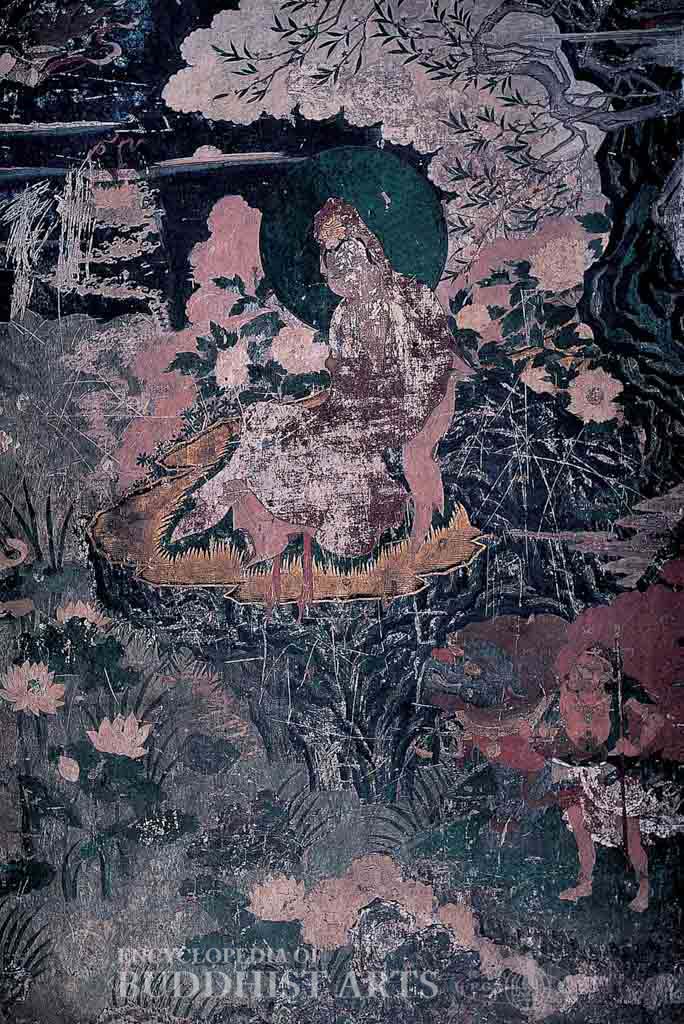
Dadingge Temple Murals: Manjusri; 196 x 135 cm
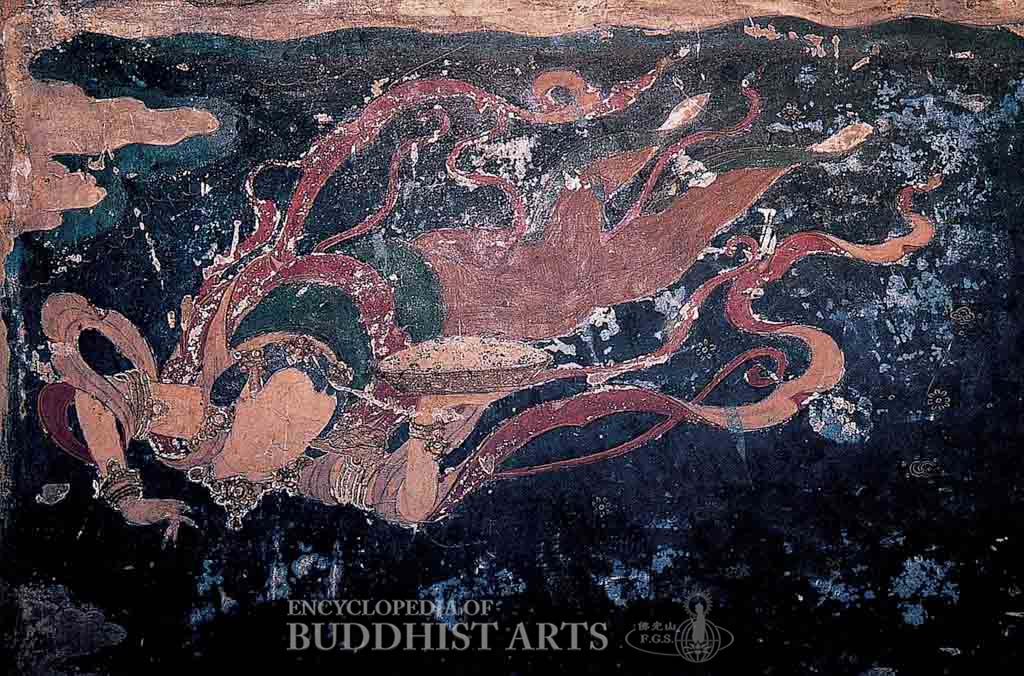
Dadingge Temple Murals: Manjusri - Apsara
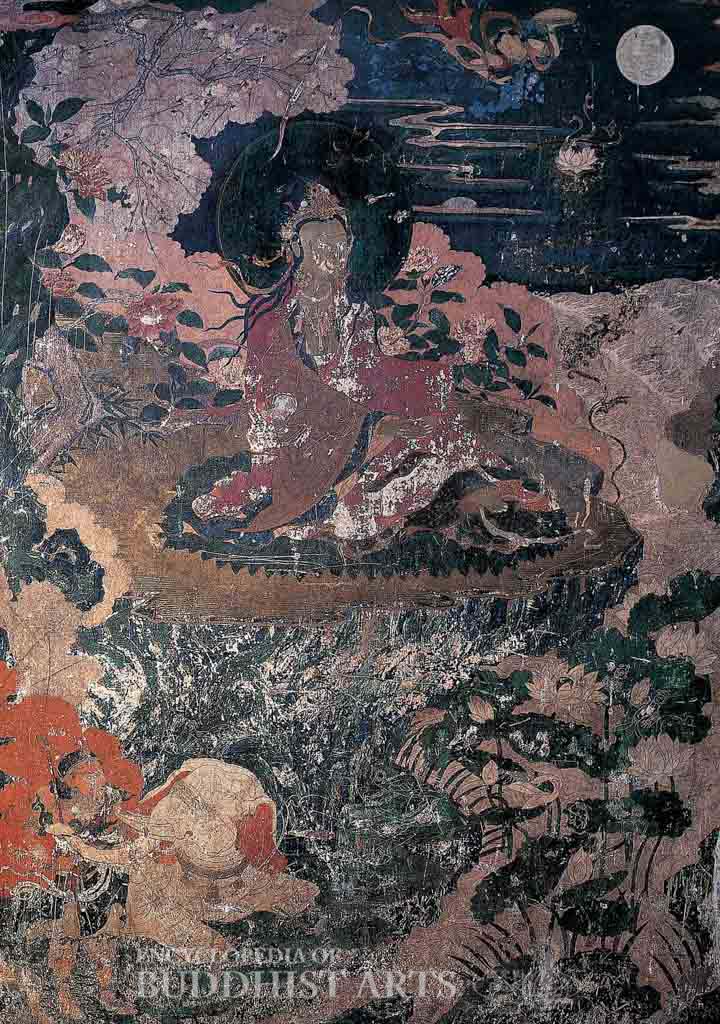
Dadingge Temple Murals: Samantabhadra
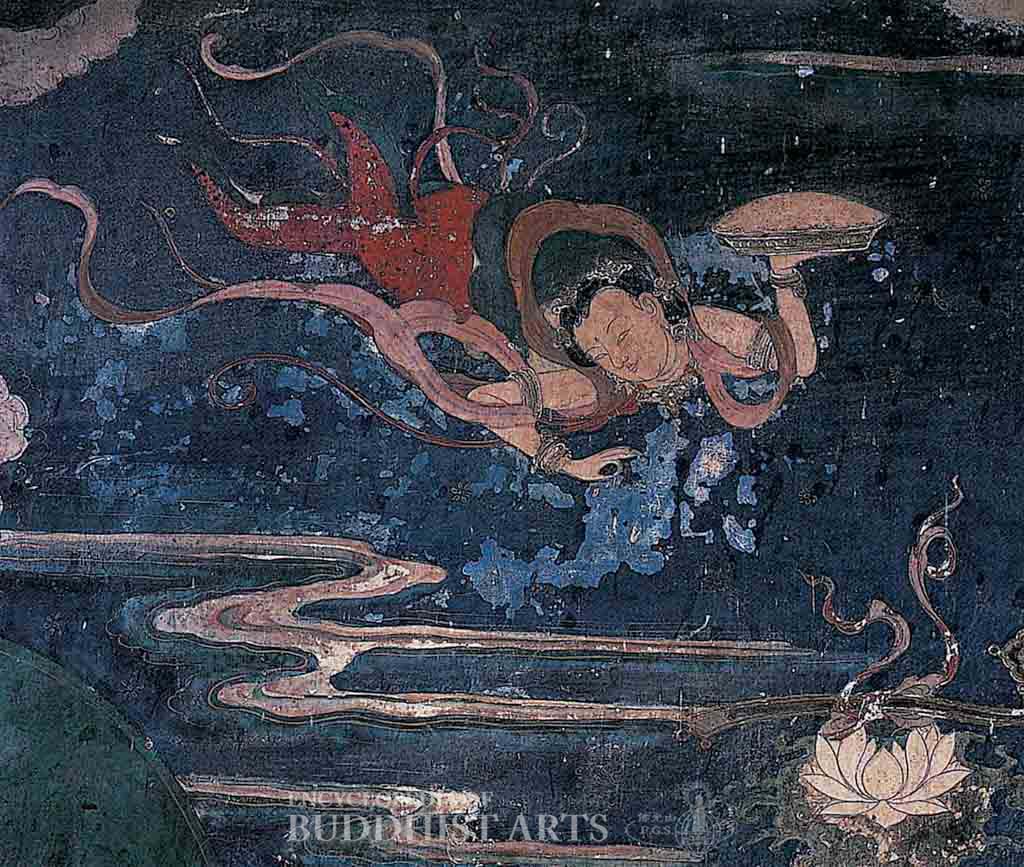
Dadingge Temple Murals: Samantabhadra - Apsara
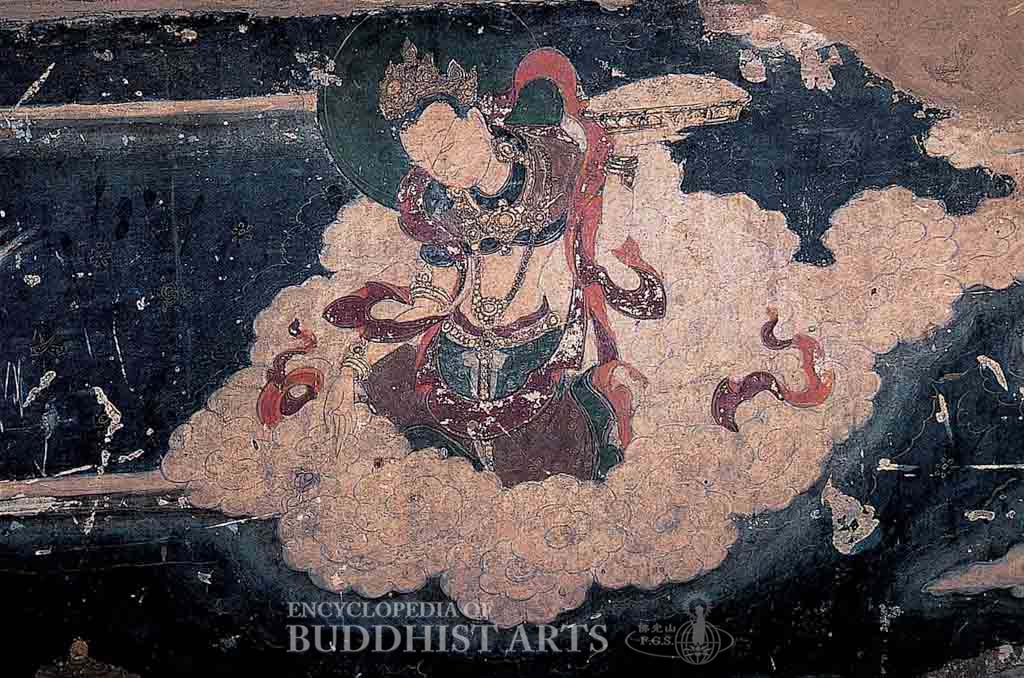
Dadingge Temple Murals: Avalokitesvara - Apsara
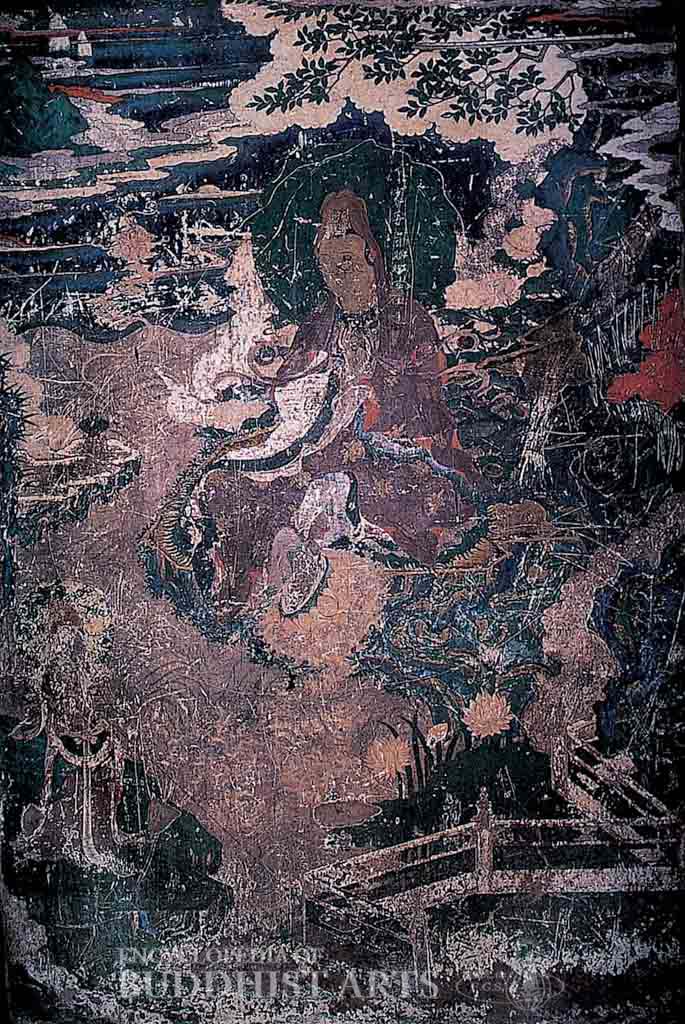
Dadingge Temple Murals: Mahasthamaprapta
Dadingge Temple Murals
CHINA, Yunnan, Lijiang; Ming dynasty
These murals are painted at Dadingge Temple in the ancient town of Baisha in Lijiang, Yunnan. Lijiang, located on the main road from Yunnan to Sichuan and Tibet, has a large collection of religious murals. Dadingge Temple was constructed between 1598 and 1623, and underwent renovation during the Qing dynasty (1644–1911). Presently, only seven of the original eighteen murals remain intact on the north, south, and east walls of the main hall. The murals in the auxiliary halls have deteriorated. In the mural on the east wall of the main hall, Cakrasamvara, Kalachakra, and Hevajra are shown embracing their consorts. Avalokitesvara, Manjusri, Samantabhadra, and Mahasthamaprapta Bodhisattvas are painted on the north and south walls. Each Bodhisattva sits within a separate naturalistic scene. Samantabhadra, with hands wrapped around the right knee, sits upon a prayer mat placed on a rock by a pond. The plum trees and peonies beside the Bodhisattva are in bloom. In the upper right corner, a flying apsara scatters flowers beside a full moon. A mahout stands beside a white elephant in the lower left corner. The images of the other three Bodhisattvas are similarly composed. The central figures are surrounded by trees, flowers, and flying apsaras. The murals are painted in a style similar to that seen in the art of the Central Plains region of China.
For more details, go to the Encyclopedia of Buddhist Arts: Painting A-H, page 174.
Cite this article:
author = Hsingyun and Youheng and Youlu and Wilson, Graham and Manho and Mankuang and Huntington, Susan,
booktitle = {Encyclopedia of Buddhist Arts: Painting A-H},
pages = 174,
title = {{Dadingge Temple Murals}},
volume = 14,
year = {2016}}