
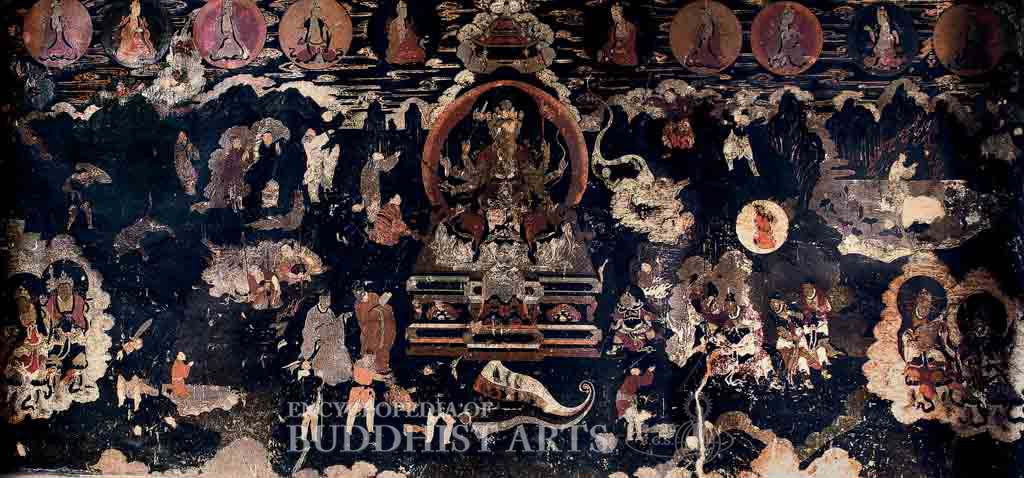
Dabaoji Palace: Illustration of the Lotus Sutra - Universal Gateway Chapter
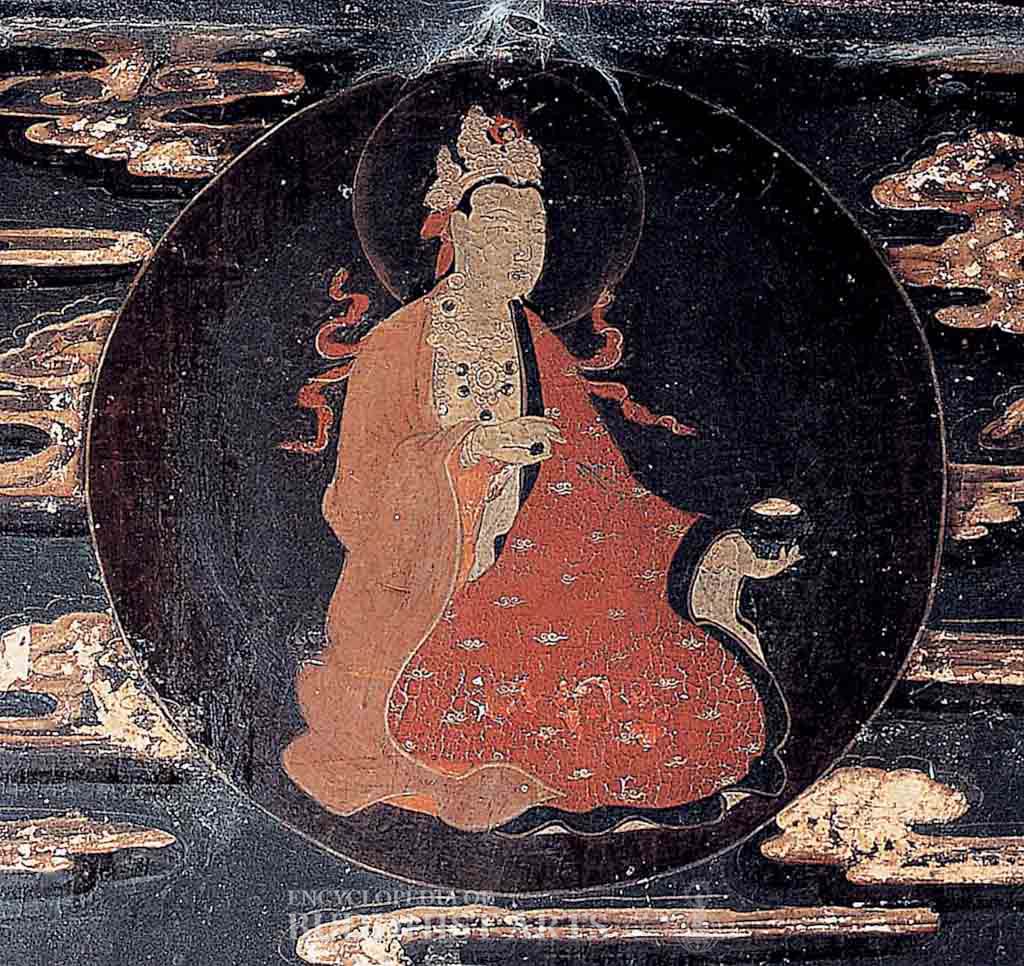
Dabaoji Palace: Illustration of the Lotus Sutra - Universal Gateway Chapter - Avalokitesvara Bodhisattva
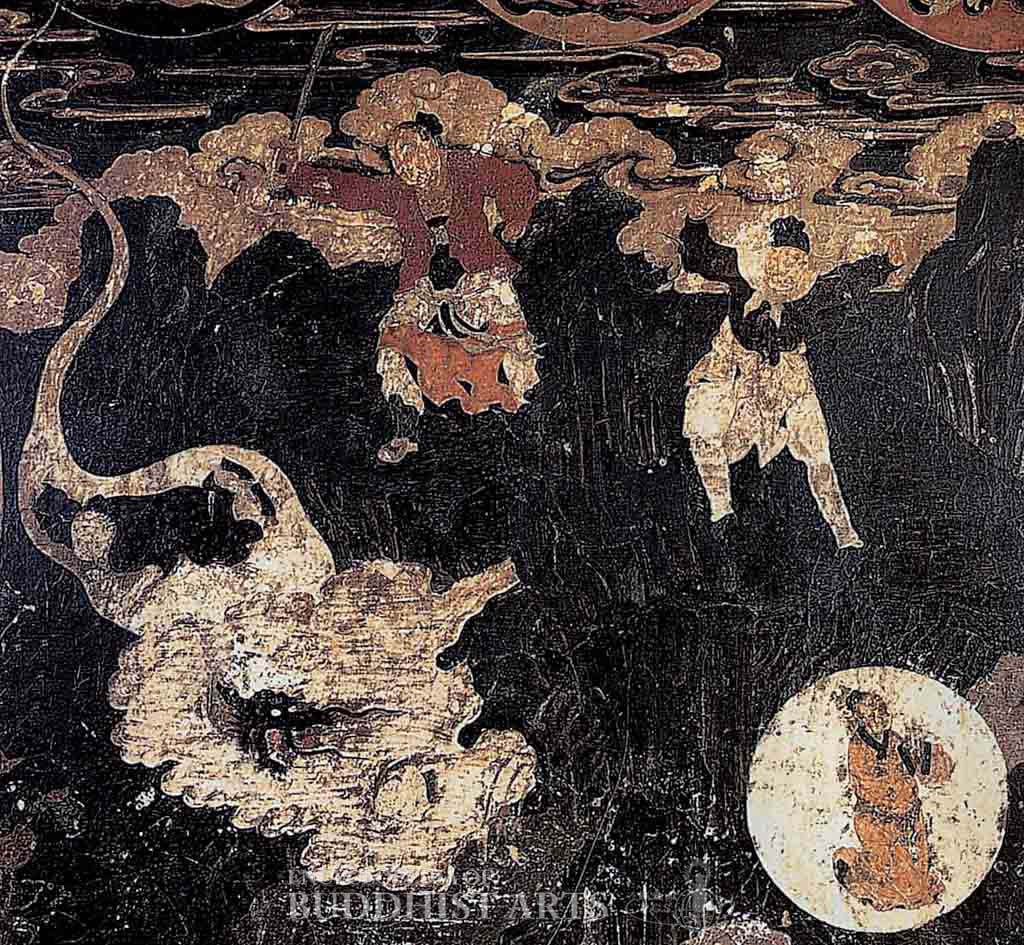
Dabaoji Palace: Illustration of the Lotus Sutra - Universal Gateway Chapter - Calamity of Flood
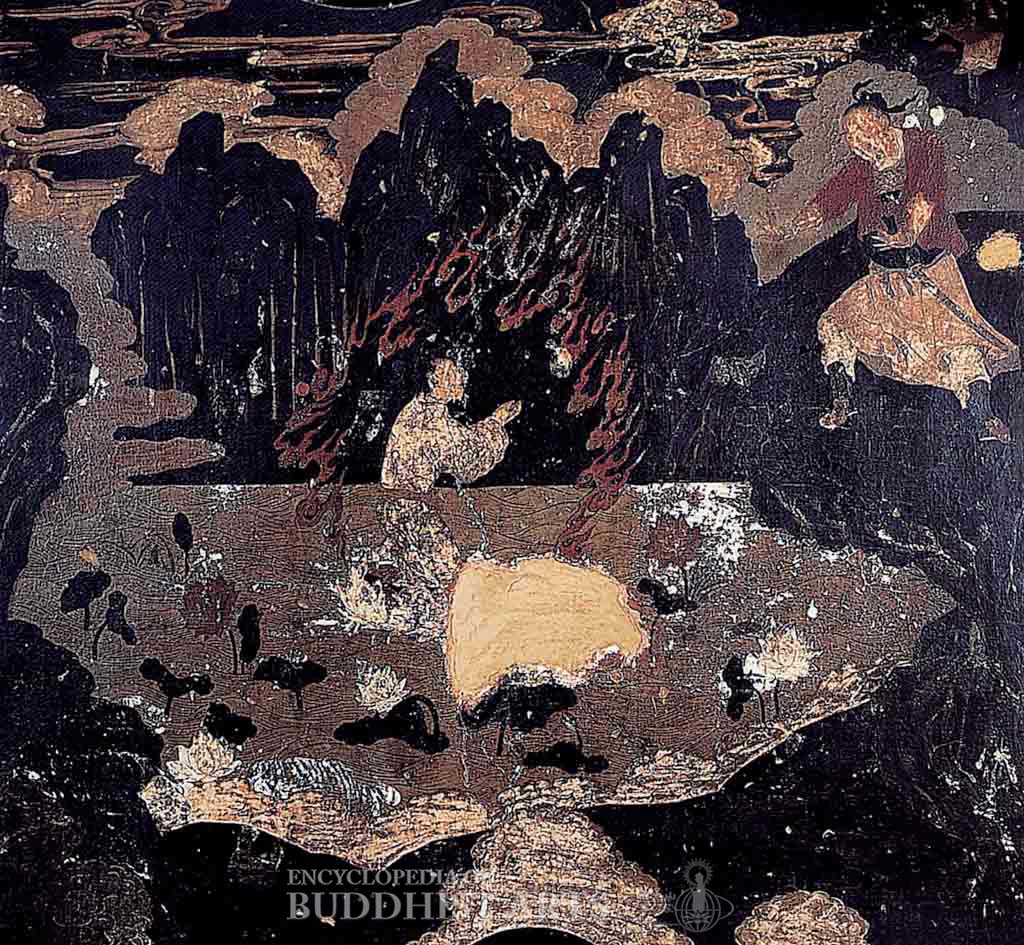
Dabaoji Palace: Illustration of the Lotus Sutra - Universal Gateway Chapter - Calamity of Fire
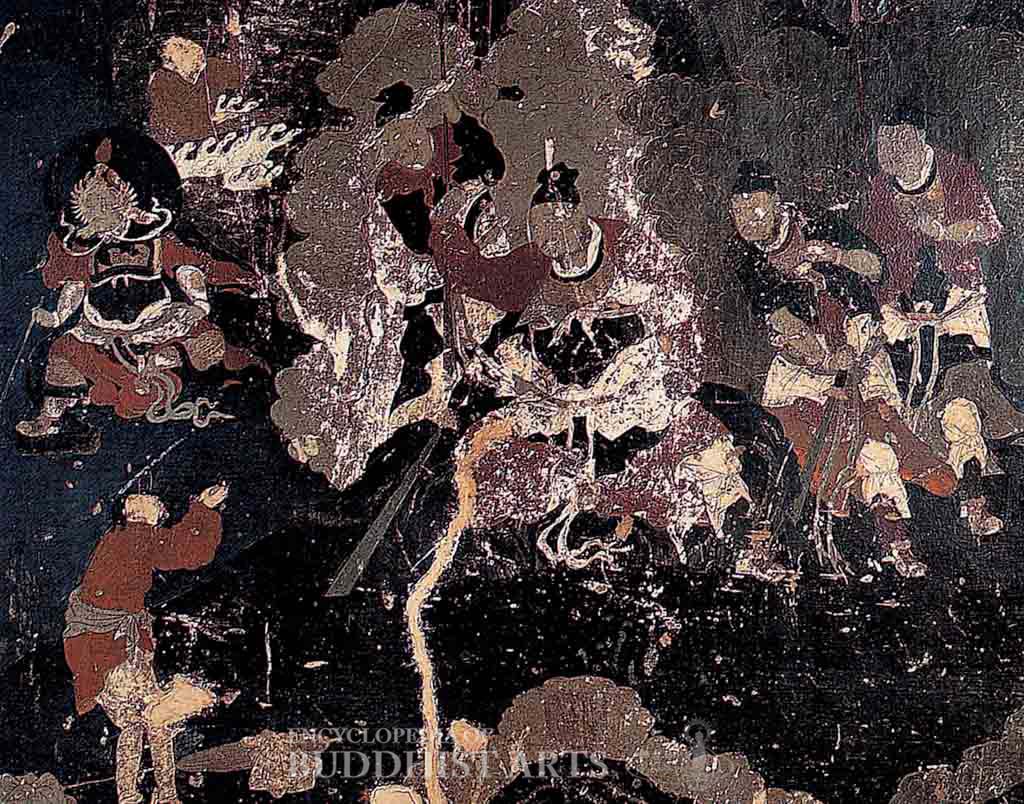
Dabaoji Palace: Illustration of the Lotus Sutra - Universal Gateway Chapter - Encounter with Robbers
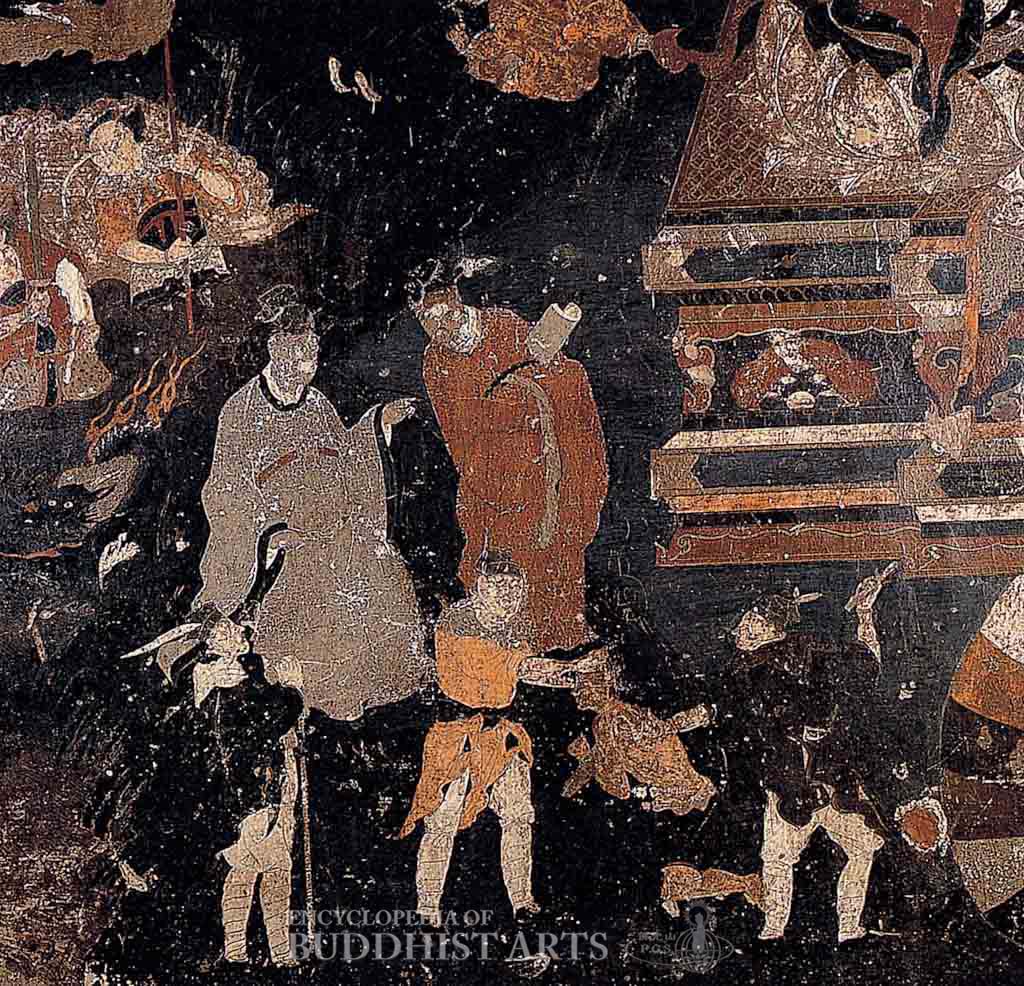
Dabaoji Palace: Illustration of the Lotus Sutra - Universal Gateway Chapter - Death Sentence
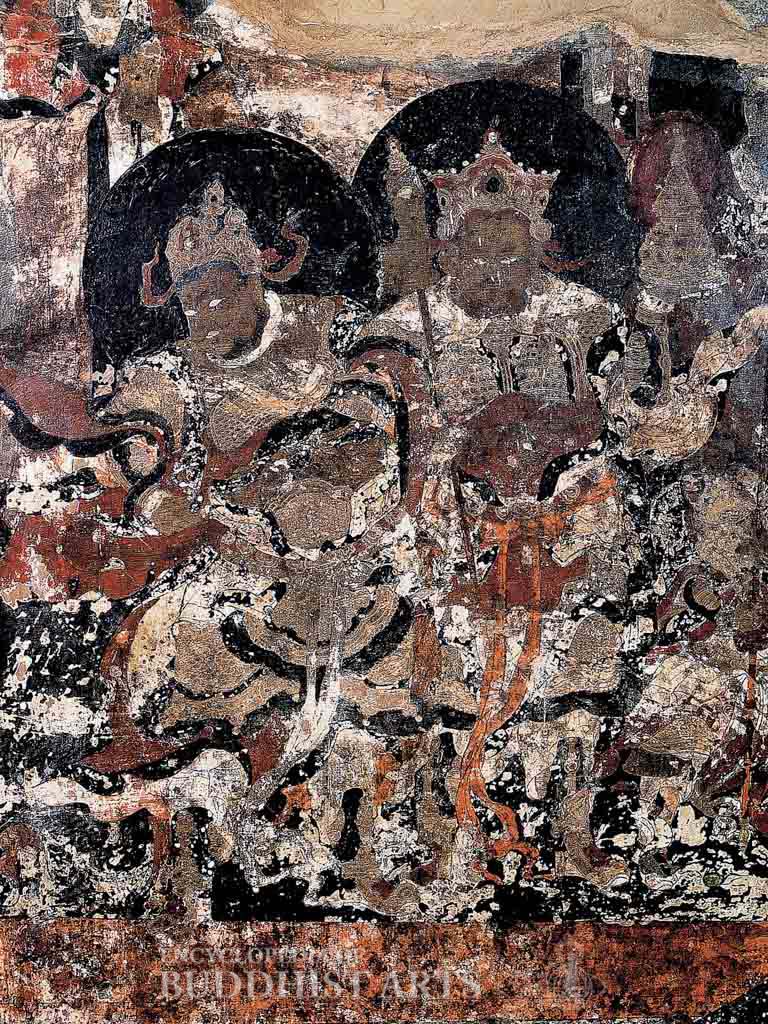
Dabaoji Palace: Illustration of the Lotus Sutra - Universal Gateway Chapter - Virupaksa and Vaisravana
Dabaoji Palace: Illustration of the Lotus Sutra - Universal Gateway Chapter
CHINA, Yunnan, Lijiang; Ming dynasty
This mural on the north wall of Dabaoji Palace is based on the “Universal Gateway Chapter” of the Lotus Sutra. The central figure, Three-Headed, Eight-Armed Avalokitsevara, wears a crown decorated with a Buddha image and sits in full lotus position on a lotus throne. The Bodhisattva holds different objects including an axe, a bow, arrows, a spear, and a sword. The lotus throne rests on a Sumeru base which is inscribed in gold with the “female water sheep year” of the Tibetan calender, which corresponds to 1583.
Surrounding Avalokitesvara are scenes described in the “Universal Gateway Chapter” in which sentient beings are rescued from disaster by reciting Avalokitesvara’s name with single minded devotion. The scenes include the calamity of flood, the calamity of fire, an encounter with robbers, and a death sentence. In the depiction of the calamity of fire, a figure is surrounded by flames but is miraculously saved when a lotus pond appears beneath his feet. Another scene shows a group of people encountering a tiger in the mountains. It turns away when they call upon the Bodhisattva.
The canopy in the middle of the upper register is flanked by five different images of Avalokitesvara on each side. On the left side of the lower register, Virupaksa, Heavenly King of the West, and Vaisravana, Heavenly King of the North, stand within clouds. Dhrtarastra, Heavenly King of the East, and Virudhaka, Heavenly King of the South, are shown on the right. All of the Heavenly Kings wear headdresses and armor. The common people depicted in the mural are portrayed realistically, providing insight into dress and customs during the Ming dynasty (1368–1644).
For more details, go to the Encyclopedia of Buddhist Arts: Painting A-H, page 166.
Cite this article:
author = Hsingyun and Youheng and Youlu and Wilson, Graham and Manho and Mankuang and Huntington, Susan,
booktitle = {Encyclopedia of Buddhist Arts: Painting A-H},
pages = 166,
title = {{Dabaoji Palace: Illustration of the Lotus Sutra - Universal Gateway Chapter}},
volume = 14,
year = {2016}}