
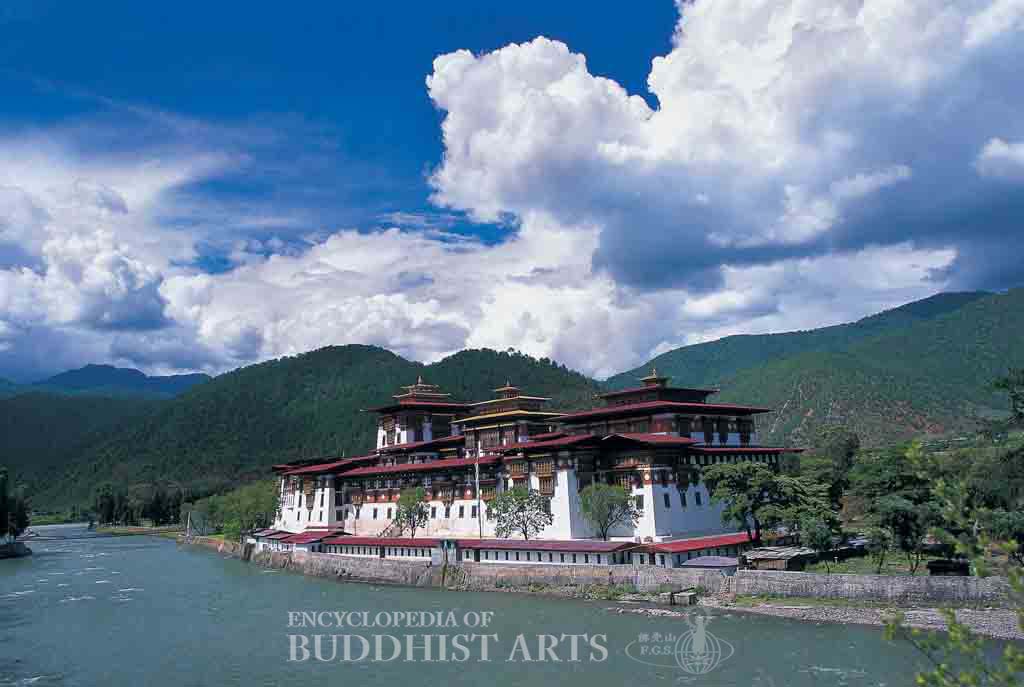
Punakha Dzong
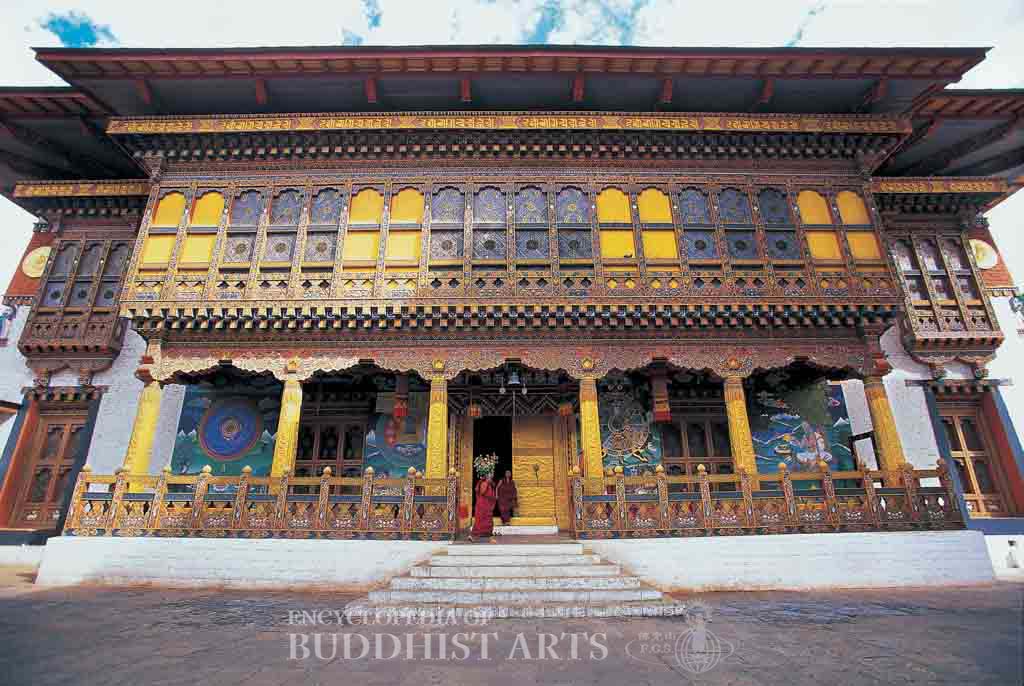
Punakha Dzong
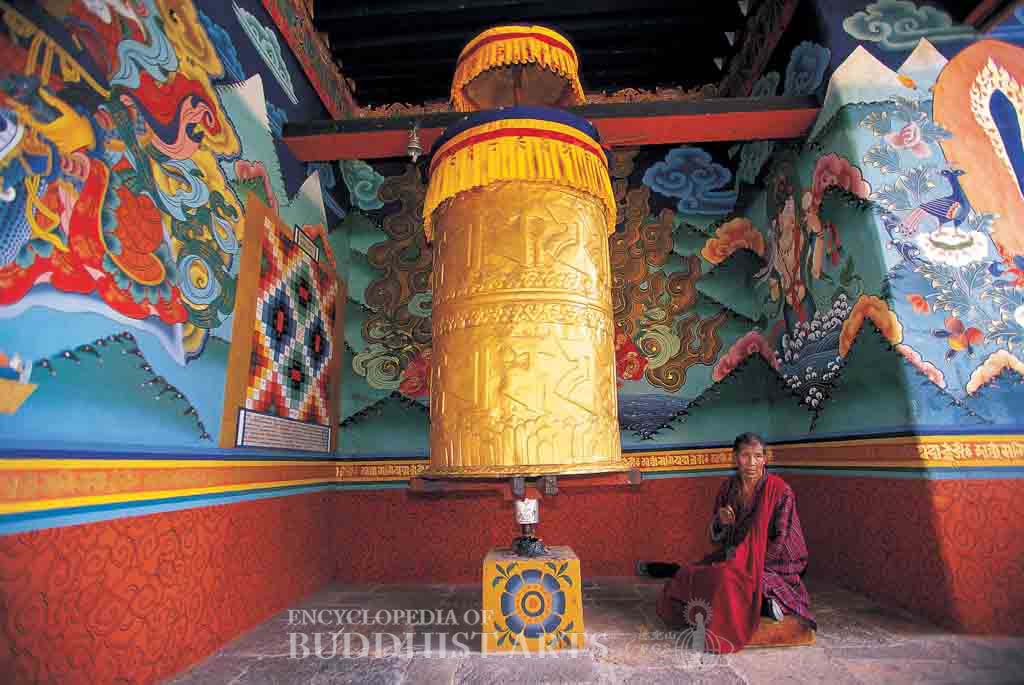
Punakha Dzong (interior)
Punakha Dzong
BHUTAN, Punakha
This dzong or fortress of monastery is also known as Pungtang Dechen Photrang Dzong, which means the Palace of Great Happiness. It is located at the confluence of the Pho Chhu and Mo Chhu rivers and used to be the capital of Bhutan. The dzong was built in 1637 by Shabdrung Ngawang Namgyal (reigned 1629–1651), the first religious-political ruler of Bhutan. In 1907 Gongsar Ugyen Wangchuck (reigned 1907–1926), the first king of Bhutan, held his coronation here. It was damaged by an earthquake, two floods, and six fires. It was completely reconstructed according to its original design by the fourth king, Jigme Singye Wangchuck (reigned 1972–2006). It is now the local political and religious center. Every winter the National Master leads a group of monastics in cultivation at this site.
The north-facing building occupies 1.3 ha and has a traditional dzong layout. It is rectangular and consists of clusters of buildings with four stories or more. There are five main stupa towers with square golden pyramidal roofs surmounted by spires. The exteriors of the buildings appear identical: they are completely white with the exception of a red ocher band at the top and wooden window frames.
Shabdrung Ngawang Namgyal lived here in retirement and molded more than 10,000 small clay stupas, as well as producing some Buddhist paintings. They are the treasures of the dzong.
For more details, go to the Encyclopedia of Buddhist Arts: Architecture M-S, page 849.
Cite this article:
author = Hsingyun and Youheng and Johnson, Peter and Mankuang and Lancaster, Lewis,
booktitle = {Encyclopedia of Buddhist Arts: Architecture M-S},
pages = 849,
title = {{Punakha Dzong}},
volume = 3,
year = {2016}}