
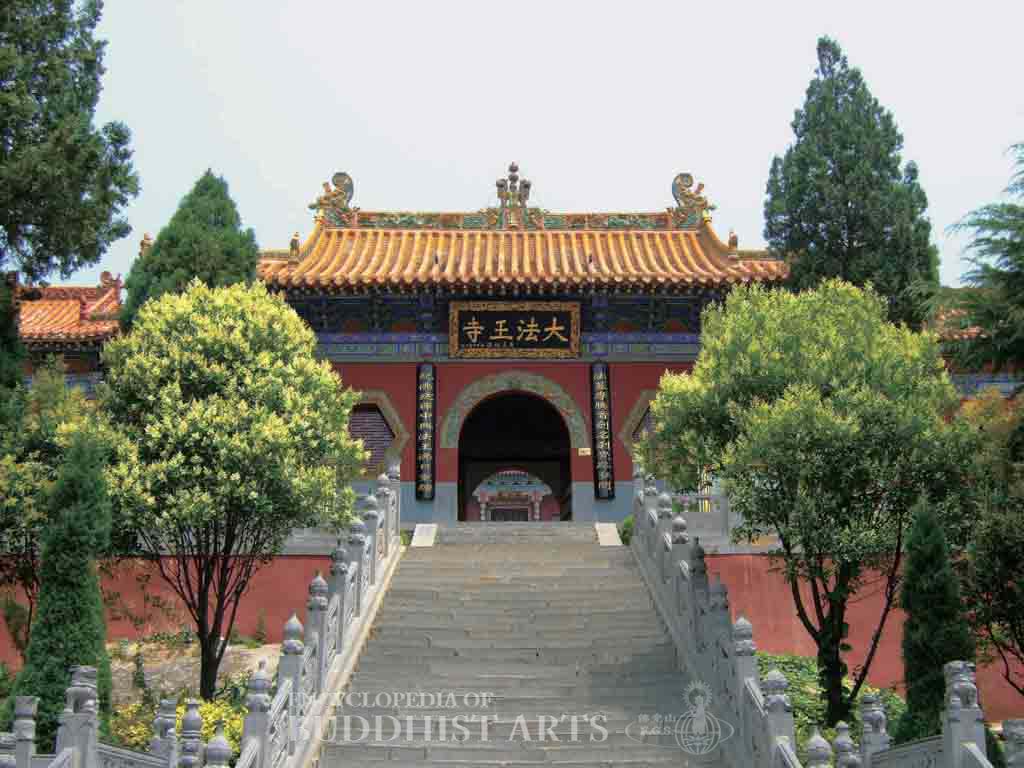
Fawang Temple: Main Temple Gate
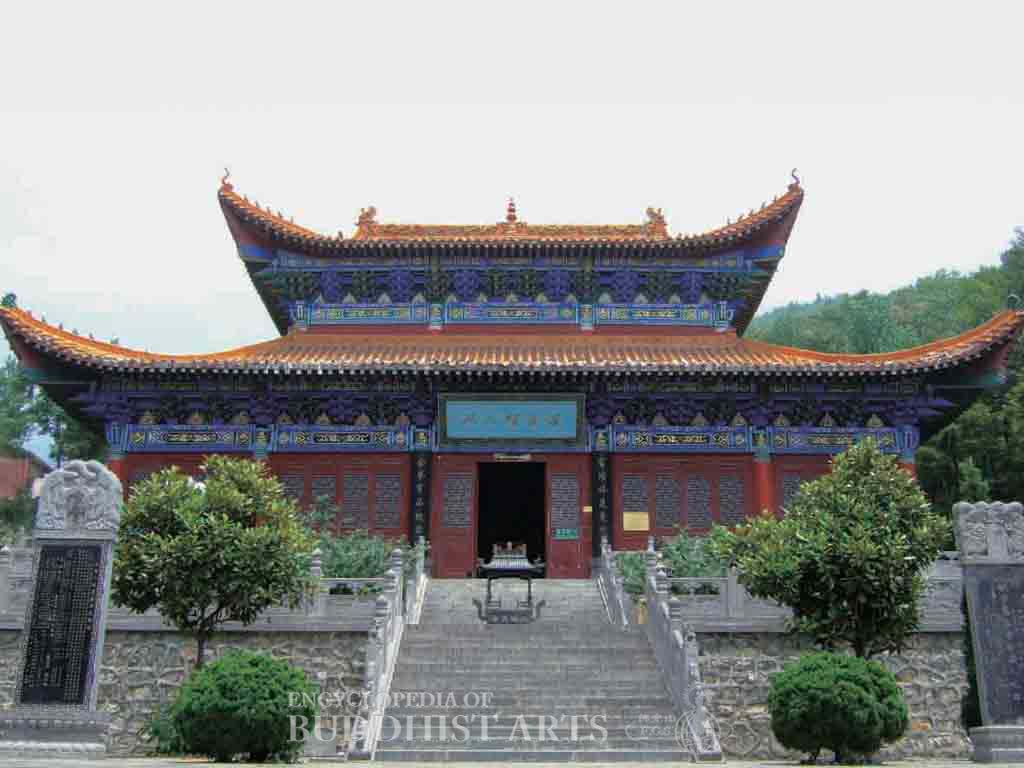
Fawang Temple: Western Sage Hall
Fawang Temple
CHINA, Henan, Zhengzhou
Fawang means Dharma King. The temple was built in 71 CE during the Eastern Han dynasty, only three years after the famous White Horse Temple in Luoyang. It is one of the earliest temples built after Buddhism was introduced into China. The emperor built it for Kasyapa Matanga and Dharmaratna, eminent monks from India, to translate the sutras which they had brought with them. The temple eventually collapsed due to damage from natural disasters, war, and vandalism. It was reconstructed in 1987.
Built to integrate with the mountainous terrain, the temple has a total of seven courtyards. The buildings include the main temple gate, Future Buddha Hall, Heavenly King Hall, Great Hero Hall, Ksitigarbha Hall, Western Sage Hall, and the sutra repository. Six brick pagodas are located around the temple. Four were constructed during the Tang dynasty (618–907) and two were built during the Yuan (1271–1368) and Qing (1644–1911) dynasties.
The three-bay wide main temple gate has a hip-and-gable roof covered in yellow glazed tiles. Within the Great Hero Hall there is a large Buddha niche housing colorful statues of Sakyamuni Buddha, the Medicine Buddha, and Amitabha Buddha, as well as statues of Mahakasyapa and Ananda. The Sage of the West Hall is also known as the Vairocana Pavilion. It is five bays wide and has a roof covered in yellow glazed tiles. Vairocana Buddha is enshrined within the hall.
For more details, go to the Encyclopedia of Buddhist Arts: Architecture A-F, page 291.
Cite this article:
author = Hsingyun and Youheng and Johnson, Peter and Mankuang and Lancaster, Lewis,
booktitle = {Encyclopedia of Buddhist Arts: Architecture A-F},
pages = 291,
title = {{Fawang Temple}},
volume = 1,
year = {2016}}