
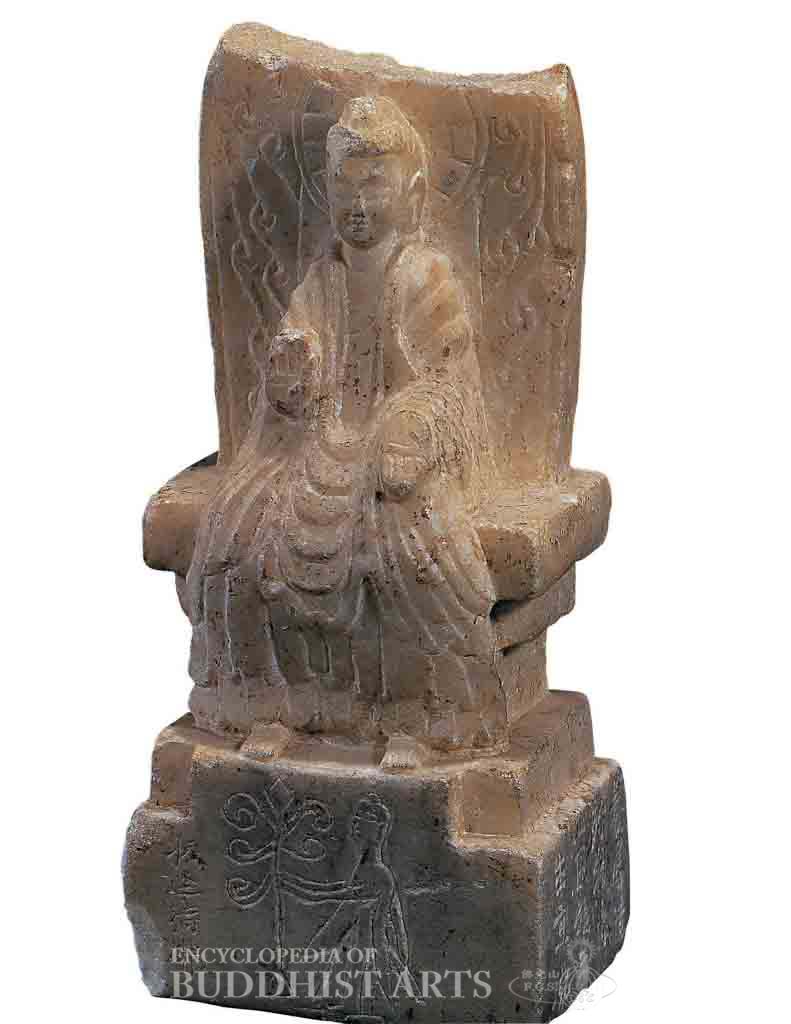
Dingzhou: Northern Dynasty Sculptures - Seated Maitreya; Northern Wei dynasty, dated 523
Marble
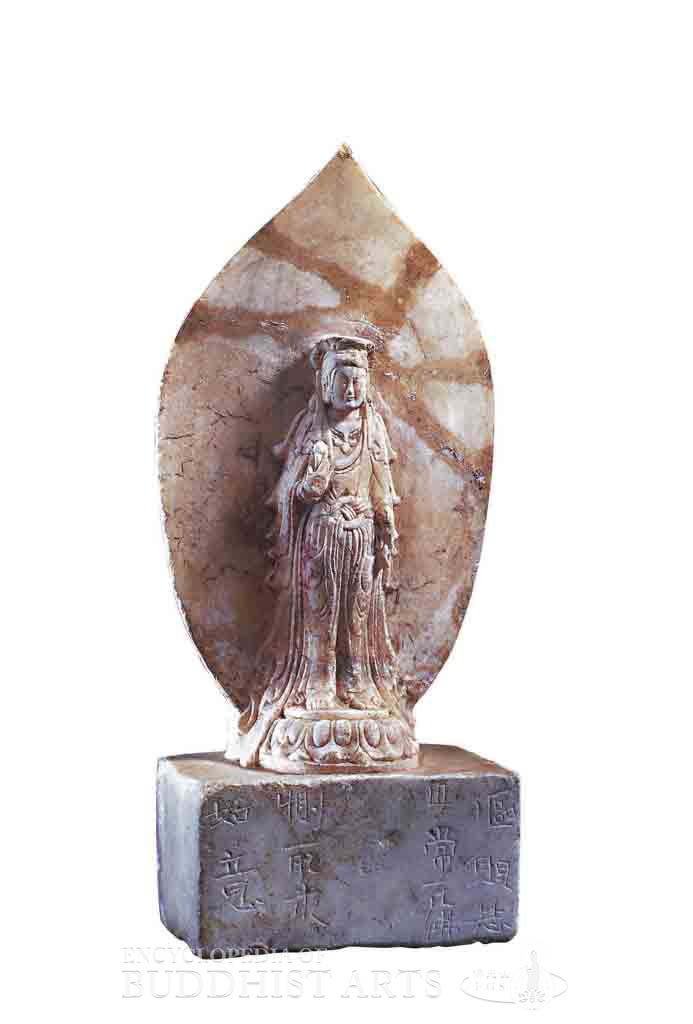
Dingzhou: Northern Dynasty Sculptures - Standing Avalokitesvara; Eastern Wei dynasty, dated 549
Marble
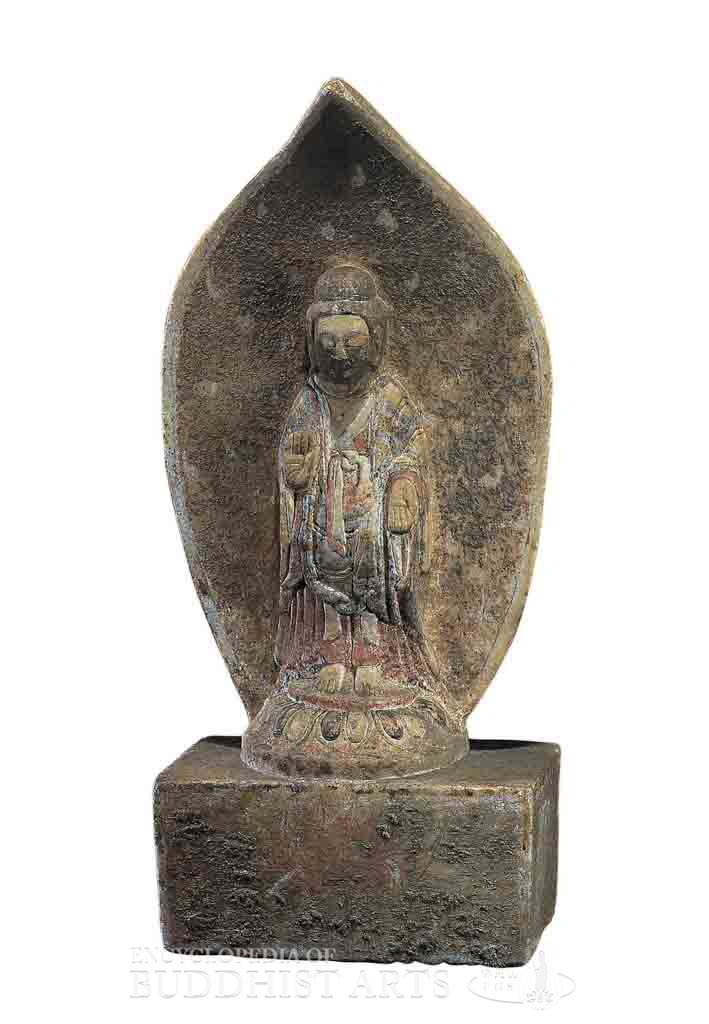
Dingzhou: Northern Dynasty Sculptures - Standing Buddha; Northern Qi dynasty, dated 550
Marble
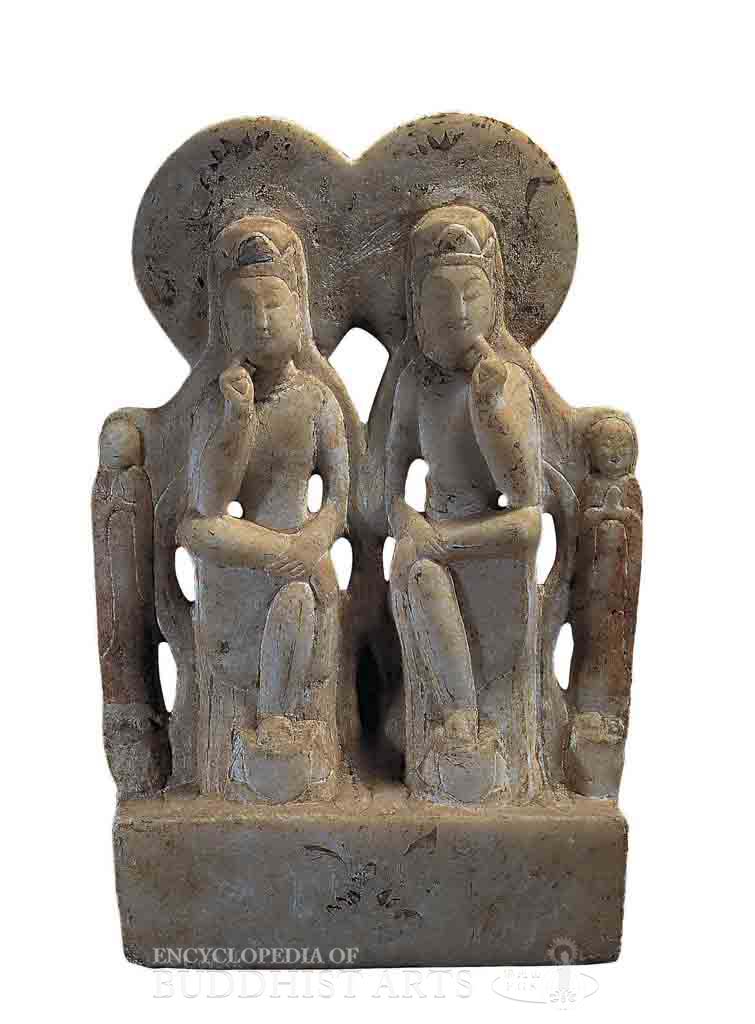
Dingzhou: Northern Dynasty Sculptures - Pair of Seated Bodhisattvas; Northern Qi dynasty
Marble
Dingzhou: Northern Dynasty Sculptures
CHINA, Hebei, Baoding; Northern Wei dynasty
Dingzhou played an important role as a point of transit between the southern and northern regions of China during the time of divided dynasties. Well before the Northern Wei dynasty (386–534), Buddhism was already established there and large quantities of Buddhist artifacts have been discovered that date from the 6th century into the Tang dynasty (618–907).
The discoveries can be classified into four groups. The first group is comprised of freestanding statues from the late Northern Wei to early Eastern Wei (534–550). Most of the Buddhas’ faces are long, with slender figures dressed in monastic robes that have deep folds and are opened or tied at the front. An example is the seated Maitreya, dated to 523.
The second group is from the late Eastern Wei dynasty. Paired Buddhas, or Bodhisattvas in contemplation replace the Maitreya images. The figures have more supple and rounded forms and the garments are fuller. The example here depicts a standing Avalokitesvara dated to 549.
The third group includes the Northern Qi (550–577) and Sui (581–618) dynasties and features predominantly paired figures. Their faces are more rounded and the bodies more robust. Most of the Buddhas wear cross-collared robes, while the Bodhisattvas are adorned with long necklaces and wear simple robes with sparsely placed folds. Intricately carved floral niches, or openwork back screens characterize many pieces.
The fourth group consists of a small quantity of Tang sculptures, most of them large and undated. The Buddhas sometimes wear monastic robes that leave the right shoulder bare. The Bodhisattvas wear fitted robes and jewelry and often stand in the tribhanga posture.
Dingzhou’s sculptural style lasted longer than other regions. Most are made from white marble, then painted or gilded. Mainly commoners and monastics commissioned the sculptures, and a few were ordered by court officials. Most were presented on behalf of dead family members but some were also created to ask for individual benefits or that of living relatives. The second and third, out of the four groups, make up almost two thirds of the number, indicating sculptures were in greater demand during this period.
For more details, go to the Encyclopedia of Buddhist Arts: Sculpture A-F, page 291.
Cite this article:
author = Hsingyun and Youheng and Lovelock, Yann and Chou, Yuan and Huntington, Susan and Edson, Gary and Neather, Robert,
booktitle = {Encyclopedia of Buddhist Arts: Sculpture A-F},
pages = 291,
title = {{Dingzhou: Northern Dynasty Sculptures}},
volume = 10,
year = {2016}}