
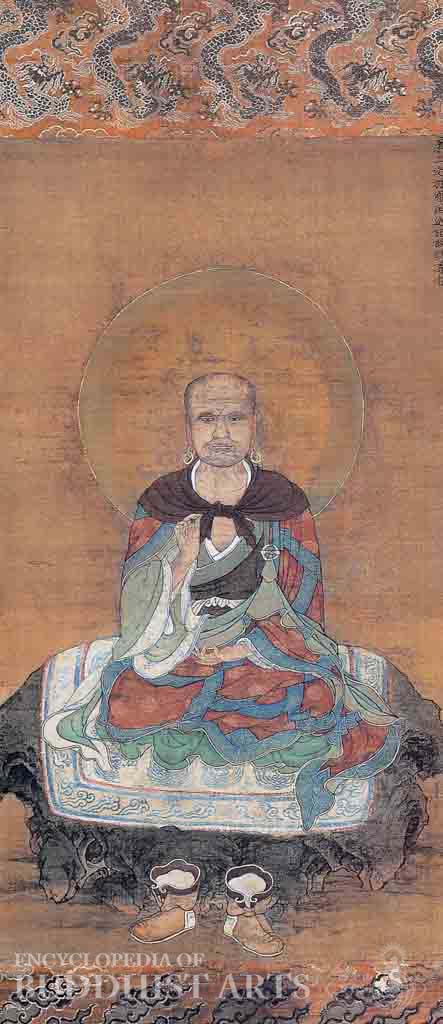
Sixteen Arhats - Kanakavatsa
Ink and color on silk
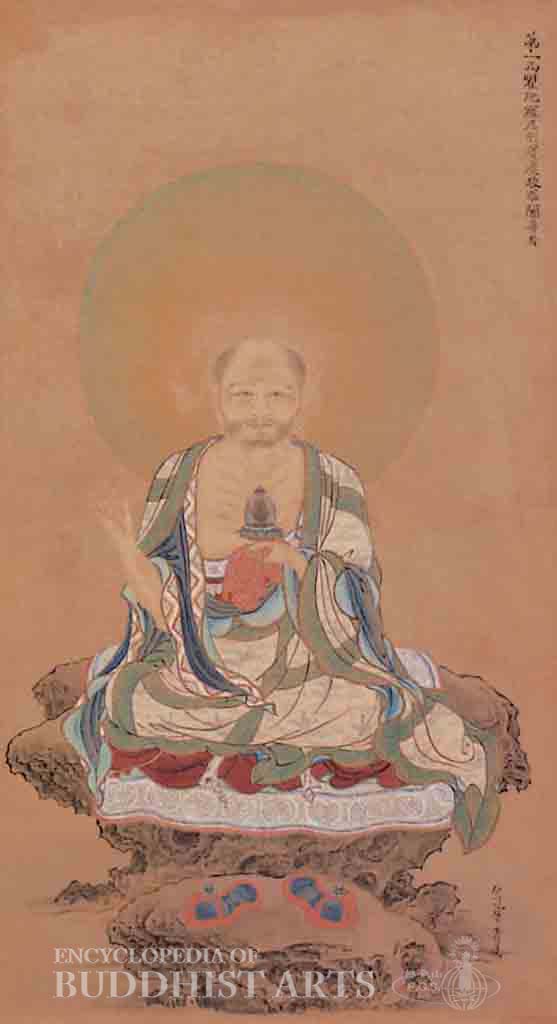
Sixteen Arhats - Pindolabharadraja
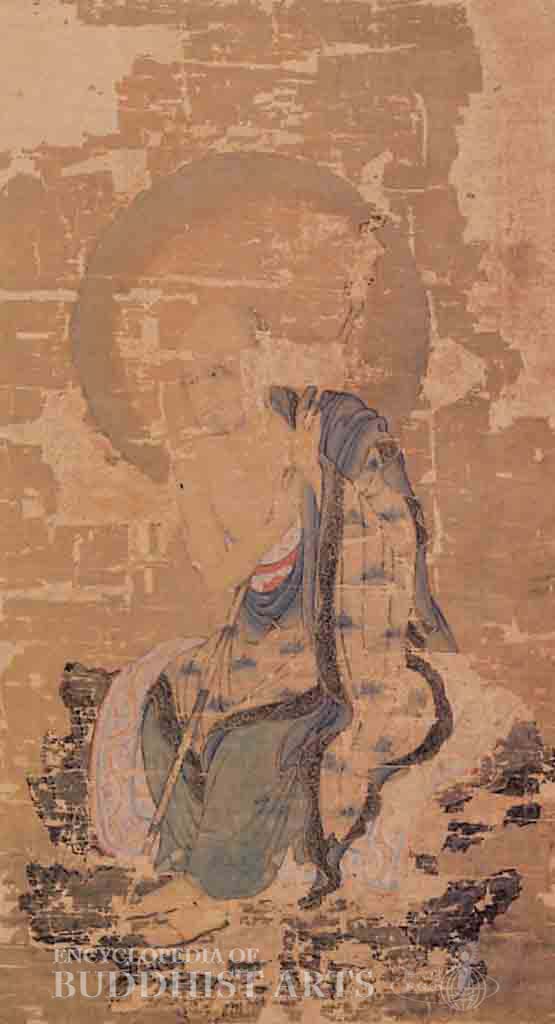
Sixteen Arhats - Kanakabharadraja
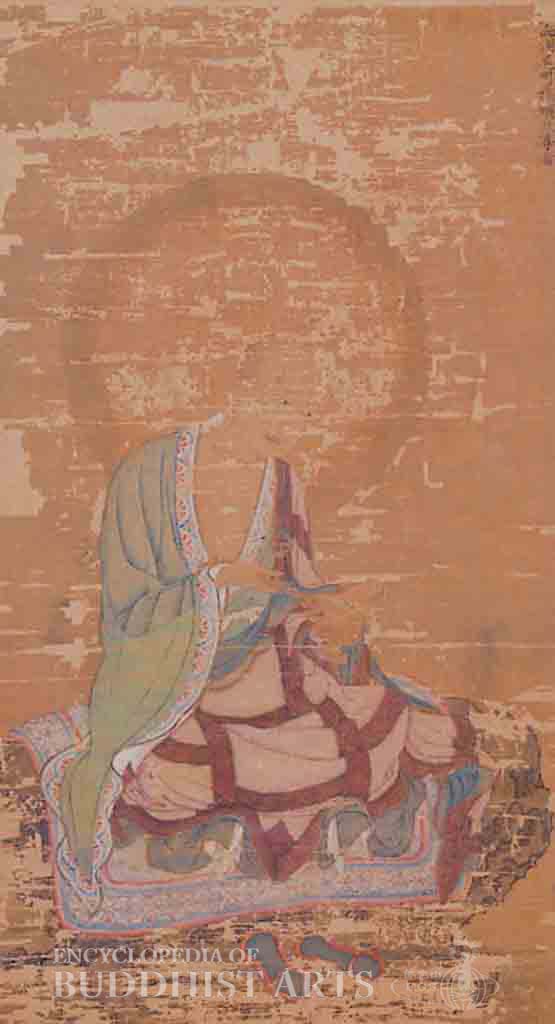
Sixteen Arhats - Subinda
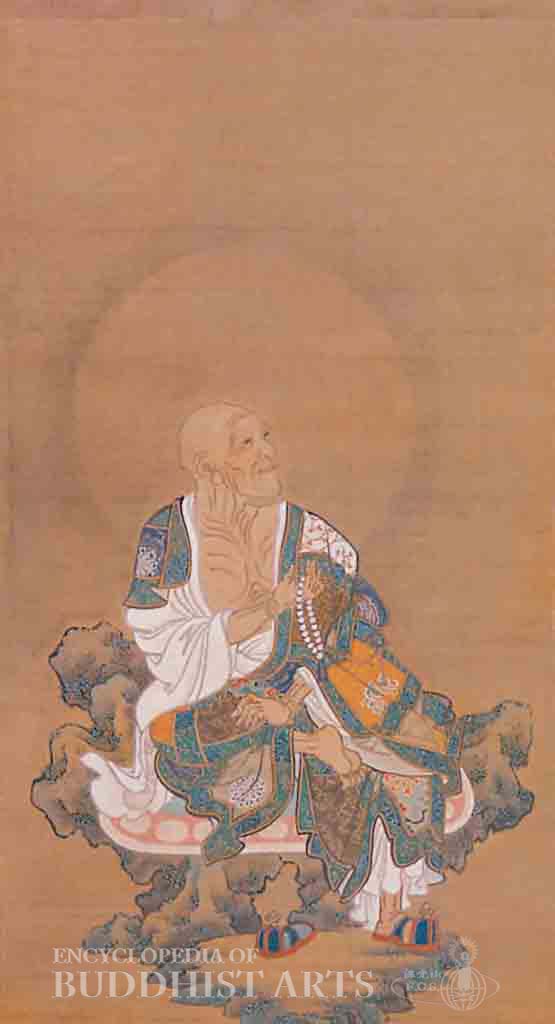
Sixteen Arhats - Nakula
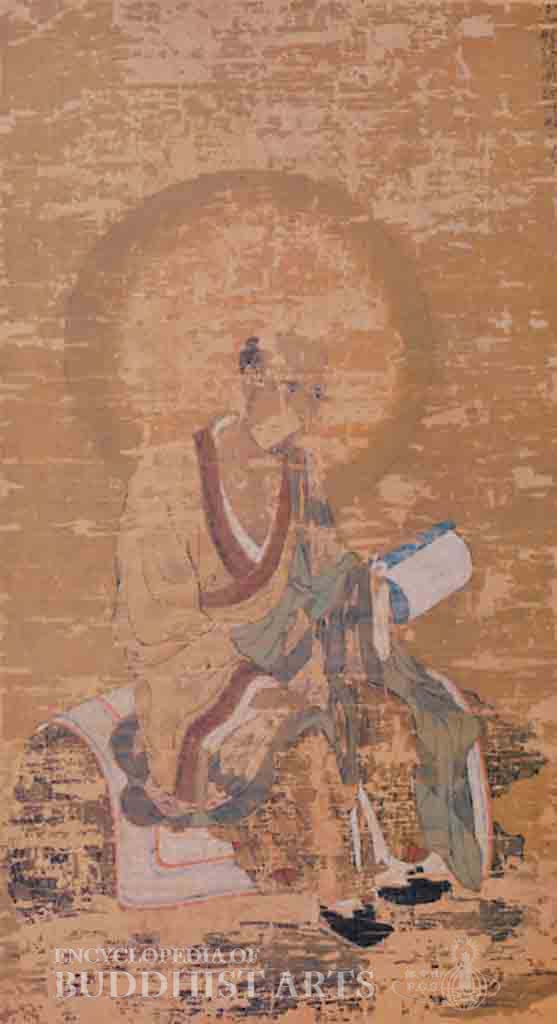
Sixteen Arhats - Bhadra
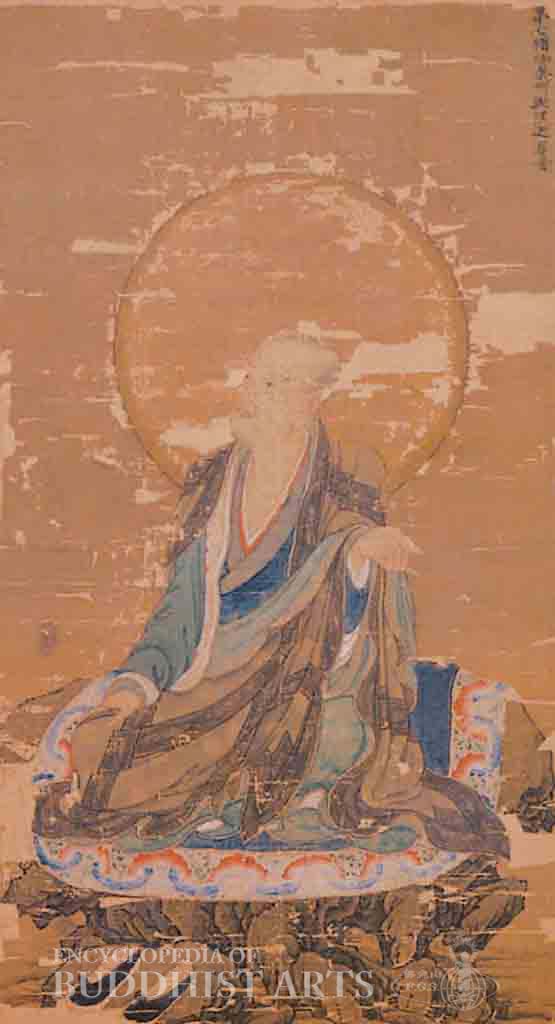
Sixteen Arhats - Kalika
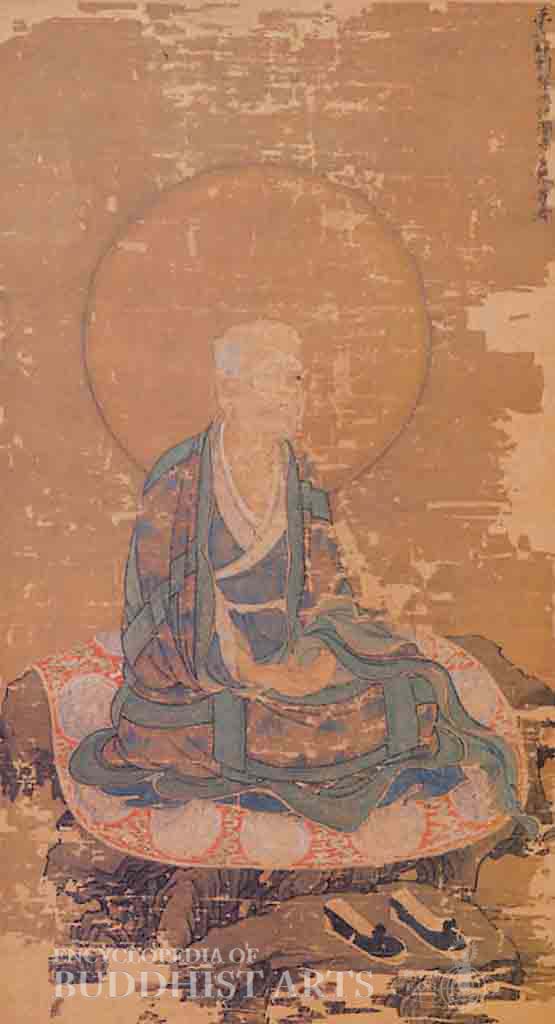
Sixteen Arhats - Vajraputra
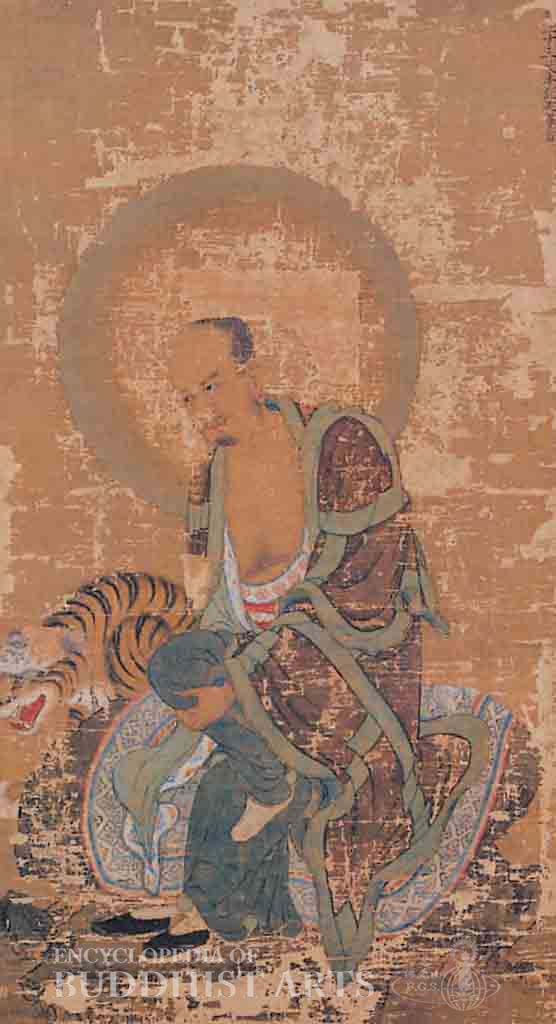
Sixteen Arhats - Jivaka
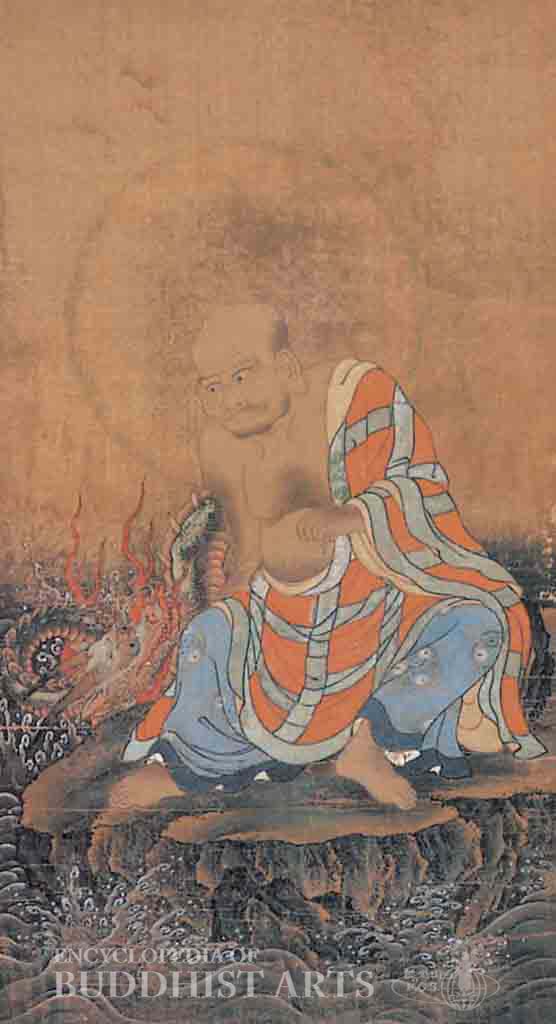
Sixteen Arhats - Panthaka
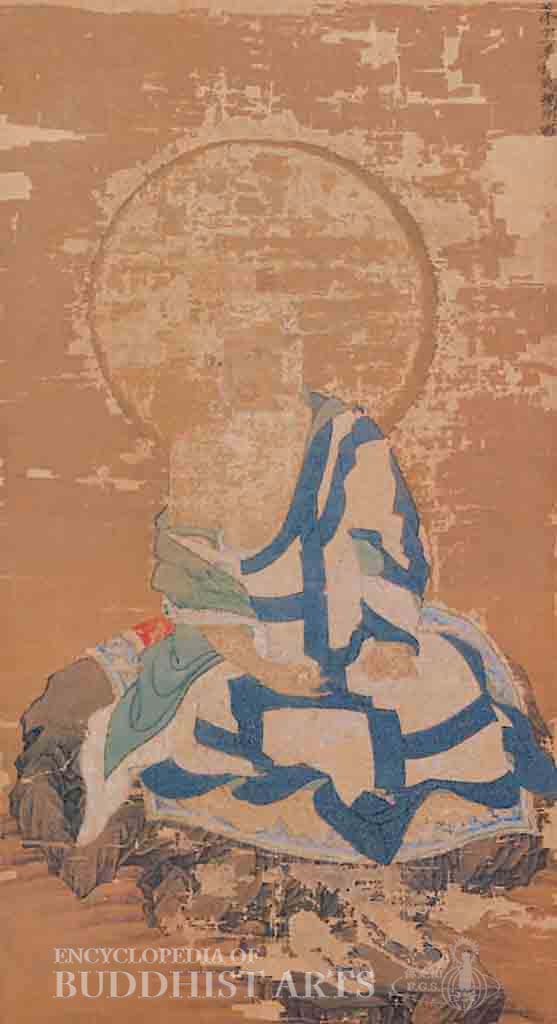
Sixteen Arhats - Rahula
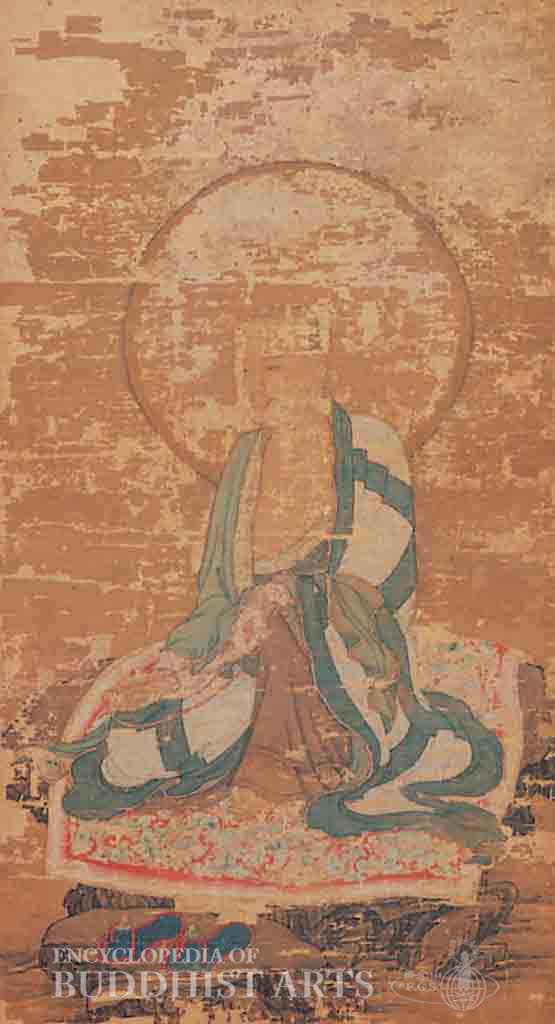
Sixteen Arhats - Nagasena
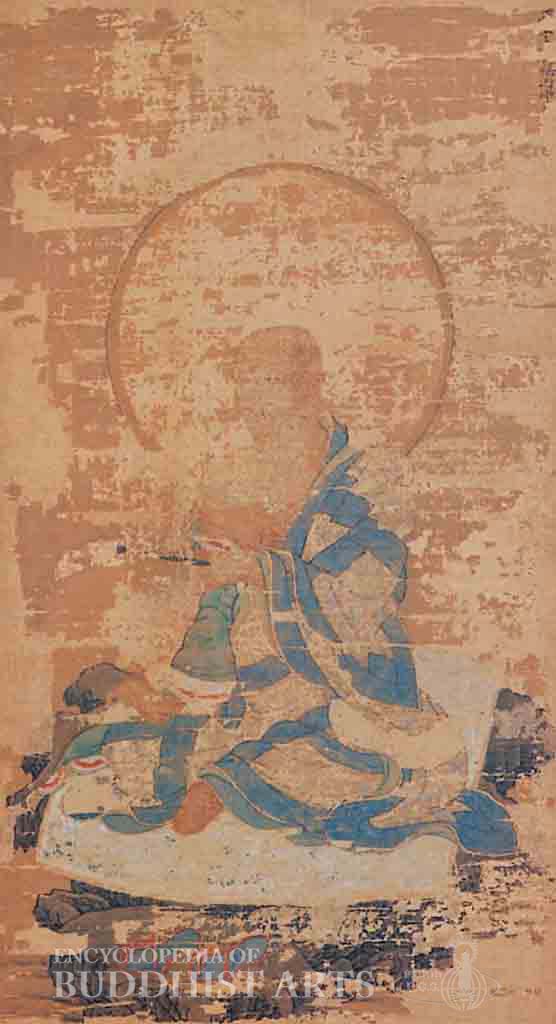
Sixteen Arhats - Angaja
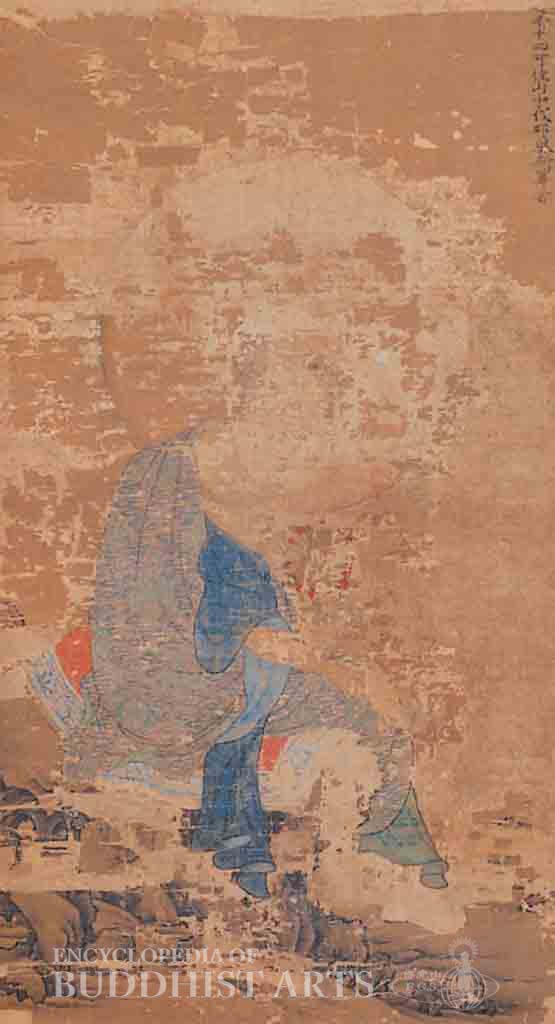
Sixteen Arhats - Vanavasin
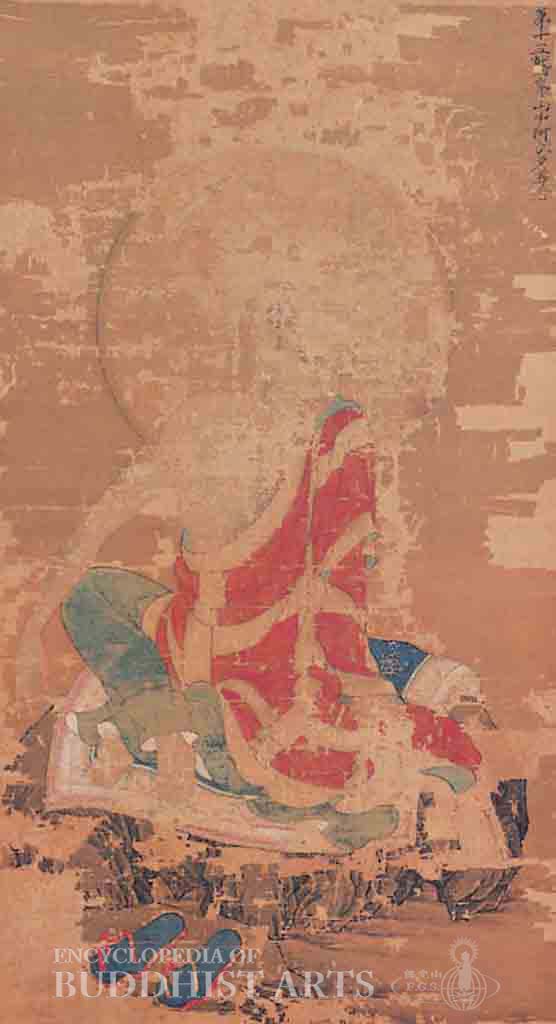
Sixteen Arhats - Ajita
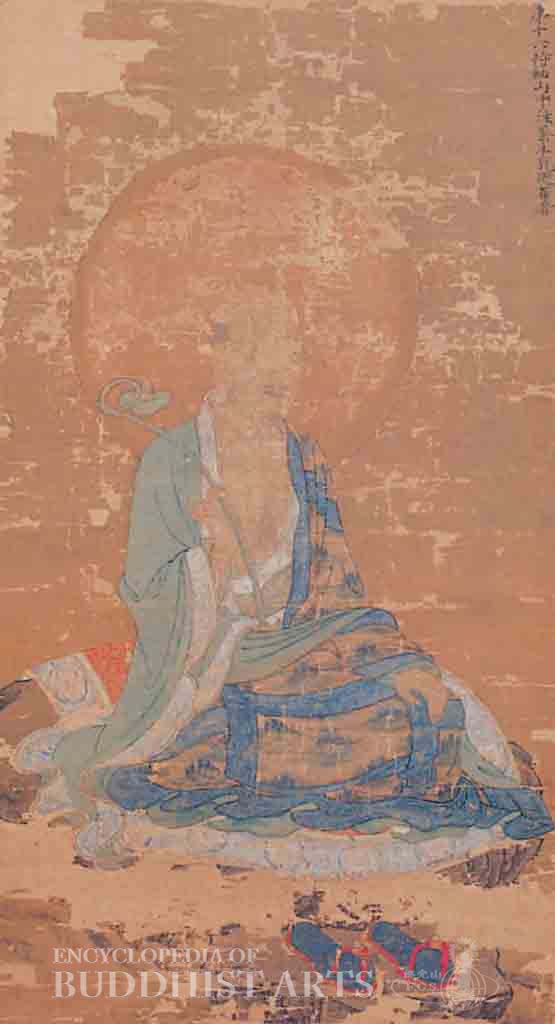
Sixteen Arhats - Cudapanthaka
Sixteen Arhats
CHINA; Southern Song dynasty
These pictures of the Sixteen Arhats were painted on sixteen scrolls by Zhao Jue, a native of Siming (present day Ningbo, Zhejiang) during the Southern Song dynasty, and were later brought to Japan and attached to eight folding screens. Four of the paintings were restored during the Edo period (1615–1868). The original picture of Kanakavatsa is kept in the Museum of Fine Arts, Boston, USA. A copy was made by Gu Wenhuang and is kept with the rest of the paintings in Hokekyoji Temple.
The names and appearances of the Arhats are taken from the Records of Nandimitra’s Discourse on Abiding Dharma. The Arhats appear wise and serene. They sit on rocks, have large nimbuses, and wear colorful monastic robes. Panthaka looks down at a dragon, and Jivaka is accompanied by a tiger. The realistic faces of the Arhats are depicted with delicate lines and shading; their features are less exaggerated than in other similar works.
For more details, go to the Encyclopedia of Buddhist Arts: Painting P-Z, page 849.
Cite this article:
author = Hsingyun and Youheng and Youlu and Wilson, Graham and Manho and Mankuang and Huntington, Susan,
booktitle = {Encyclopedia of Buddhist Arts: Painting P-Z},
pages = 849,
title = {{Sixteen Arhats}},
volume = 16,
year = {2016}}