
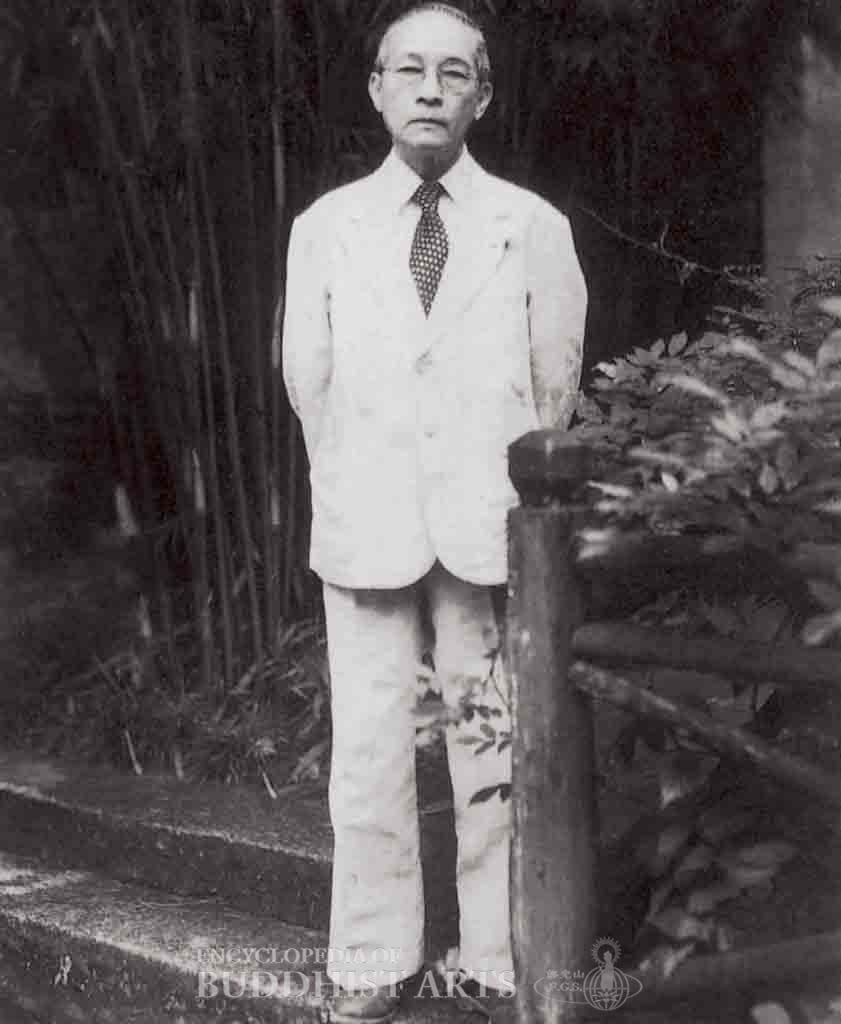
Gao Jianfu
Gao Jianfu
CHINA, Guangdong, Guangzhou
Born in Panyu district of Guangzhou, Gao Jianfu was originally named Gao Lun and had a style name of Jueting. He was a painter and calligrapher who, alongside his brother, Gao Qifeng, and Chen Shuren, founded the Lingnan school of painting. At a young age, he studied painting under Ju Lian, and later traveled to Japan to learn western-style painting. He preferred to use a broken pen and dry ink for calligraphy work, and his strokes often resembled a dragon or snake. His work was lifelike and boldly incorporated the features of Japanese and western styles.
In the early 1900s, Gao was dedicated to the revolutionary ideas of the time and took part in many surrounding activities. Devoted to art education, he formed a research association and worked to reform Chinese painting, integrating styles from the west. He established Spring Slumber Art Studio, Nanzhong Academy of Fine Arts, and Guangzhou Municipal Academy of Fine Arts. During the 1920s, he had a close connection with monk Tiechan, abbot of Liurong Temple in Guangdong. There, he established a lay Buddhist association. Gao often donated his calligraphy and paintings to temples, being associated with several. Some of these paintings are now kept at Yaoshi Temple in Guangdong. His painting, Pagodas in Myanmar, is collected in the art museum of Chinese University of Hong Kong,
In the 1930s, he was invited to several countries around the world to exhibit his work and give lectures. During this time, he painted various Buddhist images and replicated ancient temple murals he saw in such places as Sri Lanka. In 1949, he migrated to Macau and lived in Puji Chan Monastery where he again taught the Lingnan school of painting. He authored several books including Modern Chinese Painting, New Trend of Ink Painting, Record of Buddhist Kingdoms, Indian Art, and My Perspective on Modern Painting.
For more details, go to the Encyclopedia of Buddhist Arts: People, page 76.
Cite this article:
author = Hsingyun and Youheng and Youlu and Pokorski, Stefanie and Yichao and Mankuang and Miaohsi,
booktitle = {Encyclopedia of Buddhist Arts: People },
pages = 76,
title = {{Gao Jianfu}},
volume = 19,
year = {2016}}