
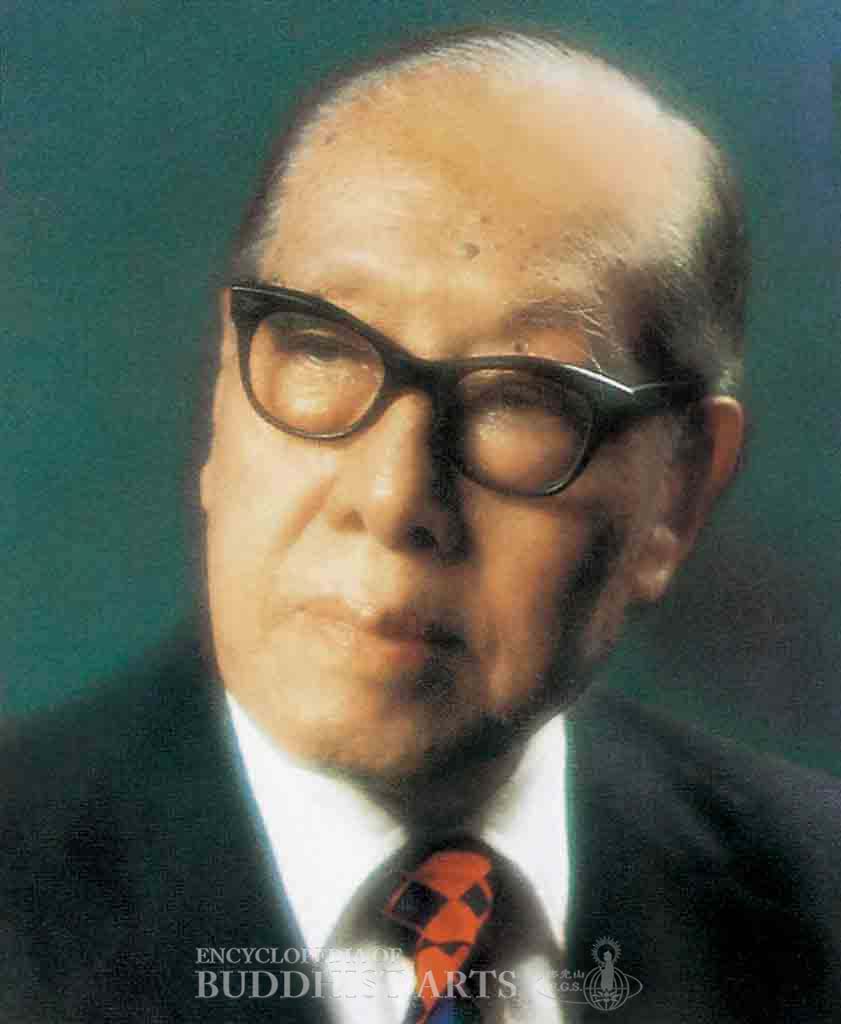
Zhao Shao’ang
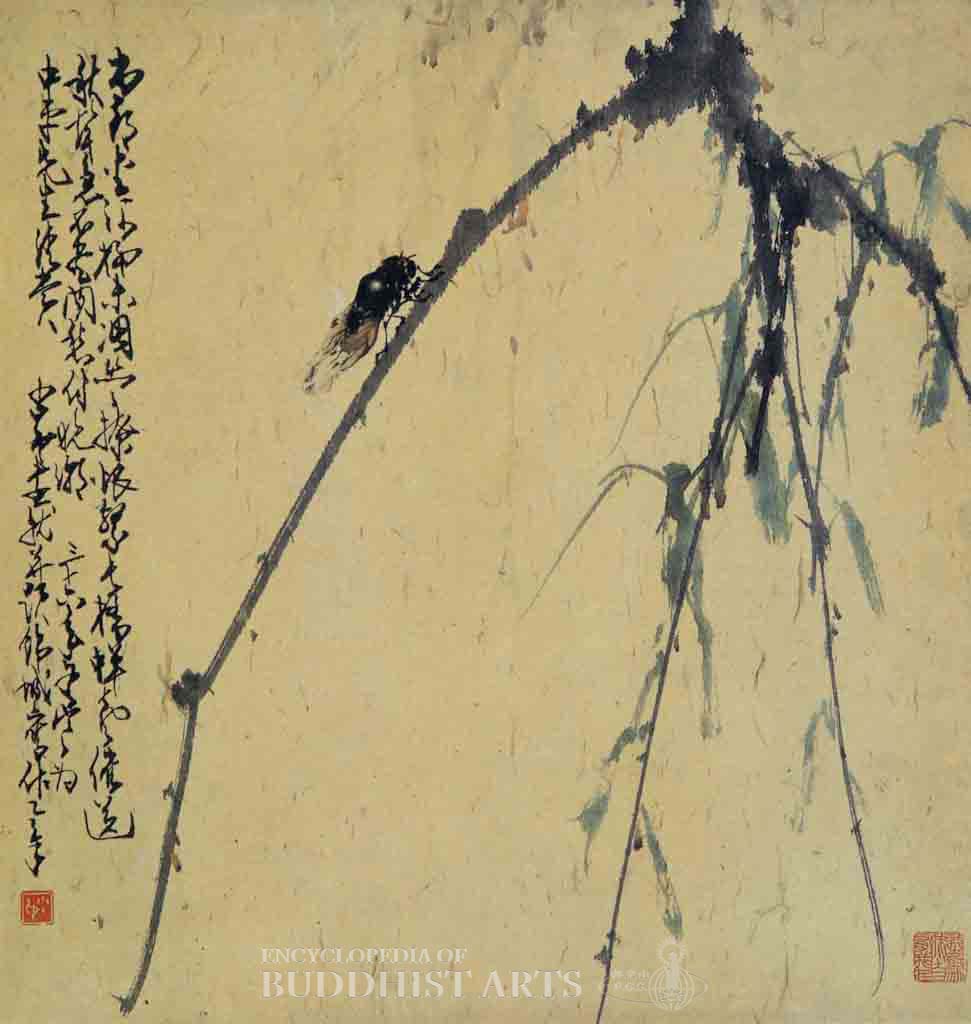
Willow and Cicada by Zhao Shao’ang; 20th century
Ink and color on paper
Zhao Shao’ang
CHINA, Guangdong, Guangzhou
Zhao Shao’ang, originally named Zhao Yuan and also known as Shuyi, was a painter from Panyu district in Guangzhou. Since a young age, he was enthusiastic about painting, and by 1920, he began learning the art from Gao Jianfu and Gao Qifeng. Influenced by the modernization of Chinese painting seen in the Southern school, he was dedicated to the merging of Chinese and Western, as well as traditional and modern art. In 1930, he established the Lingnan Art School where he taught painting. During the Sino-Japanese War (1937–1945), he moved around to various locations in Hunan, Jiangxi, Guizhou, and Sichuan and continued to paint in addition to organizing exhibitions, the proceeds of which he donated to assist refugees.
After moving to Hong Kong in 1948, Zhao produced a large amount of paintings showing a more matured style. He organized and participated in exhibitions in several countries, including Japan, Southeast Asia, Europe, the United States, Canada, and Australia. His work once earned him the gold prize at the World’s Fair held in Belgium. The publications he authored include Collection of Beautiful Cicadas, Practical Paintings, and Collection of Zhao Shao’ang’s Paintings.
A master in floral, bird, and landscape paintings, Zhao detailed his subjects with seasoned features that showed both shape and spirit with a natural energy. This unique style of floral and avian paintings, which was praised by Xu Beihong, is illuminated by his unrestrained brushstrokes and bright coloring. Zhao also occasionally painted figures and his portrayals of the Buddha and arhats are lively. His painting, Willow and Cicada, is currently kept at the National Art Museum of China in Beijing.
For more details, go to the Encyclopedia of Buddhist Arts: People, page 349.
Cite this article:
author = Hsingyun and Youheng and Youlu and Pokorski, Stefanie and Yichao and Mankuang and Miaohsi,
booktitle = {Encyclopedia of Buddhist Arts: People },
pages = 349,
title = {{Zhao Shao’ang}},
volume = 19,
year = {2016}}