
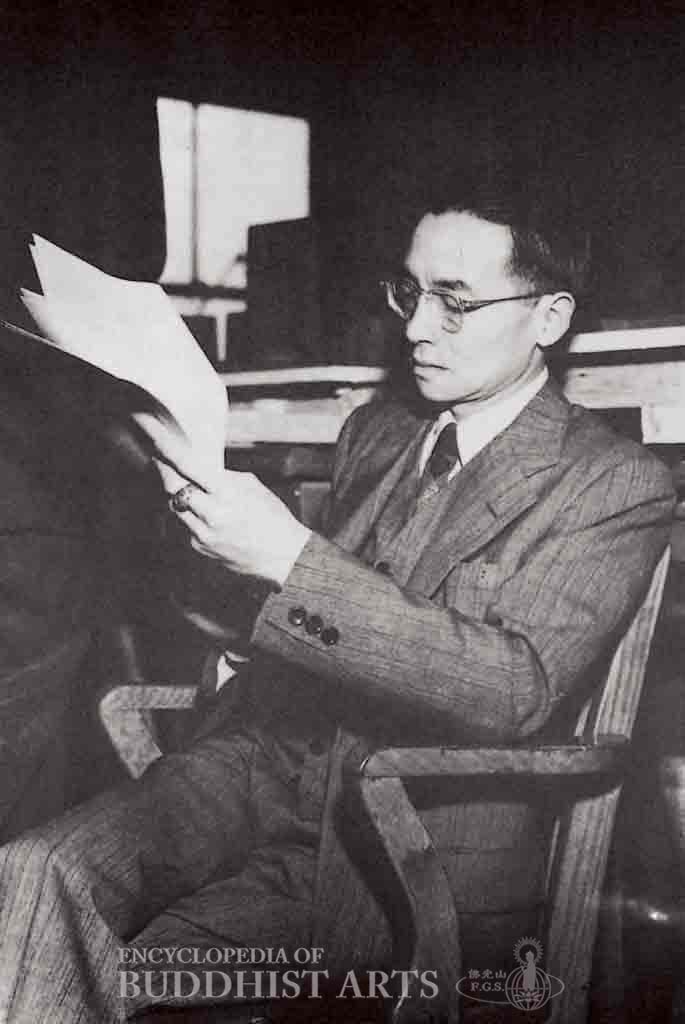
Liang Sicheng
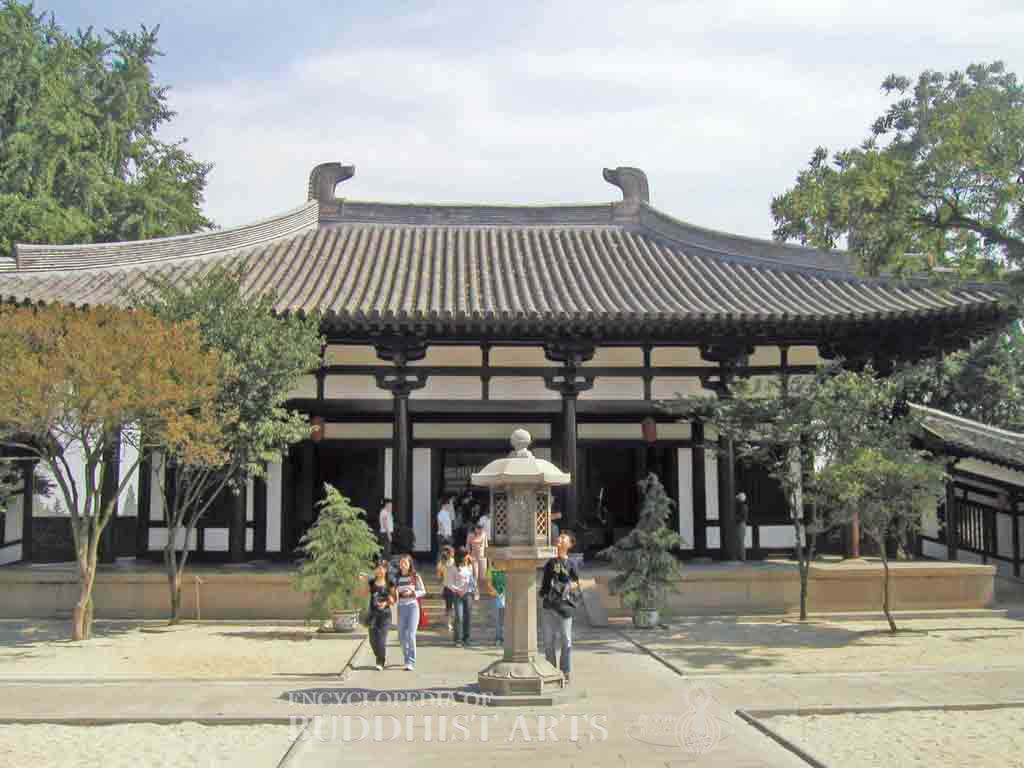
Master Jianzhen Memorial Hall designed by Liang Sicheng; Dated 1963
Liang Sicheng
CHINA, Guangdong, Jiangmen
Liang Sicheng was an architect, historian, scholar, and teacher from Xinhui district in Jiangmen. He was the eldest son of Liang Qichao, a well-known scholar and reformer of the Qing dynasty (1644–1911). After he graduated with a degree from the Department of Architecture at Tsinghua University, Liang obtained both a Bachelor of Arts and Master’s degree from the University of Pennsylvania in Philadelphia, USA. Liang joined the design committee of the United Nations in 1947, and in 1948, he was granted an honorary doctorate degree from Princeton University in New Jersey, USA. He later became the Vice Director of the Beijing Municipal Commission of Construction, as well as Vice Director-General of the Commonwealth Association of Architects. In 1963, he headed the architectural planning of the Master Jianzhen Memorial Hall at Daming Temple in Jiangsu.
Fond of ancient Chinese architectural and sculptural design, Liang intensively researched the subjects, and in 1932 he completed his magnum opus, Building Construction of the Qing Dynasty. He soon became a renowned expert on early Chinese structures, and produced extensive academic reports on various ancient temples and buildings around China. Liang’s research brought about discoveries regarding famous temples and Buddhist sites; this includes identifying Fogong Temple Shijia Pagoda in Shanxi as the world’s tallest wooden pagoda, and Dule Temple in Hebei as China’s very first wooden temple. In addition, he was the first person to provide investigative reports that revealed the famous sculptures of the Dazu Rock Carvings in Sichuan to the academic world, and encouraged the establishment of the Dunhuang Art Research Institute to protect the treasured works.
Liang was known to be committed to academia throughout his life. He served as a professor in several universities and established a multitude of departments and institutions dedicated to the study of Chinese architecture. In doing so, he promoted his own creative architectural theory which entailed “adopting ancient form for modern usage, and adopting Western form for Chinese usage,” emphasizing that modern architecture should inherit traditional style.
Together with his wife, Lin Huiyin, Liang conducted an intensive study of the Song dynasty (960–1279) construction manual, Treatise on Architectural Methods, as well as the Qing dynasty (1644–1911) publication, Qing Structural Regulations. Liang authored a large collection of academic papers and books on ancient architecture in China, including History of Chinese Sculpture, History of Chinese Architecture, and Annotations to the Treatise on Architectural Methods. He also published Chinese Architecture: A Pictorial History in English. Several of his works were compiled into the Literary Collection of Liang Sicheng.
For more details, go to the Encyclopedia of Buddhist Arts: People, page 170.
Cite this article:
author = Hsingyun and Youheng and Youlu and Pokorski, Stefanie and Yichao and Mankuang and Miaohsi,
booktitle = {Encyclopedia of Buddhist Arts: People },
pages = 170,
title = {{Liang Sicheng}},
volume = 19,
year = {2016}}