
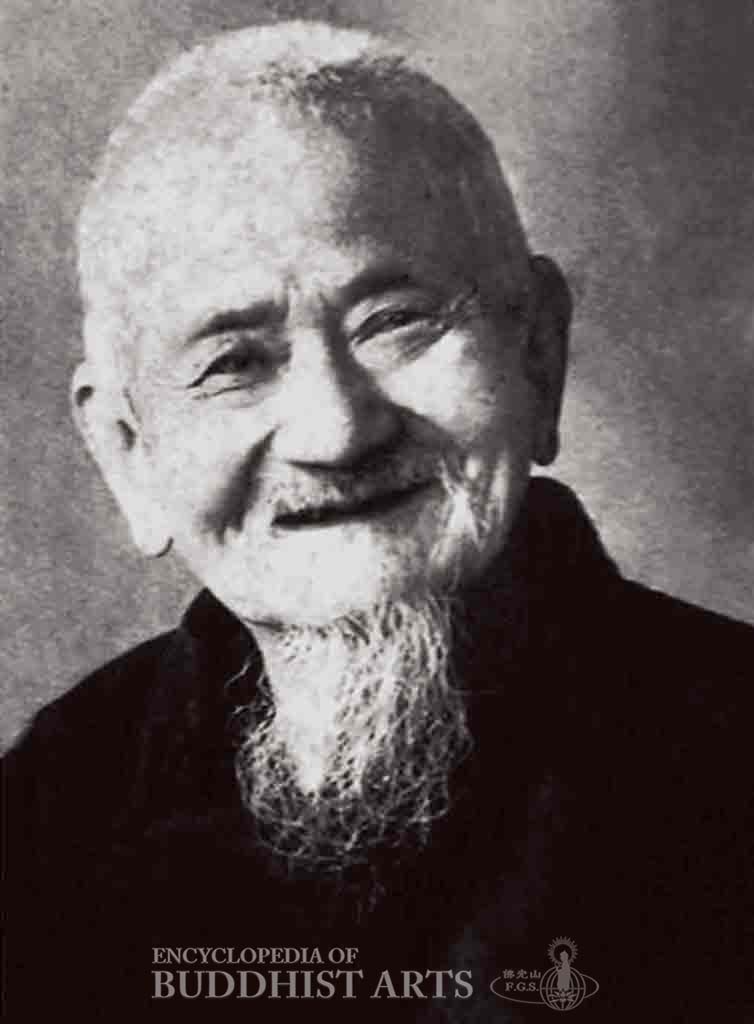
Li Geng
Li Geng
CHINA, Fujian, Putian
Born in Xianyou county of Putian, Li Geng was also known as Damao Shanren or Yan Nong. From an early age, he studied Chinese painting and painted murals at temples with his father, who was also a folk artist. Li went on to found the Dragon Ball Painting Society with several friends including Li Xia and Chen Zifen. He later served as the Deputy Chairman of the Fujian branch of the Chinese Artists Association.
Li was renowned for his portraiture, but was also accomplished in painting landscapes and flowers, as well as seal-carving, sculpting, playing string instruments, and writing poetry. His portraits depict characters from folk stories, historical figures, and Buddhist and Daoist deities. His style was influenced by Wu Bin, Shangguan Zhou, and Huang Shen, and his works were praised by Xu Beihong and Cai Ruohong. Li’s Buddhist artworks include paintings of Sakyamuni Buddha, Maitreya Buddha, Bodhisattvas, Bodhidharma, Arhats, Chan Masters, and Master Daoji. He depicted Arhats as having features of Indian monks, standing in various poses with unique facial expressions. His portraits are painted with steadfast, strong brushstrokes, and utilize colors and tones that are both simplistic and profound.
In 1925, Li participated in the Five-Province Art Exhibition and won the competition with his portrayal of Maitreya Buddha. In 1928, he won the competition at the China-France Art Exhibition with Maitreya Buddha, Su Shi in Straw Hat and Shoes, and Returning by Boat in Autumn Rain. In 1959, Li established the Li Geng Chinese Painting Research Centre to educate and mentor a new generation of Chinese painters. Li also held many solo exhibitions in cities such as Beijing, Shanghai, and Fuzhou.
For more details, go to the Encyclopedia of Buddhist Arts: People, page 158.
Cite this article:
author = Hsingyun and Youheng and Youlu and Pokorski, Stefanie and Yichao and Mankuang and Miaohsi,
booktitle = {Encyclopedia of Buddhist Arts: People },
pages = 158,
title = {{Li Geng}},
volume = 19,
year = {2016}}