
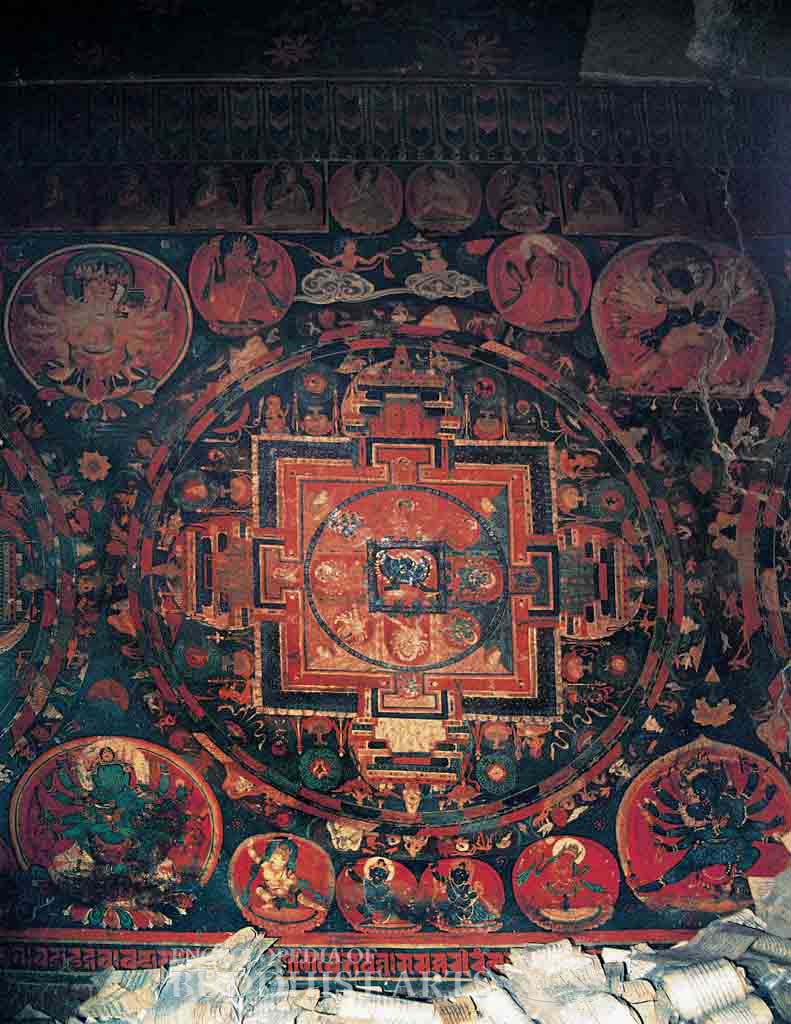
Paerzong Caves Mandala Cave: Mandala (west wall)
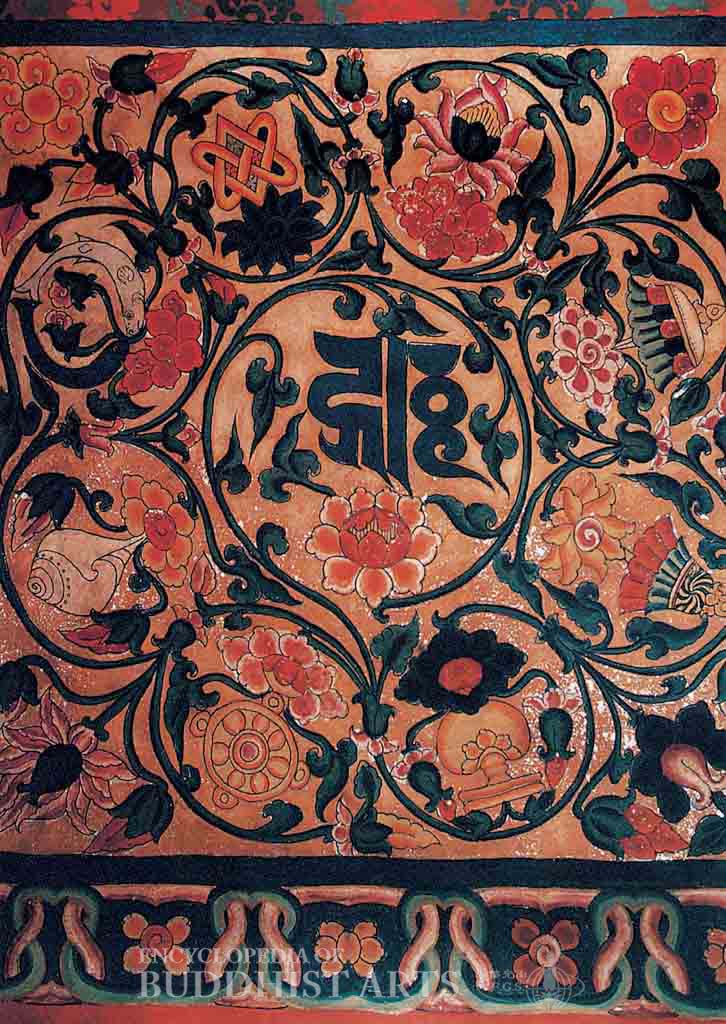
Paerzong Caves Mandala Cave: Seed Syllable and the Eight Auspicious Symbols (ceiling)
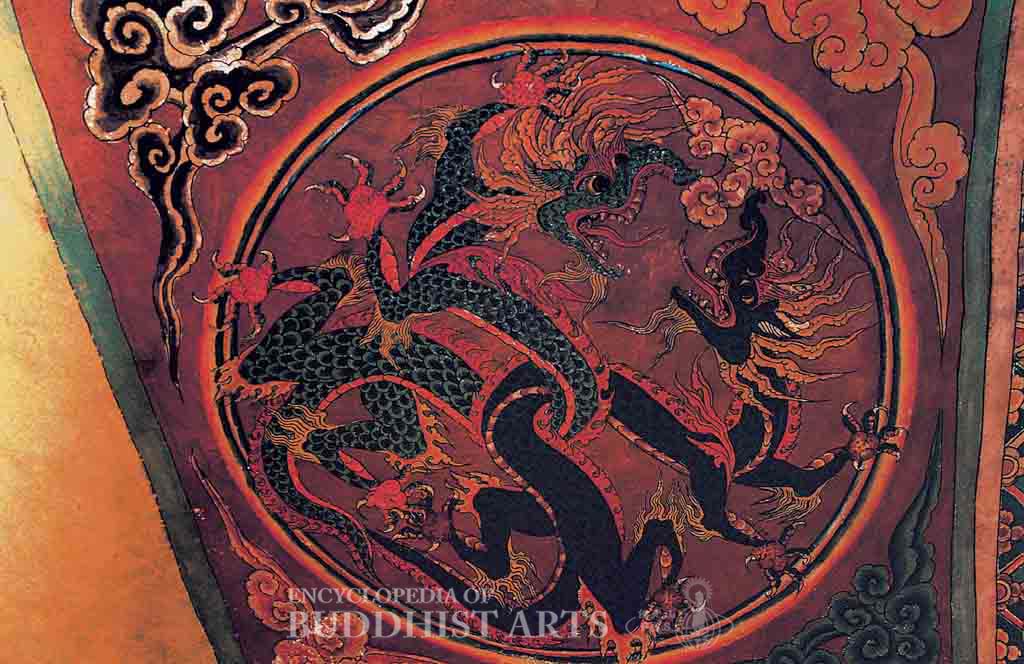
Paerzong Caves Mandala Cave: Double Dragons (ceiling)
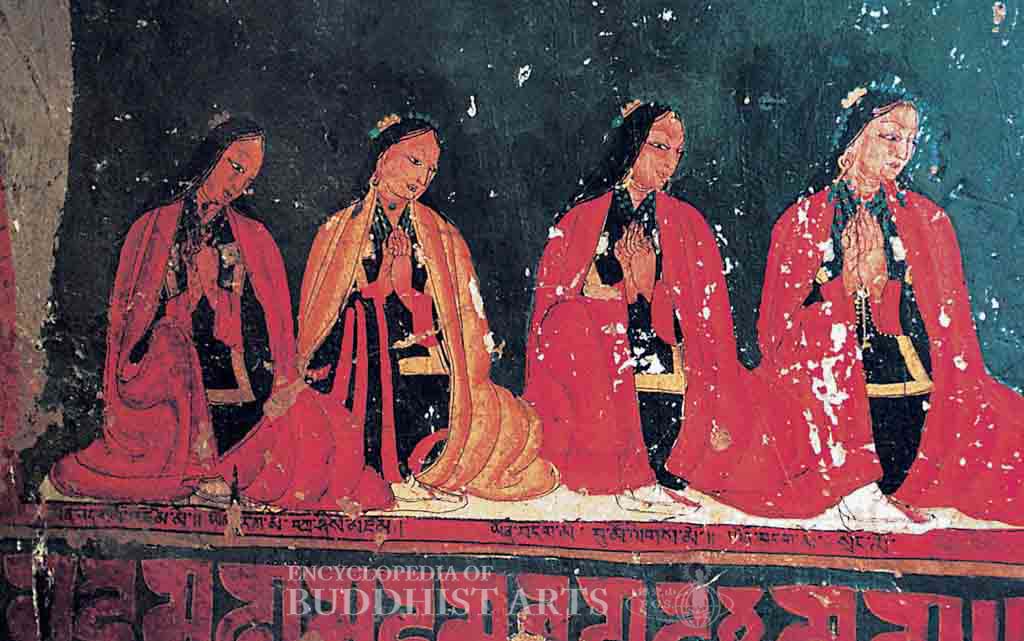
Paerzong Caves Mandala Cave: Female Donors (west wall)
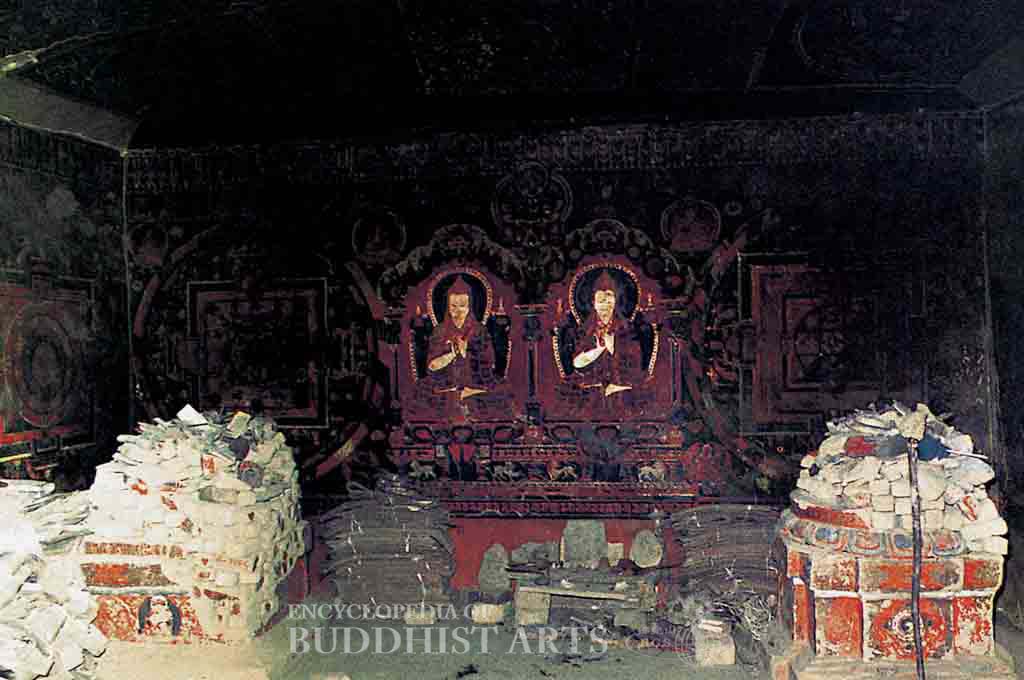
Paerzong Caves Mandala Cave: Back Wall
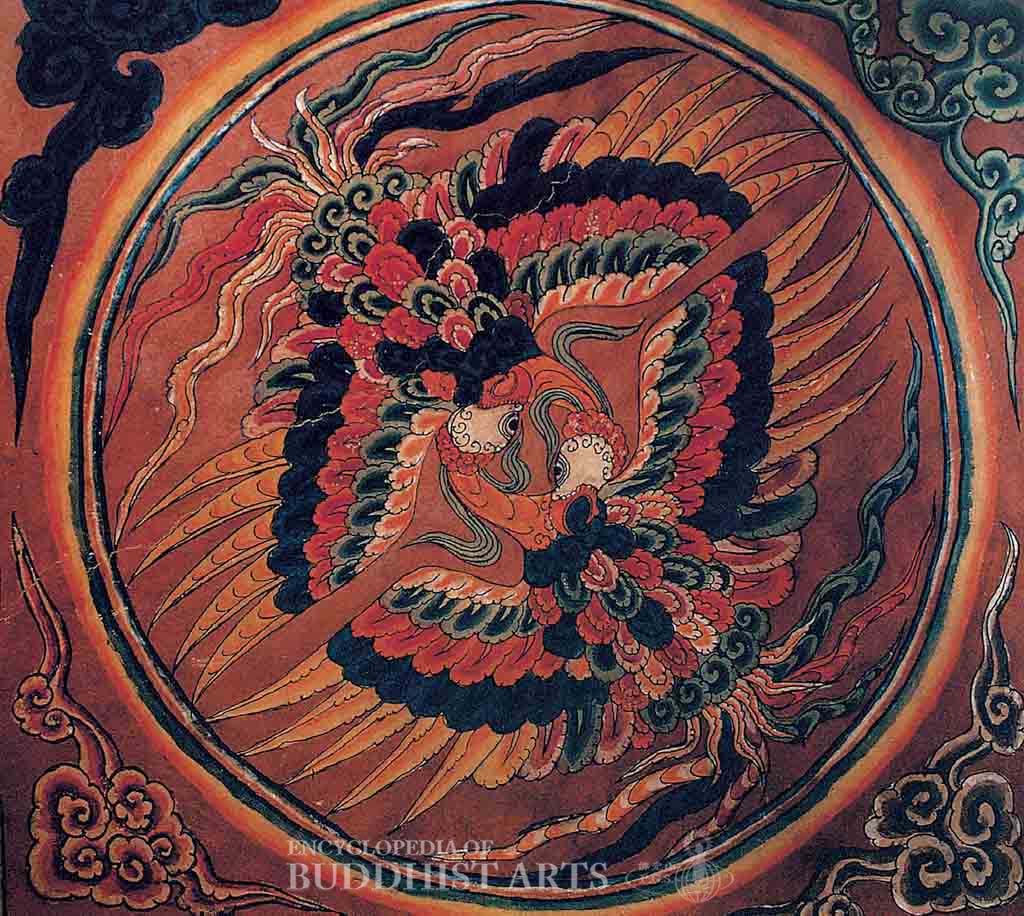
Paerzong Caves Mandala Cave: Double Phoenixes (ceiling)
Paerzong Caves Mandala Cave
CHINA, Tibet, Ngari
As the largest of the Paerzong Caves, the Mandala Cave is rectangular and faces the south. The bases of two pagodas remain on either side in front of the back (north) wall, and throughout the cave are various painted mandalas. The style of the artwork is similar to that of the late Guge Kingdom (circa 10–17th century) and is thought to date from the 15th to 16th century.
The center of the ceiling features a Sanskrit seed syllable in the Ranjana script. The eight auspicious symbols surround the seed syllable. Images of double dragons, double phoenixes, geometric patterns, and flowers are depicted on each corner.
The back wall features two guru figures with pointed hats. Their hands form the vitarka (teaching) mudra and they have gold-trimmed mandorlas and nimbuses. Beside the two figures are Diamond Realm Mandalas and illustrations of monks. There are five mandalas on each of the side walls, with various depictions of monks and masters surrounding them. Two rows of lay donors dressed in red robes and kneeling with palms joined or forming various mudras line the lower sections of the walls. To either side of the entrance on the front (south) wall are illustrations of ten masters and practitioners in various postures, with Dharma protectors in their midst. Within the upper row of figures, there is a six-armed Mahakala and a skull-adorned Dharma protector, who crush two demons beneath their feet. The lower row are Vaisravana and Yama.
The illustrations on each wall of the corridor are divided into three sections. A woman riding a white horse with incense in hand can be seen in the upper section on the east wall, while figures follow behind riding green horses. In the middle section, another woman rides a horse, with one hand holding the reins and the other carrying a vajra bell. Attendants clothed in long black robes, with hands clasped, follow behind. A Dharma protector seated in full lotus position and holding iron chains in both hands is on the lower section, and a tiny creature is depicted beneath him.
The upper section of the west wall portrays a warrior riding a green horse. One hand carries a flag while the other holds the reins of the horse. Figures riding white horses follow behind carrying pennants. One male rider and one female rider holding a whip are seen in the middle section. The lower section on the west wall has deteriorated and is no longer discernible.
For more details, go to the Encyclopedia of Buddhist Arts: Caves Mo-S, page 1296.
Cite this article:
author = Hsingyun and Youheng and Johnson, Peter and Mankuang and Huntington, Susan and Edson, Gary and Neather, Robert,
booktitle = {Encyclopedia of Buddhist Arts: Caves Mo-S},
pages = 1296,
title = {{Paerzong Caves Mandala Cave}},
volume = 8,
year = {2016}}