
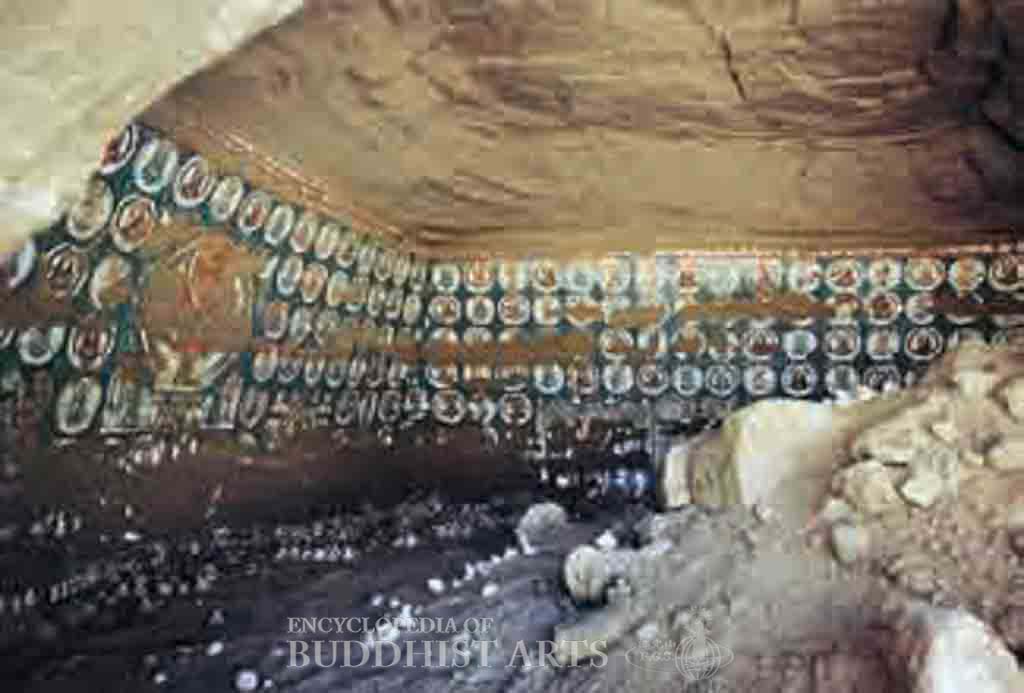
Zengsa Cave 1
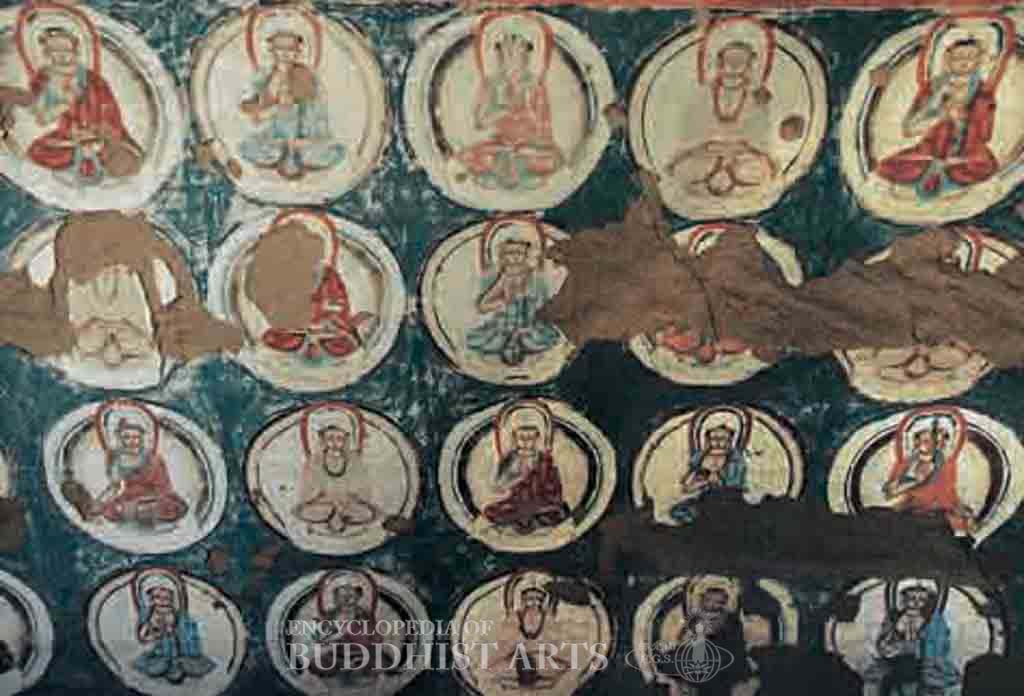
Zengsa Cave 1: Thousand Buddhas (north wall)
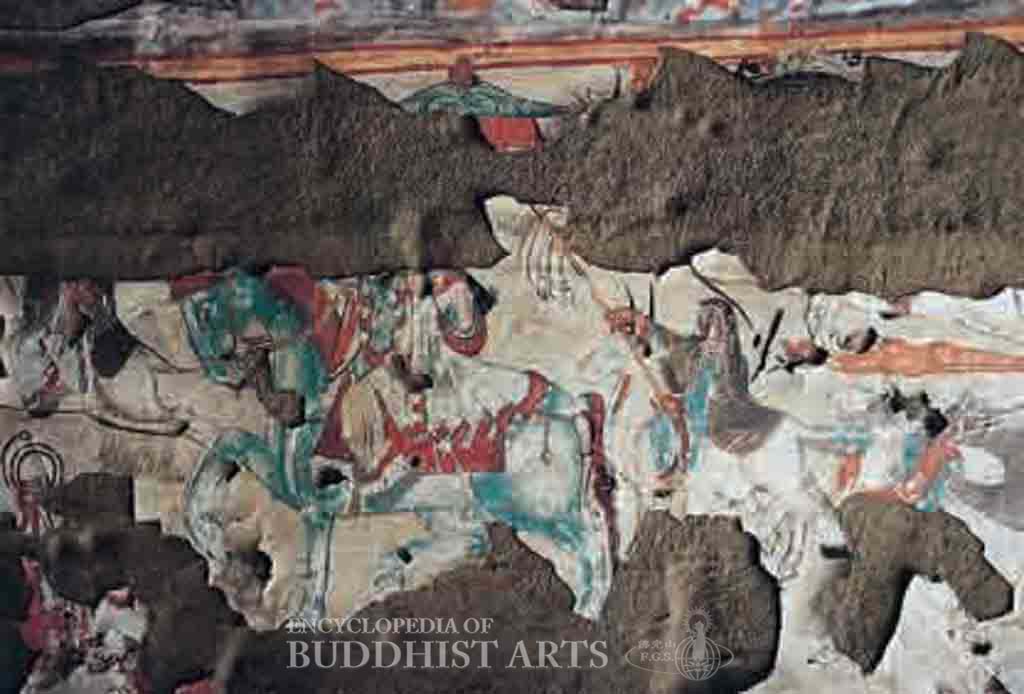
Zengsa Cave 1: People on a Journey (corridor, east wall)
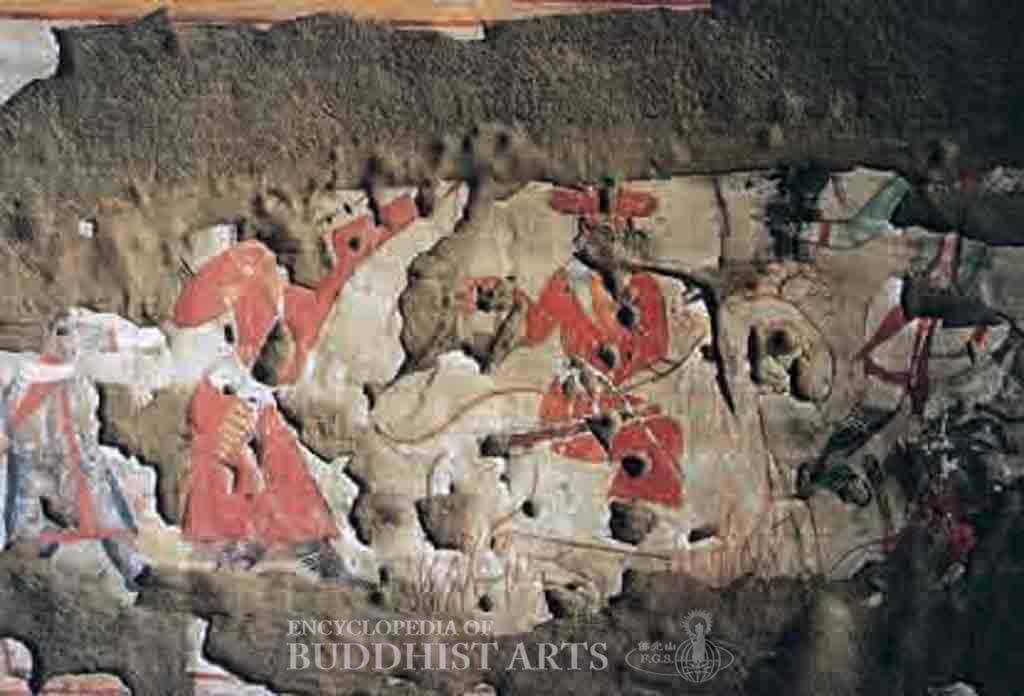
Zengsa Cave 1: People on a Journey (corridor, west wall)
Zengsa Cave 1
CHINA, Tibet, Ngari
This south-facing cave features a style similar to early Dunkar Caves and Piyang Caves. The figures in the murals are dressed in Kashmiri-style clothing, using coloring techniques that reflect the Guge style. However, these are not well-preserved due to the lack of a mud base coating, which has resulted in much deterioration.
The walls on either side of the corridor depict people going on a journey. On the west wall of the corridor, a central figure is seen riding a white ram with long horns. The figure is dressed in a long red robe with a triangular upturned collar and red brimmed hat. He looks back to a figure dressed in similar attire and adorned with white bracelets and armlets with a flame pattern mandorla. A third male figure in front of the central figure wears a long dark robe and carries a whip. The scene on the east wall of the corridor features a woman in red and white robes on a green horse. One servant rides before her on horseback, while a second one rides a ram behind her and supports a parasol with both hands. A male figure with red robes, an upturned collar, and a large red flame patterned mandorla is found behind these three figures. This figure, as well as the woman before him, may be the benefactors of the cave.
The four walls of the cave are largely covered with the Thousand Buddha motif, which is arranged in six rows. Multi-layer pedestals in the center of each wall supported seated Buddhas which have decayed beyond recognition. The remains of Tibetan inscriptions and two attendant Bodhisattvas can be found below the central Buddha figures. Illustrations of four figures are depicted at the bottom of the west wall; however, they have also greatly deteriorated. The mural on the back wall is the best preserved, and depicts various Tibetan style pavilions and a row of red Tibetan inscriptions below.
For more details, go to the Encyclopedia of Buddhist Arts: Caves T-Z, page 1753.
Cite this article:
author = Hsingyun and Youheng and Johnson, Peter and Mankuang and Huntington, Susan and Edson, Gary and Neather, Robert,
booktitle = {Encyclopedia of Buddhist Arts: Caves T-Z},
pages = 1753,
title = {{Zengsa Cave 1}},
volume = 9,
year = {2016}}