
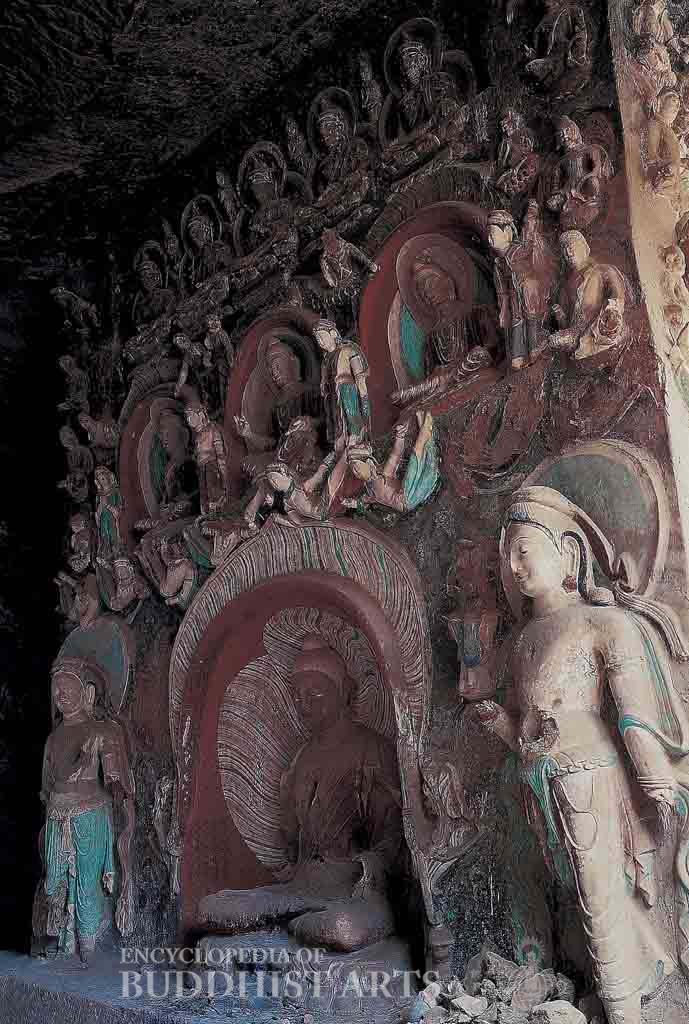
Jinta Temple East Cave: Niche Sculptures
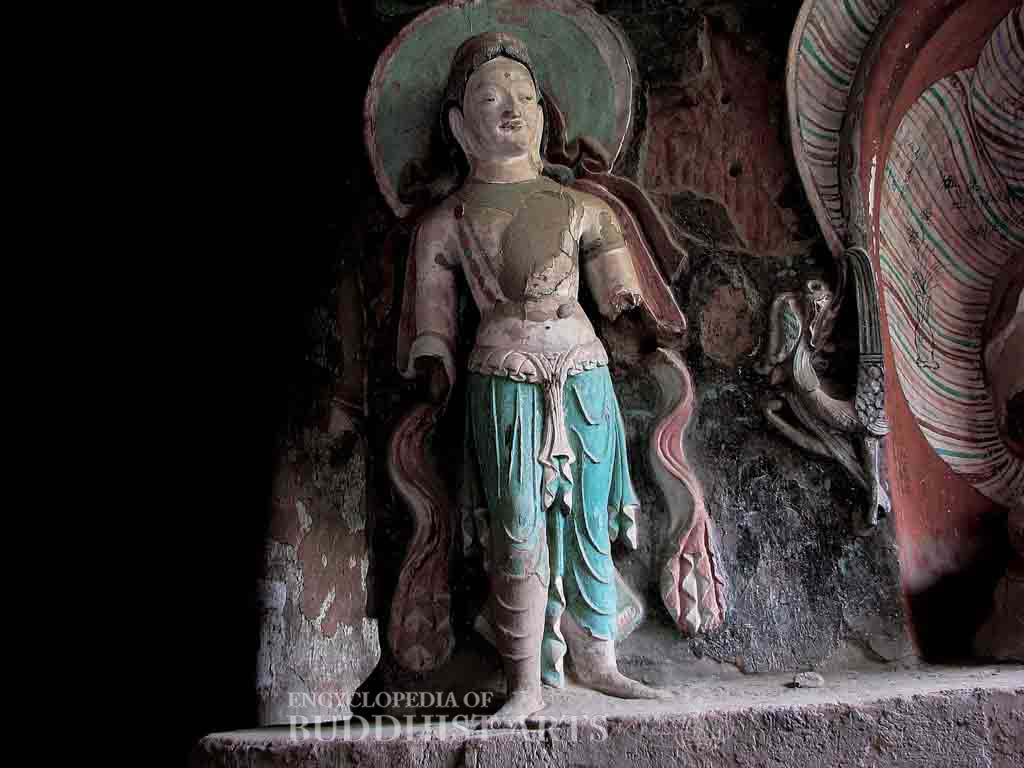
Jinta Temple East Cave: Niche Sculptures - Attendant Bodhisattva (left side)
Jinta Temple East Cave: Niche Sculptures
CHINA, Gansu, Zhangye; Northern Wei dynasty
These sculptures are located on the west side of the central pillar. On the lower level, there is an arched niche with a Buddha and two attendant Bodhisattvas on either side. The central Buddha image sits in full lotus position on a lotus platform and wears a monastic robe with thick folds that exposes the right shoulder. The hands of the Buddha have been damaged but appear to form the dhyana (meditation) mudra; a tranquil demeanor is present upon the rounded face which shows features that are reminiscent of the nomadic tribal people from the north.
The two Bodhisattvas have shoulder-length hair and long stoles which drape loosely down the sides of the figure. The upper torsos are bare, with the exception of neck ornaments decorating the chests. Thin dhotis are turned over at the waists and appear to flow freely along the contours of the legs.
There is a row of six apsaras hanging directly above the main niche and three more above the second level of niches. The apsaras are adorned with neck ornament and appear either bare-chested or wearing garments covering one or both shoulders. If not wearing a headdress, their hair is either tied up or worn long. Despite posing in a U-shape, the true forms of the dancing apsaras are more angular; their animated movements are skillfully emphasized by the shapely arch of the niche. The features of these apsaras show evidence of the departure from Gandharan style art.
For more details, go to the Encyclopedia of Buddhist Arts: Caves R-L, page 440.
Cite this article:
author = Hsingyun and Youheng and Johnson, Peter and Mankuang and Huntington, Susan and Edson, Gary and Neather, Robert,
booktitle = {Encyclopedia of Buddhist Arts: Caves R-L},
pages = 440,
title = {{Jinta Temple East Cave: Niche Sculptures}},
volume = 6,
year = {2016}}