
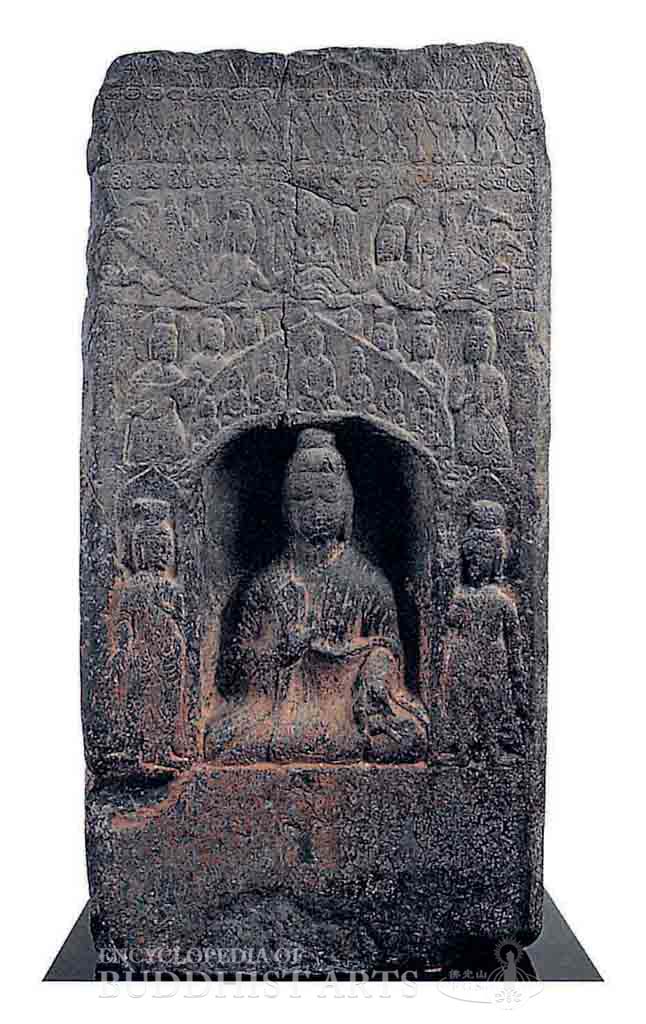
Pagoda Tier
Limestone
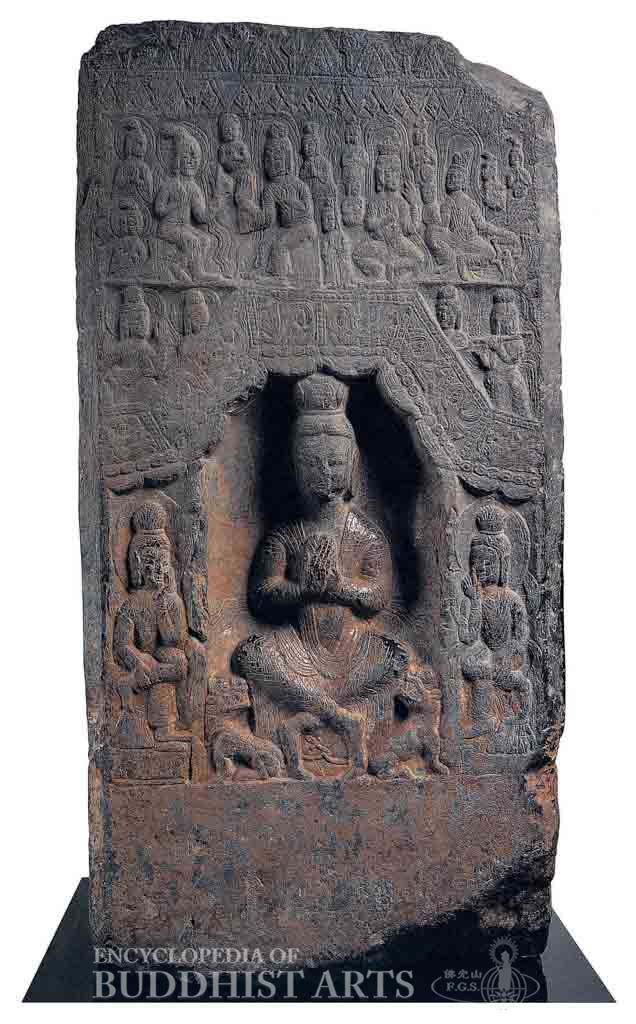
Pagoda Tier (back)
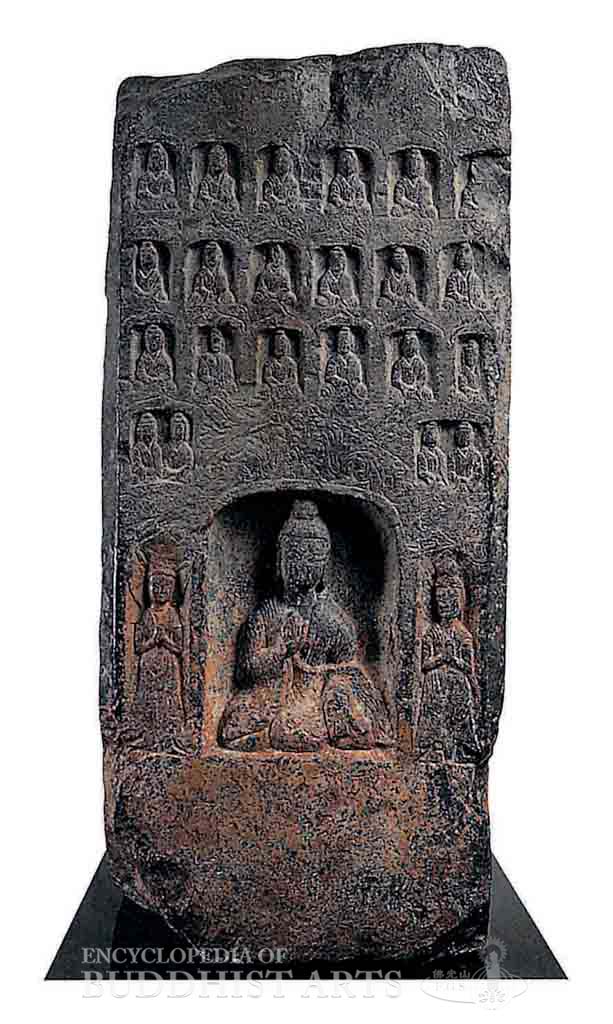
Pagoda Tier (left side)
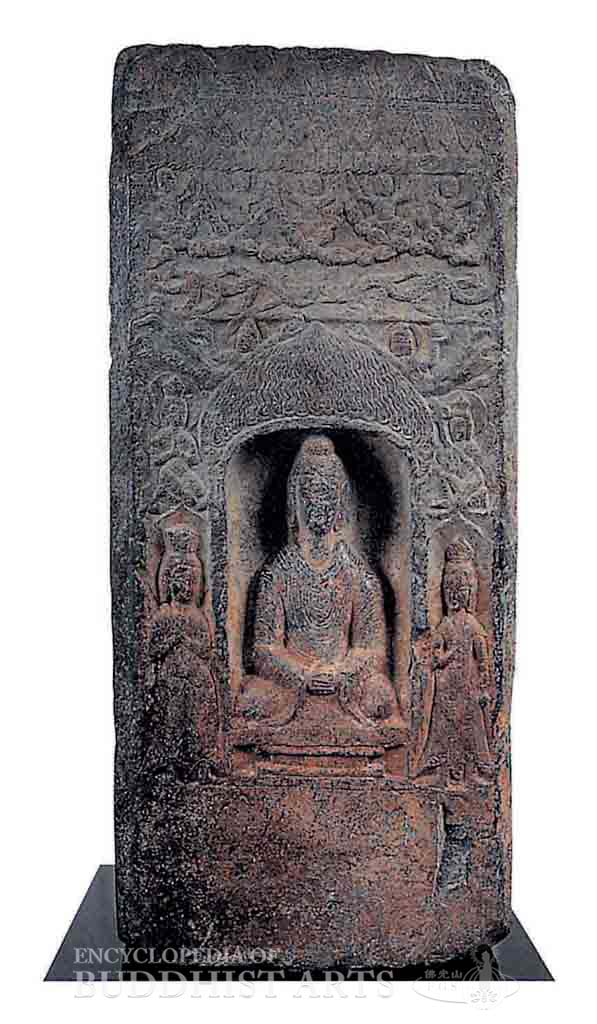
Pagoda Tier (right side)
Pagoda Tier
CHINA; Northern Wei dynasty
All four sides of the sculptured tier have niches that feature either a Buddha or a Bodhisattva triad. Experts believe it was made in China during the 6th century and was originally part of a stone pagoda. The sculpture was later taken to Japan.
The front has a rounded-arch with a Buddha seated inside, flanked by two Bodhisattvas. The Buddha makes what is likely the abhaya (fearlessness) mudra with his right hand and the varada (wish-granting) with the left hand. The remaining surface is covered in bas-relief and includes a pair of Bodhisattvas in three-quarter view, a row of seven seated Buddhas on the ogival lintel and six heavenly beings standing behind it. The remaining section is filled with decorative motifs.
The back shows a Bodhisattva triad. The main Bodhisattva is seated with palms joined in reverence and legs crossed at the ankles. Two Dharma-protecting lions sit at his feet. The attendant Bodhisattvas are in the contemplative posture with one leg crossed over the knee. Heavenly musicians line the lintel. The area above depicts Asita predicting Prince Siddhartha’s future.
There is a Buddha triad on the left side of the sculpture. The Buddha displays abhaya (fearlessness) mudra while his attendant Bodhisattvas have their palms joined in reverence. The area above is filled with a series of seated Buddhas in shallow niches, supposedly representing the Thousand Buddhas.
A meditating Buddha is seen on the right side. The attendant Bodhisattva on the Buddha’s right holds a vase while another joins palms in reverence. The area above the niche is filled with apsaras in flight.
For more details, go to the Encyclopedia of Buddhist Arts: Sculpture N-Sr, page 779.
Cite this article:
author = Hsingyun and Youheng and Lovelock, Yann and Chou, Yuan and Huntington, Susan and Edson, Gary and Neather, Robert,
booktitle = {Encyclopedia of Buddhist Arts: Sculpture N-Sr},
pages = 779,
title = {{Pagoda Tier}},
volume = 12,
year = {2016}}