
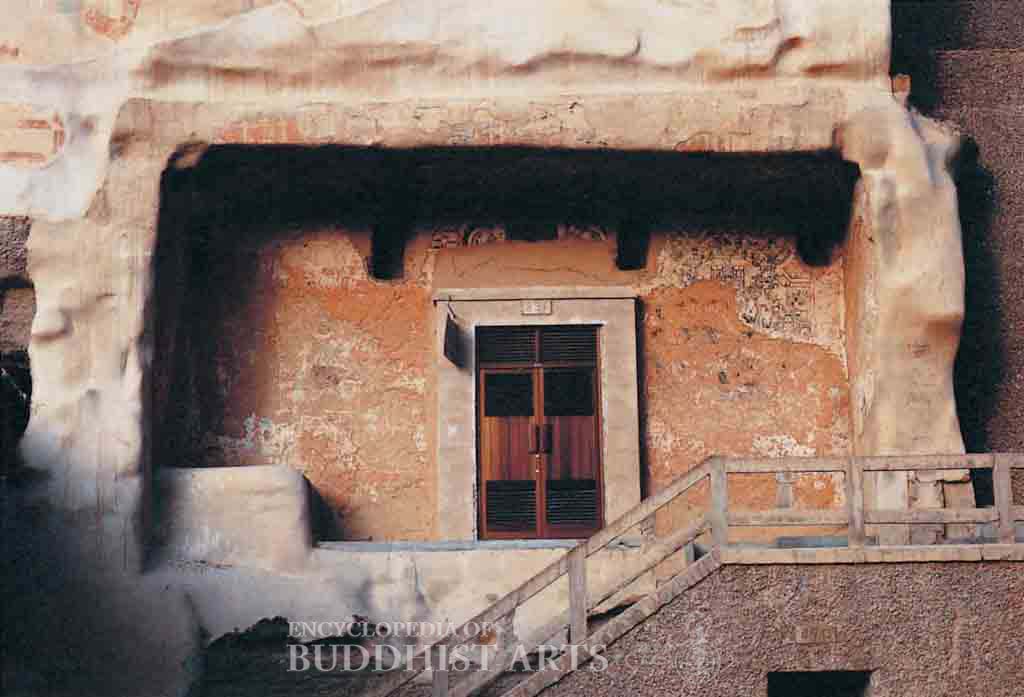
Mogao Cave 231
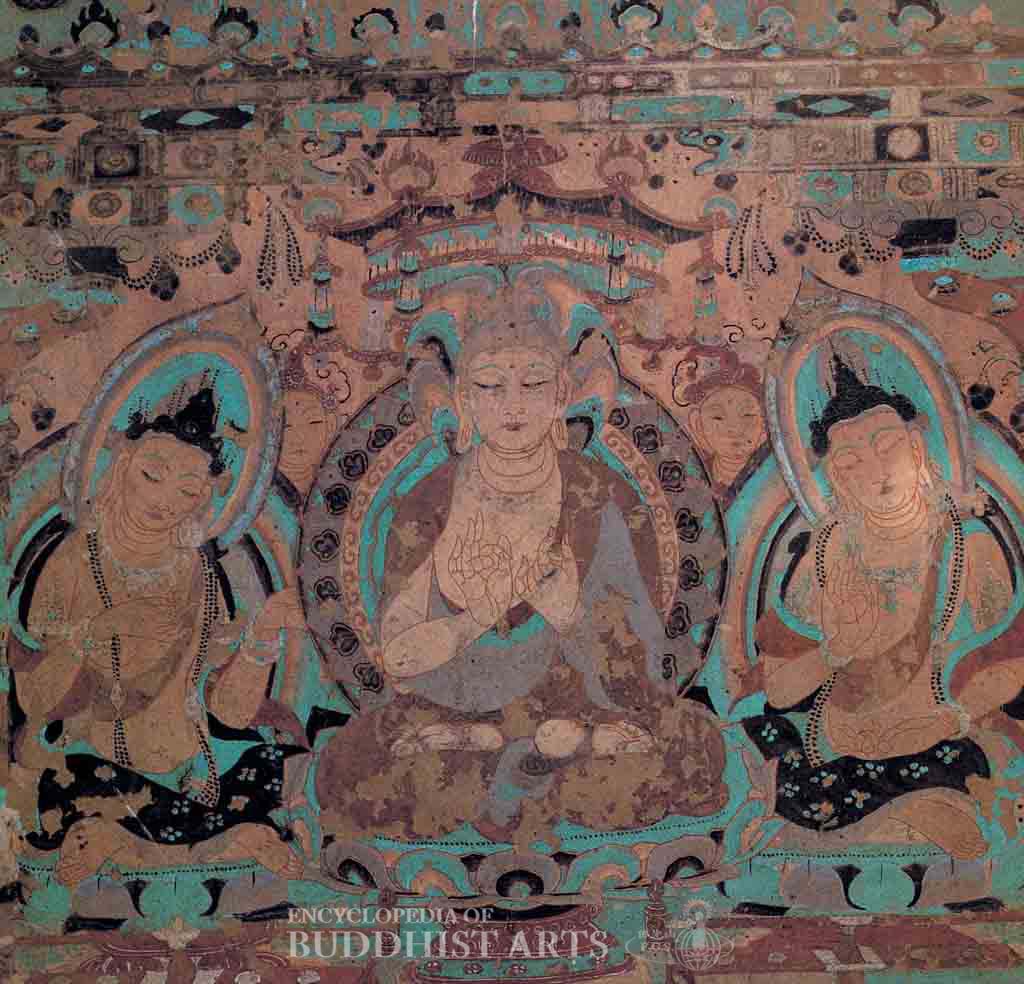
Mogao Cave 231: Illustration of the Amitayurdhyana Sutra - Amitabha Buddha Triad (south wall)
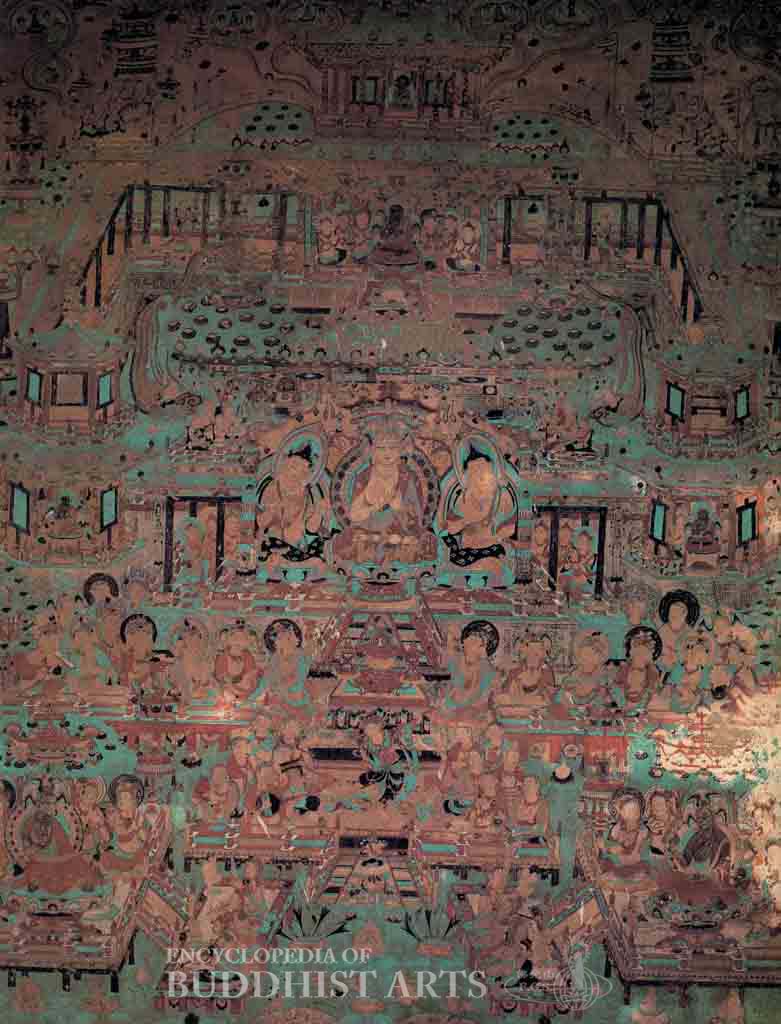
Mogao Cave 231: Illustration of the Amitayurdhyana Sutra (south wall)
Mogao Cave 231
CHINA, Gansu, Dunhuang
This shrine cave is situated in the central section of the south area of the site. It is known as the Yin Jiazheng Cave, after its main donor. According to donor records and inscriptions, the cave was constructed in 839 of the Mid-Tang period (756–846). It is composed of an antechamber and a main chamber connected by a corridor.
The antechamber contains images of Thousand-Armed, Thousand-Eyed Avalokitesvara, Amoghapasa Avalokitesvara, and Cintimanicakra Avalokitesvara on the ceiling. Above the entrance on the back (west) wall are two more Avalokitesvara images. There are sutra illustrations from the Song dynasty (960–1279) on either side of the entrance, and below these are Heavenly Kings from the Mid-Tang period. The corridor was repainted during the Song dynasty.
The main chamber has a truncated pyramidal ceiling and a niche in the back wall. Within the caisson at the center of the ceiling is a lion image surrounded by lotuses, decorative patterns, and apsaras. There are Thousand Buddha images on the four slopes of the ceiling, and in the center of each slope is a Buddha with two disciples and two Bodhisattvas.
The square niche in the back wall contains statues of a Buddha and two disciples which were repaired during the Qing dynasty (1644–1911). On the ceiling of the niche are about 40 panels portraying auspicious Buddha figures said to have originated from various, often faraway, regions, most of them associated with legends of miraculous events. The walls of the niche feature narrative illustrations and portraits of monks. Outside the niche on either side are illustrations of Manjusri and Samantabhadra Bodhisattvas, and on the lower section of the back wall are portraits of donors from the Song dynasty.
On the south wall are illustrations of the Devata Sutra, Lotus Sutra, and Amitayurdhyana Sutra, each with panels below depicting the Question of Brahma, the “Universal Gateway Chapter,” and Ajatasatru and the Sixteen Contemplations, respectively. On the north wall are illustrations of the Medicine Buddha Sutra, Avatamsaka Sutra, and Maitreya Sutras, each also with panels below depicting such themes as the Twelve Great Vows, the nine kinds of untimely death, Chapters from Avatamsaka Sutra, and scenes from the Sutra on the Descent of Maitreya. Above the cave entrance on the front (east) wall are portraits of Yin Jiazheng’s parents, along with an inscription stating their names and titles. To the left of the entrance on the front wall is an illustration of the Vimalakirti Sutra, and to the right is an illustration of the Returning Favors Sutra. Below these are images of Heavenly Kings and scenes from the Lotus Sutra.
For more details, go to the Encyclopedia of Buddhist Arts: Caves M-Mo, page 1035.
Cite this article:
author = Hsingyun and Youheng and Johnson, Peter and Mankuang and Huntington, Susan and Edson, Gary and Neather, Robert,
booktitle = {Encyclopedia of Buddhist Arts: Caves M-Mo},
pages = 1035,
title = {{Mogao Cave 231}},
volume = 7,
year = {2016}}