
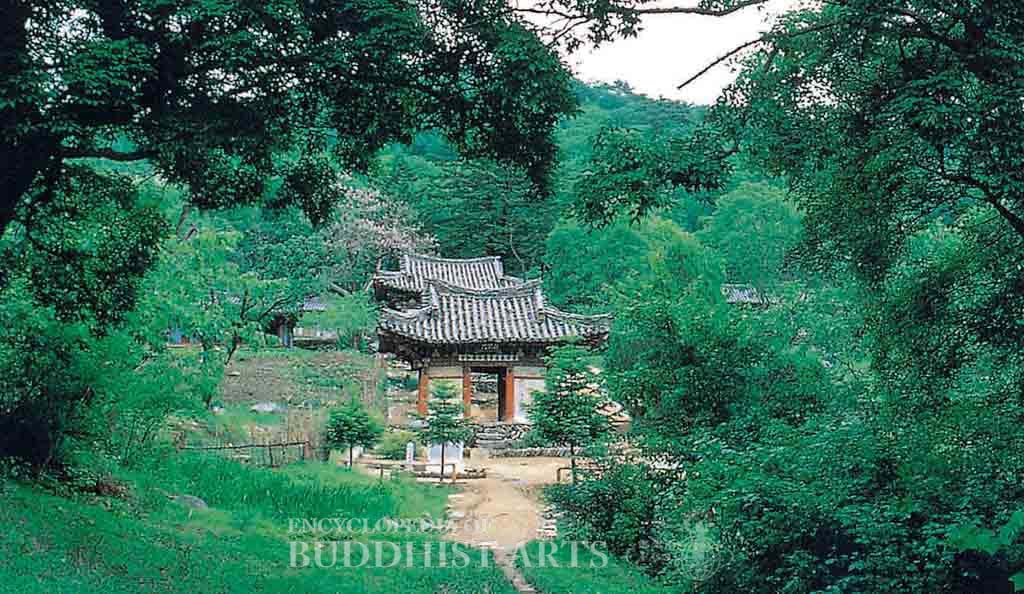
Yanghwasa Temple
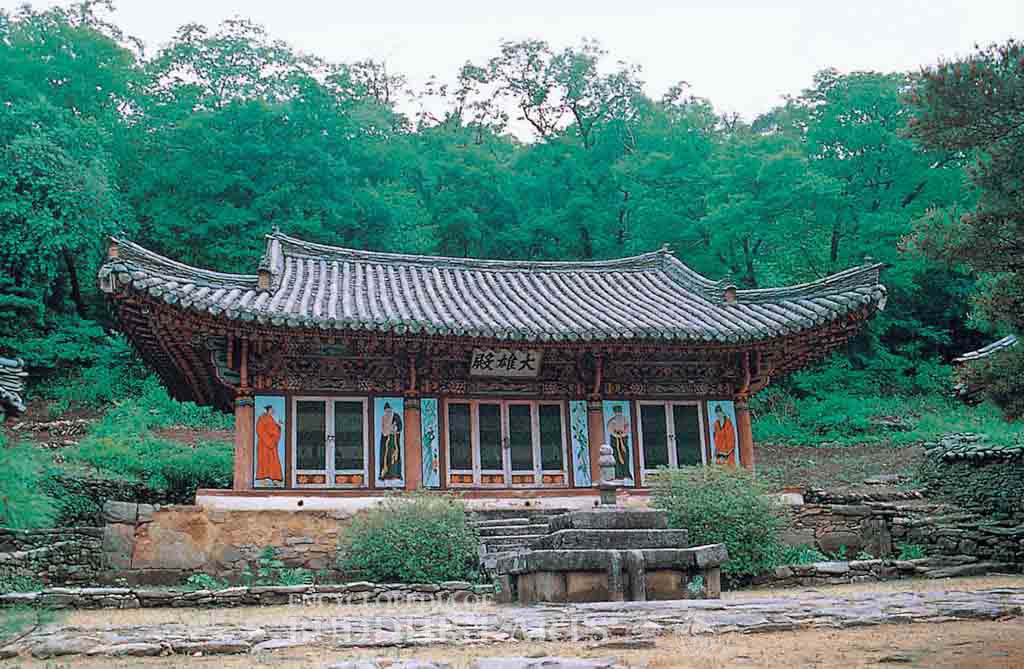
Yanghwasa Temple: Great Hero Hall
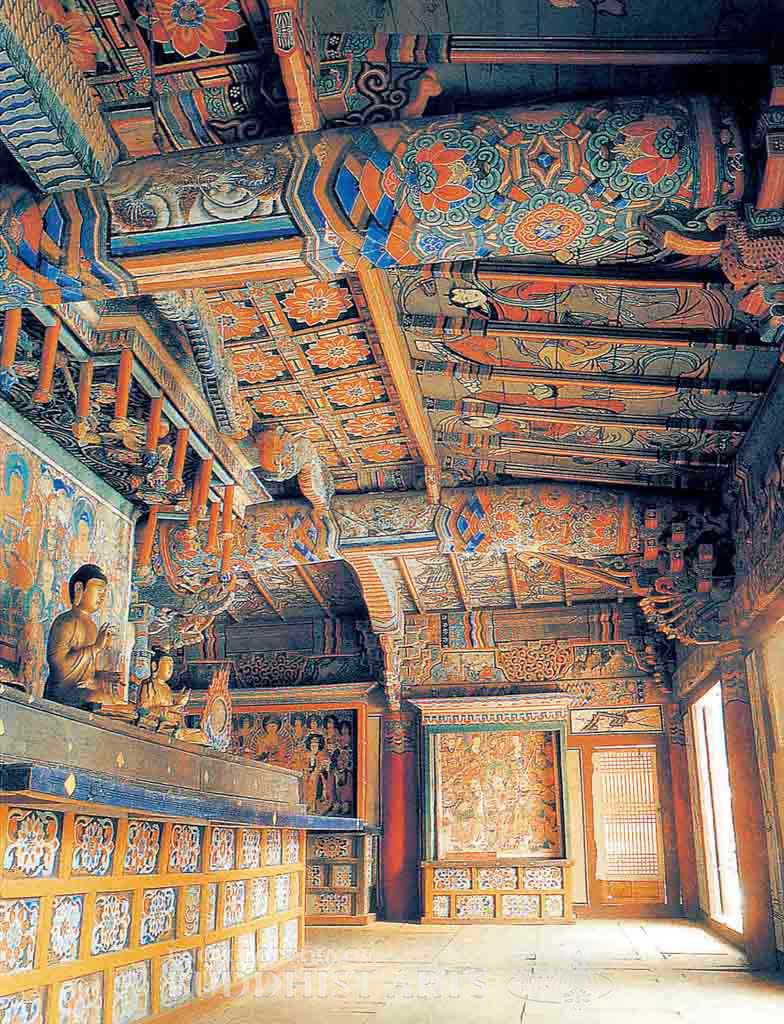
Yanghwasa Temple: Great Hero Hall (interior)
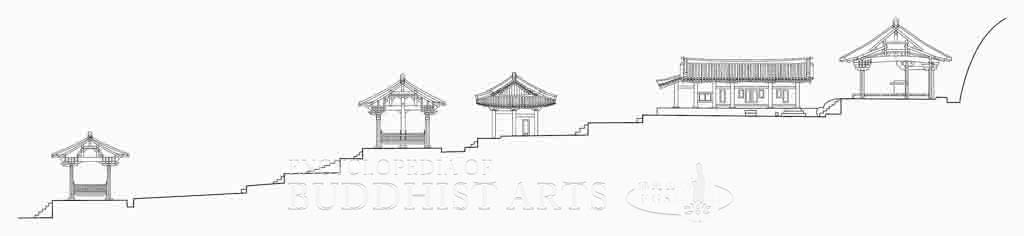
Yanghwasa Temple (section drawing)
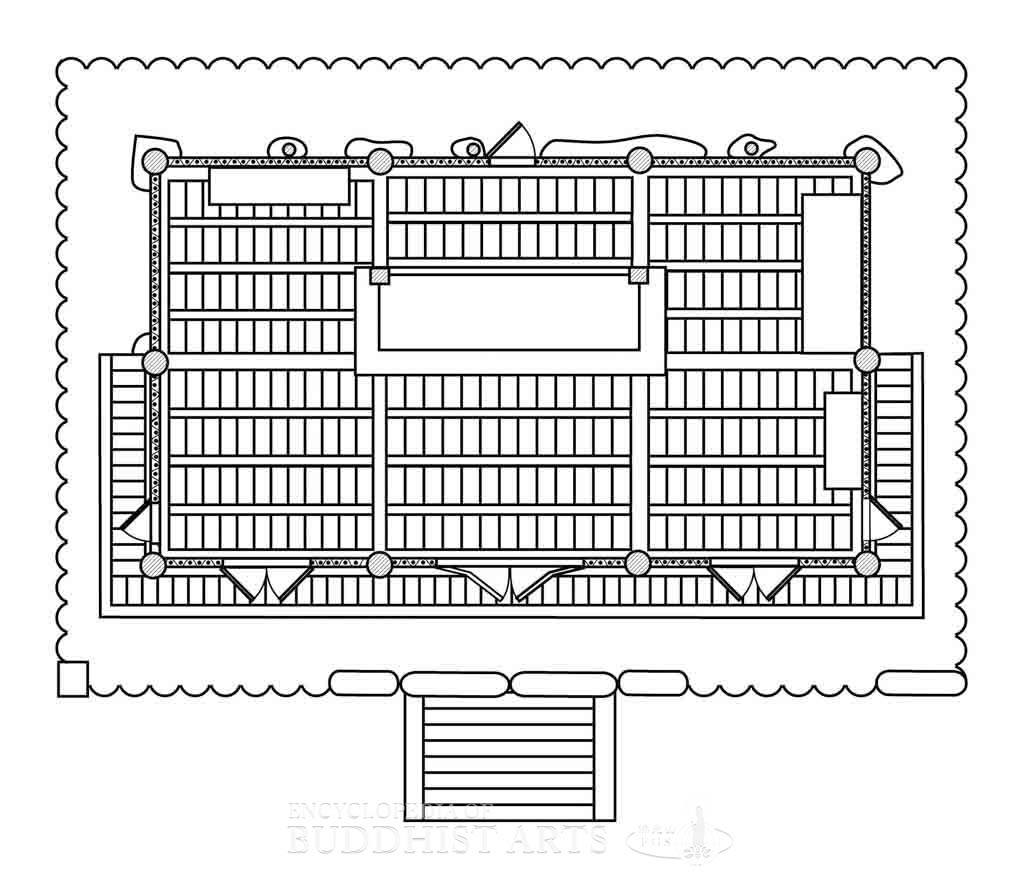
Yanghwasa Temple: Great Hero Hall (plan)
Yanghwasa Temple
NORTH KOREA, North Pyongan, Taechon
According to its records, the temple was established in 872 during the Unified Silla dynasty, and rebuilt in 992 during the Goryeo dynasty. It was reconstructed during the Joseon dynasty (1392–1910). It is listed as National Treasure No. 55.
The temple is built on a slope so that the buildings are on different levels, as is typical of temples in the mountains. The main buildings are the Gate of Liberation, Heavenly King Gate, Great Hero Hall, Judgment Hall, Phoenix Pavilion, and Mind-Sharpening Hall.
The Gate of Liberation is a three-by-two bay structure, in the middle of which is the entrance. Judging from its architectural style, it was most likely built when the Heavenly King Gate was reconstructed in 1656 during the Joseon dynasty. The Heavenly King Gate is the oldest structure in the temple. It is a three-by-two bay structure, within which statues of the four Heavenly Kings are placed, along with paintings.
The Great Hero Hall is the main hall and was built in 992 during the Goryeo dynasty, and reconstructed in 1461 during the Joseon dynasty. It was later destroyed by fire in 1874 and had to be completely rebuilt. The three-by-two bay hall has a single-eave hip-and-gable roof. The central bay contains four lattice doors painted with flowers on either side. The side bays have double doors, at the sides of which are paintings of human figures. The bracket sets at the front and on the sides of the hall consist of one tier and are adorned with circular carvings. Inside three-tier bracket sets are used and they are decorated with dragon heads. Between the beams on the ceiling there are caissons decorated with lotuses. A bronze seated Buddha statue is enshrined within the hall. Assemblies of Sakyamuni Buddha, Medicine Buddha, and Amitabha Buddha are painted behind the statue and on the two sides.
For more details, go to the Encyclopedia of Buddhist Arts: Architecture T-Z, page 1342.
Cite this article:
author = Hsingyun and Youheng and Johnson, Peter and Mankuang and Lancaster, Lewis,
booktitle = {Encyclopedia of Buddhist Arts: Architecture T-Z},
pages = 1342,
title = {{Yanghwasa Temple}},
volume = 4,
year = {2016}}