
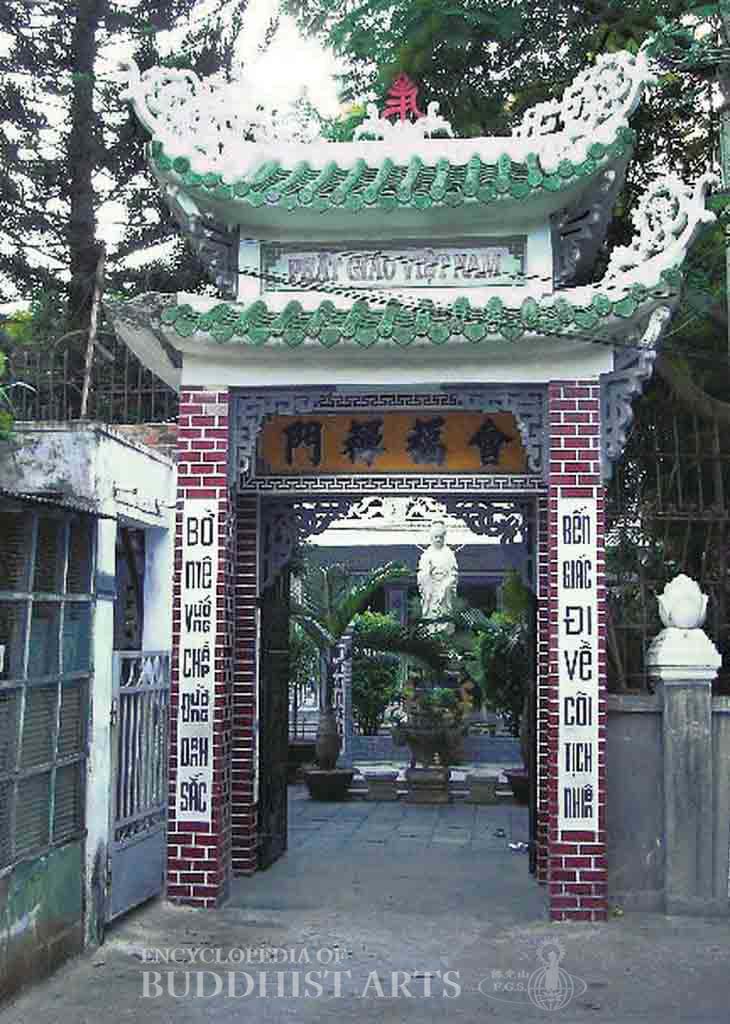
Hoi Phuoc Temple: Main Gate
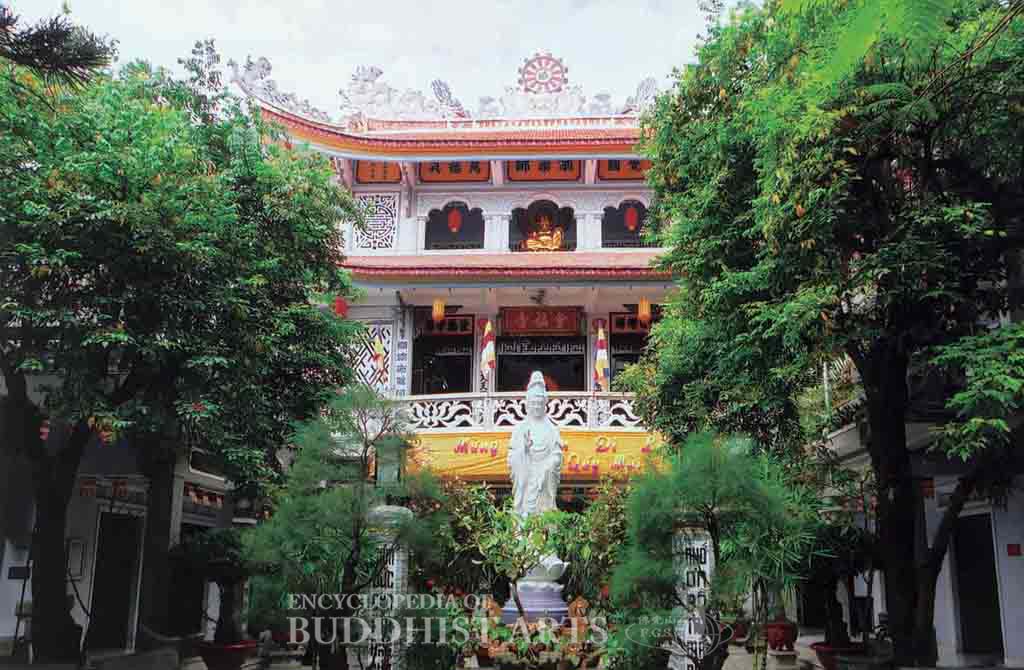
Hoi Phuoc Temple: Main Hall
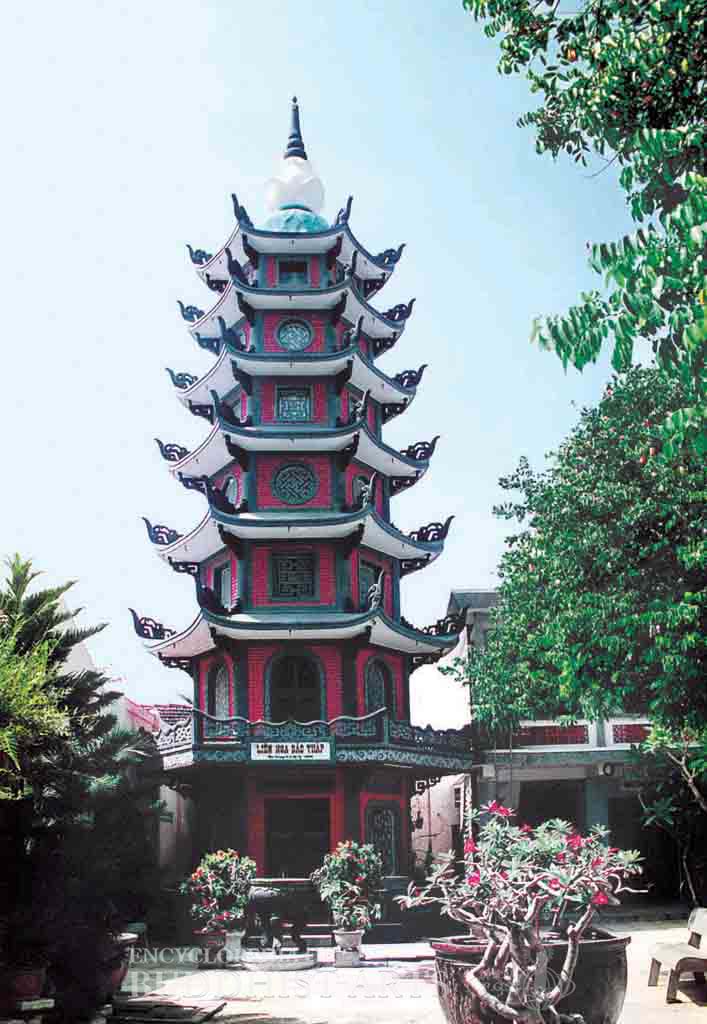
Hoi Phuoc Temple: Lotus Pagoda
Hoi Phuoc Temple
VIETNAM, Khanh Hoa, Nha Trang
Hoi Phuoc means Gather Blessings and it was built in 1680 by the monks Phat An and Tich Vien. It was later moved to a vast uninhabited desert area, which gave the temple its nickname of Sand Temple. Construction of the Lotus Pagoda began in 1988 and was completed three years later.
The principal buildings of the temple include the main hall and the Lotus Pagoda. The main hall was previously a single-story building, which was subsequently rebuilt with a three-story facade. On the roof ridge there is a Dharma wheel with dragons on either side. There is a standing statue of Avalokitesvara Bodhisattva in front of the hall and a seated statue of Sakyamuni Buddha inside. The seven-story Lotus Pagoda is 18 m high. The prominent eaves curve upwards at the corners. The spire consists of an inverted bowl, a white lotus, stacked rings, and a jewel. The pagoda contains the relics of past patriarchs. The temple houses a great bell that was cast when the monk Dao An served as abbot.
For more details, go to the Encyclopedia of Buddhist Arts: Architecture G-L, page 443.
Cite this article:
author = Hsingyun and Youheng and Johnson, Peter and Mankuang and Lancaster, Lewis,
booktitle = {Encyclopedia of Buddhist Arts: Architecture G-L},
pages = 443,
title = {{Hoi Phuoc Temple}},
volume = 2,
year = {2016}}