
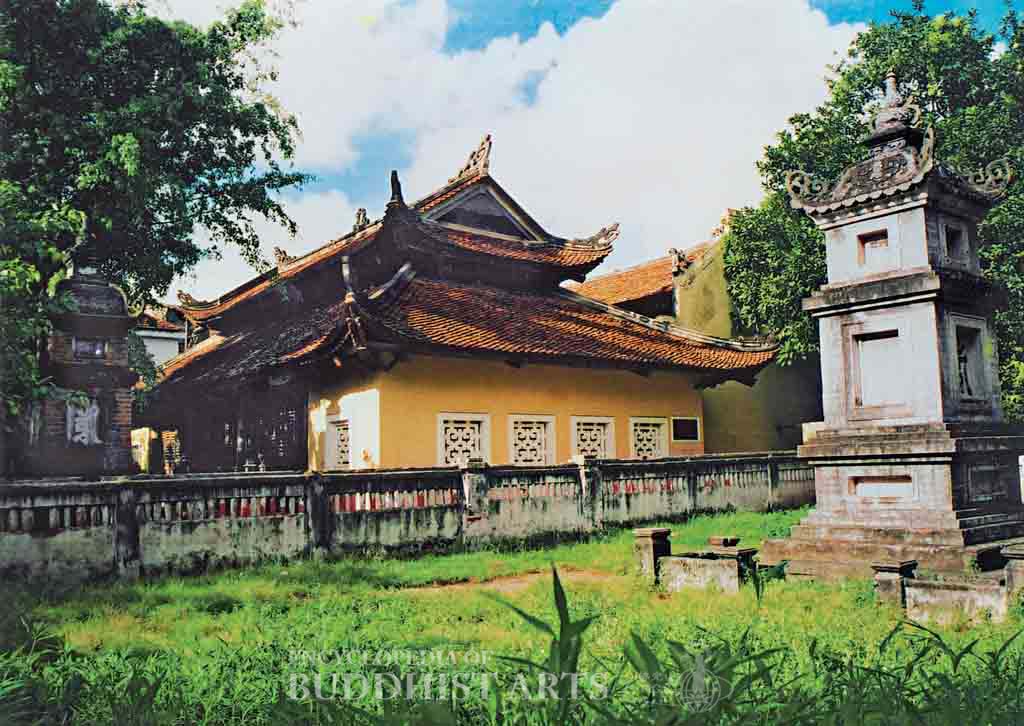
Hoe Nhai Temple
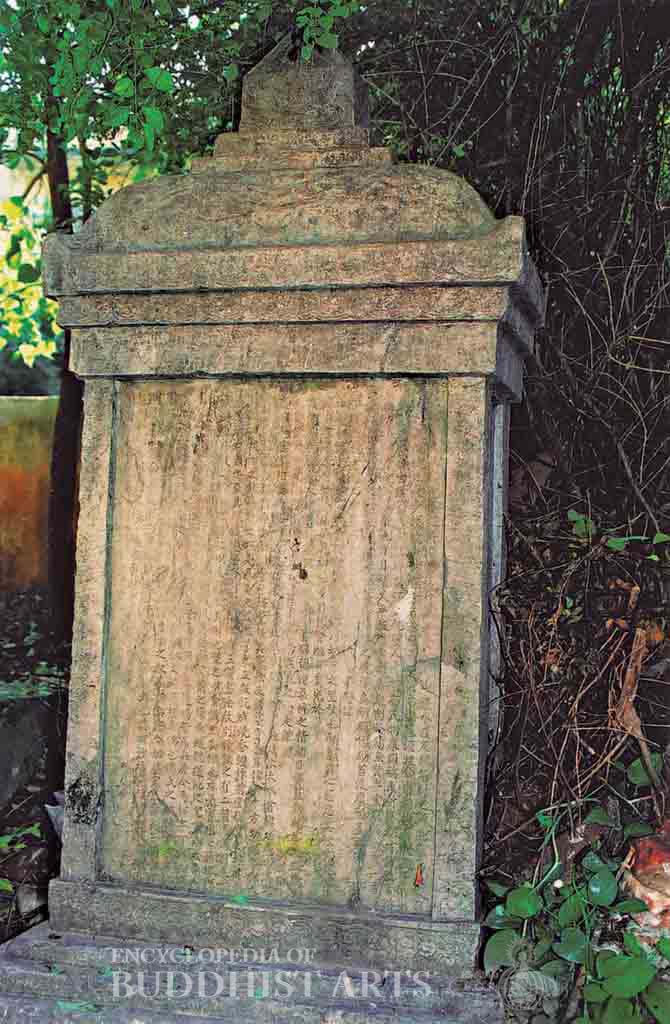
Hoe Nhai Temple: Stone Stele
Hoe Nhai Temple
VIETNAM, Hanoi
The temple was built during the Ly dynasty (1009–1225). It was subsequently repaired and underwent renovation in 1687, 1899, and 1952.
The principal buildings in the temple include the main hall and the An Quang Stupa. The main hall has a double-eave hip-and-gable roof, with its eaves curving upwards at the corners. The windows are carved in an intricate pattern. The hall contains several wooden and bronze statues. Among them there is an extraordinary statue depicting King Le Hy Tong (reigned 1675–1705) bowing in repentance and bearing a seated Buddha statue on his back.
The An Quang Stupa is located on the left side of the complex, and was built in memory of the monk Thich Quang Duc, who immolated himself in 1963. The temple contains numerous stone steles relating to the history of the temple.
For more details, go to the Encyclopedia of Buddhist Arts: Architecture G-L, page 438.
Cite this article:
author = Hsingyun and Youheng and Johnson, Peter and Mankuang and Lancaster, Lewis,
booktitle = {Encyclopedia of Buddhist Arts: Architecture G-L},
pages = 438,
title = {{Hoe Nhai Temple}},
volume = 2,
year = {2016}}