
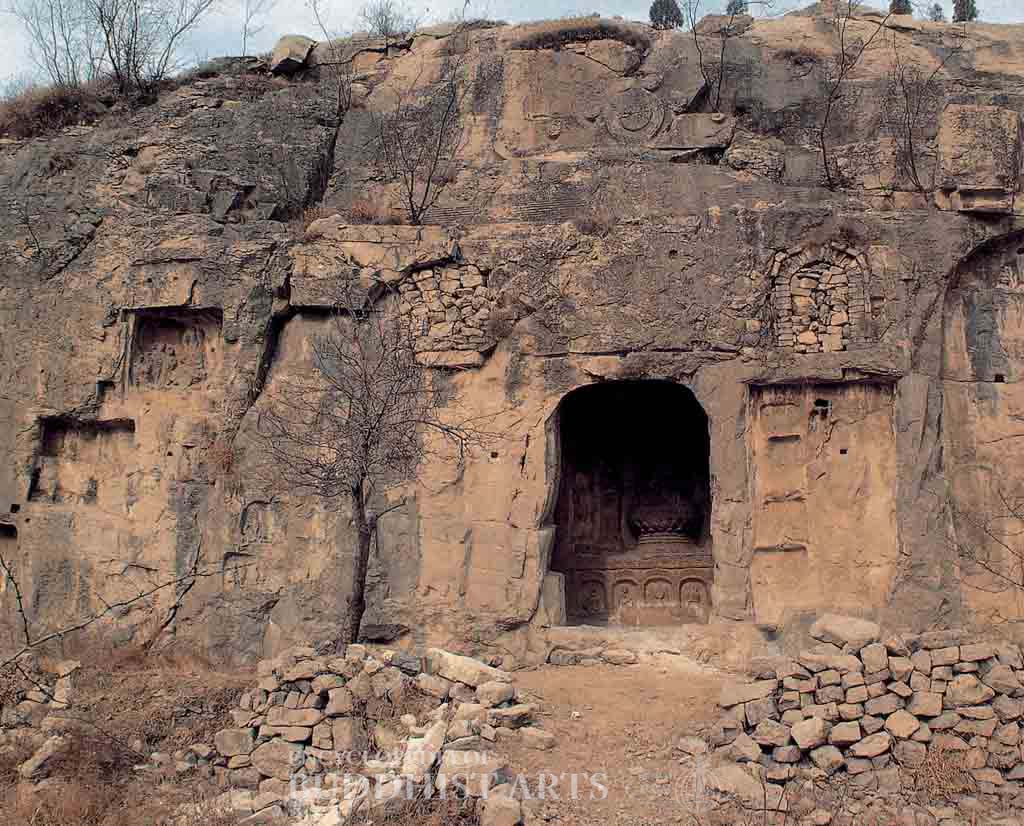
Shuiyu Temple Grottoes: West Grotto
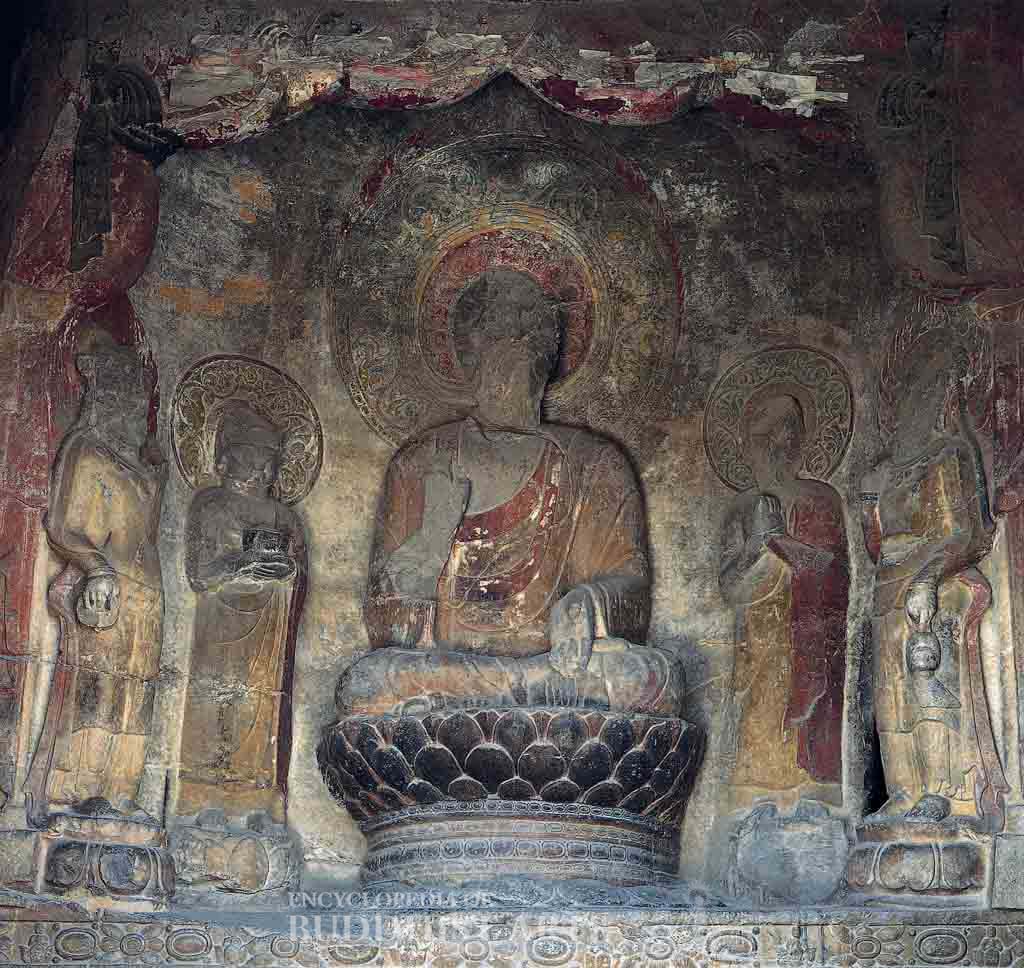
Shuiyu Temple Grottoes: West Grotto (central pillar, front)
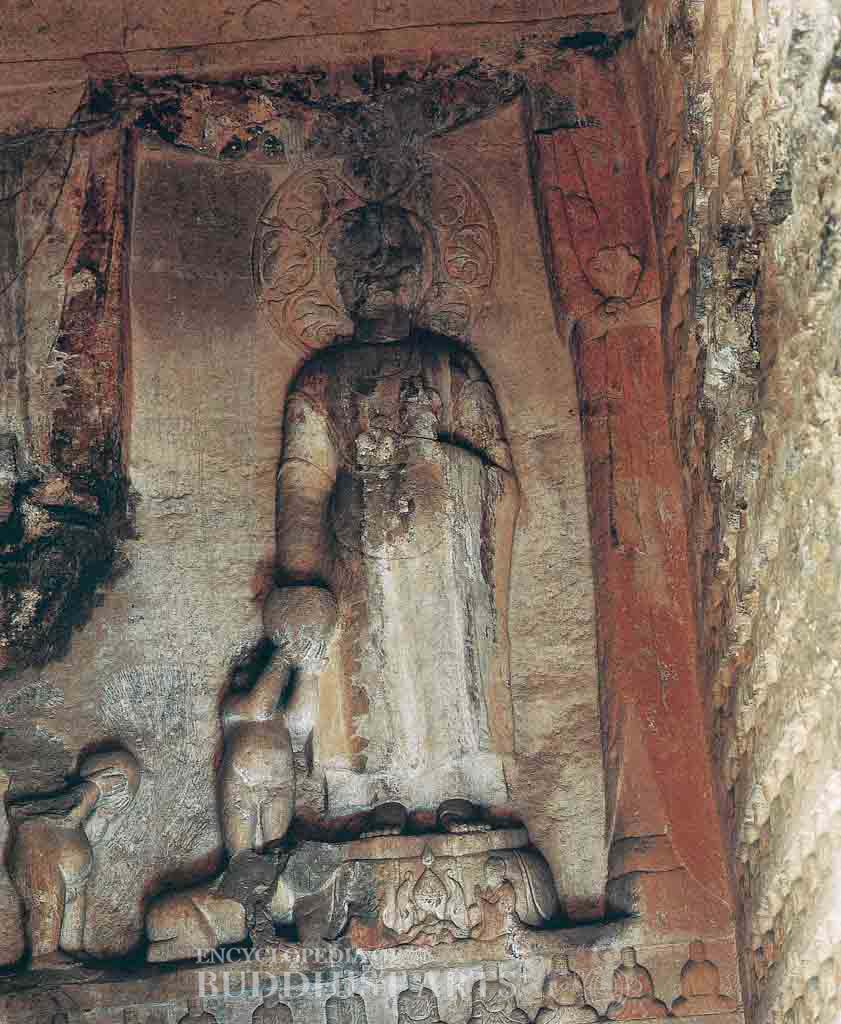
Shuiyu Temple Grottoes: West Grotto - King Asoka Making a Sand Offering
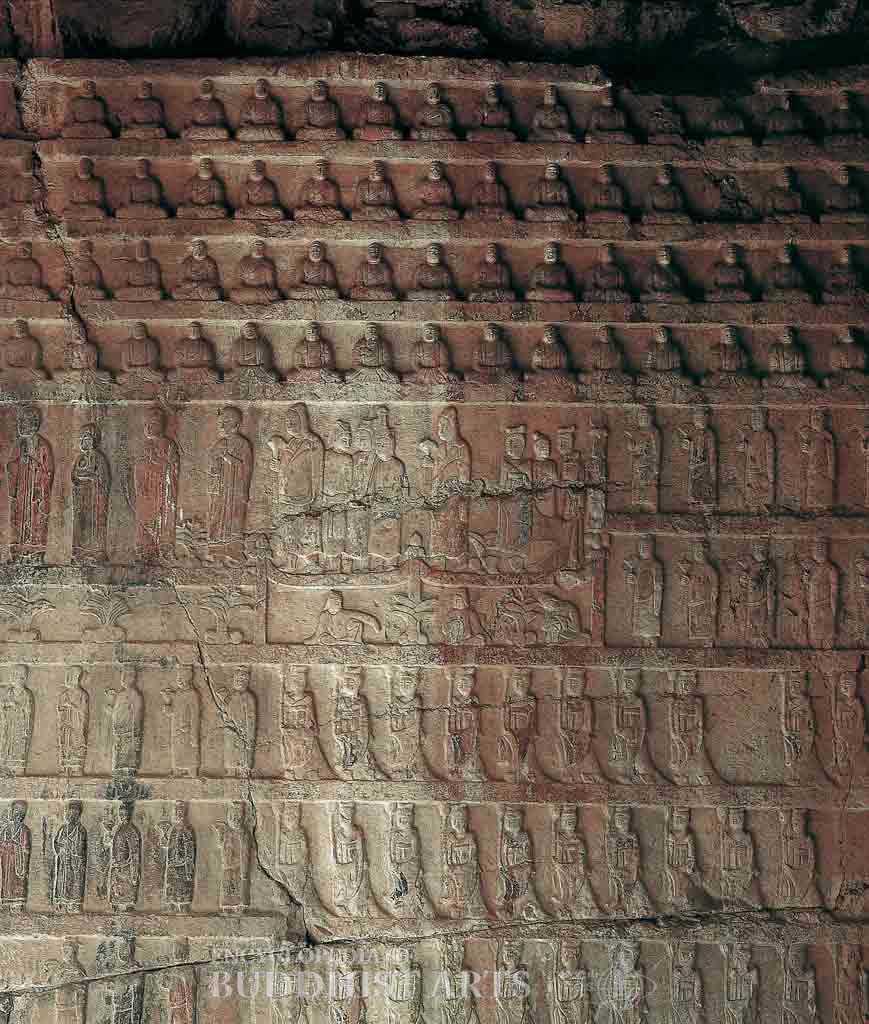
Shuiyu Temple Grottoes: West Grotto - Front Wall (right side)
Shuiyu Temple Grottoes
CHINA, Hebei, Handan
These south-facing grottoes are located in the eastern foothills of a low cliff face on Gushan (Drum Mountain), within the Fengfeng mining district of Handan, Hebei. The main grottoes that survive are the West Grotto and East Grotto, which were constructed during the Northern Qi (550–577) and Northern Song (960–1127) dynasties. In addition, these grottoes contain niche sculptures from the Late Tang period (846–907), as well as two sutra pillars constructed in the year 989 of the Northern Song dynasty.
The West Grotto is 5.4 m wide, 4.4 m to 4.9 m high, and 5.9 m deep. The central pillar is joined to the back (north) wall of the grotto. Niches can be found on the front, right, and left sides of the central pillar, each housing a Buddha, two disciples, and two Bodhisattvas. The east and west side walls both contain a niche with a Buddha and two Bodhisattvas. The Thousand Buddhas motif fills the upper section of these walls, while rows of figures making offerings take up the lower section.
Seven standing Buddhas can be found on the front (south) wall of the main chamber, above the grotto entrance. The walls on both sides of the entrance are covered with the Thousand Buddhas, figures making offerings, as well as monastics and laypeople paying respects to the Buddha. One sculpture of a monk has a cartouche identifying him as Chan Master Ding. A niche on the right side of the back wall contains a Buddha receiving offerings from three children, two of whom hold alms bowls. This niche depicts the story in which King Asoka makes a sand offering to the Buddha. A niche on the left side of the back wall houses two standing Buddhas.
The East Grotto contains platforms in front of the back and side walls. The platform in front of the back wall has a Buddha, two Bodhisattvas, and two disciples, while the west wall’s platform has a Buddha and two disciples. The east wall’s platform has a standing figure and Manjusri Bodhisattva seated in full lotus position atop a lion.
For more details, go to the Encyclopedia of Buddhist Arts: Caves Mo-S, page 1408.
Cite this article:
author = Hsingyun and Youheng and Johnson, Peter and Mankuang and Huntington, Susan and Edson, Gary and Neather, Robert,
booktitle = {Encyclopedia of Buddhist Arts: Caves Mo-S},
pages = 1408,
title = {{Shuiyu Temple Grottoes}},
volume = 8,
year = {2016}}