
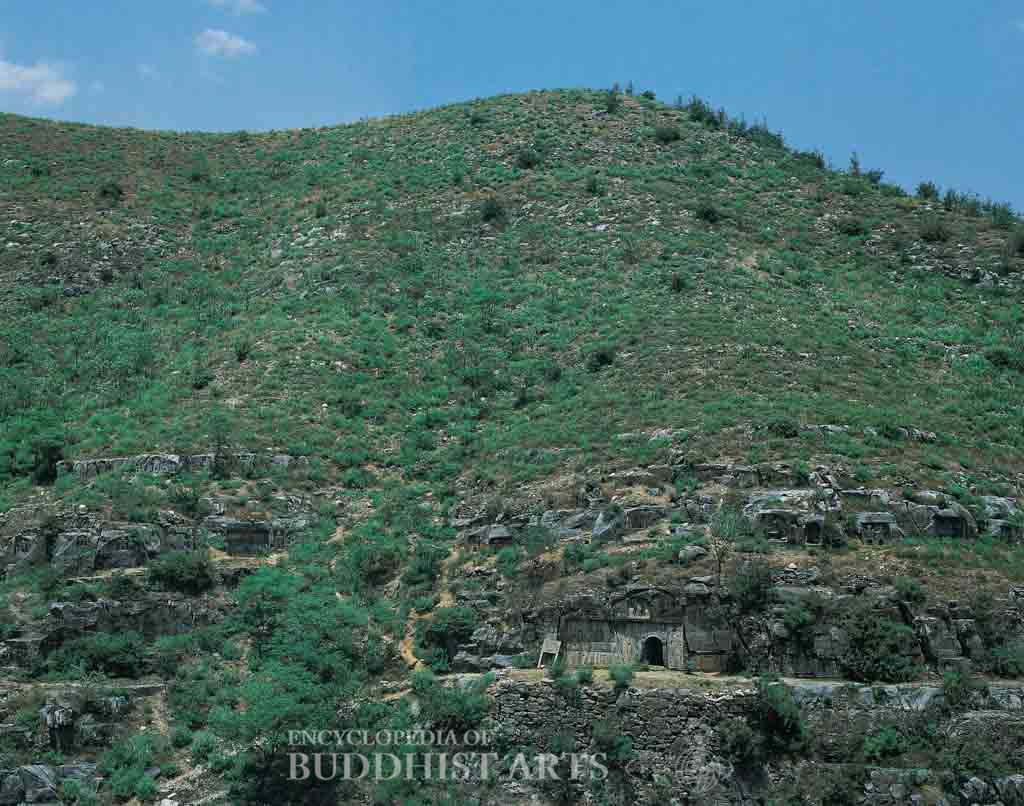
Lingquan Temple Caves: Dazhu Cave
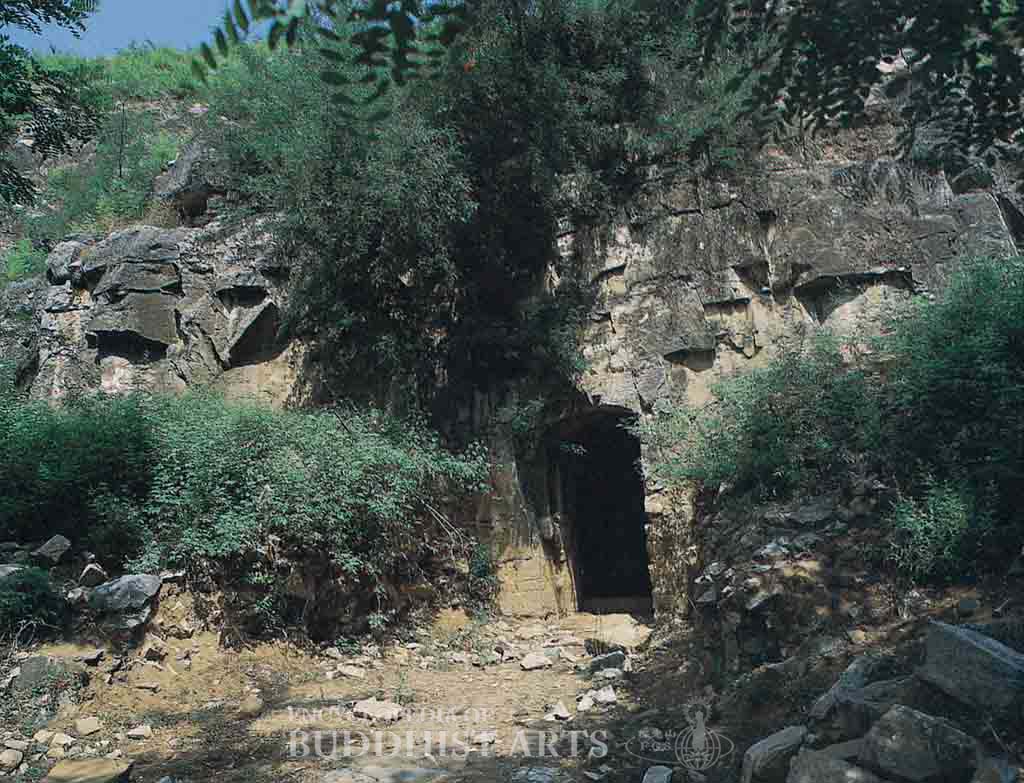
Lingquan Temple Caves: Daliu Cave
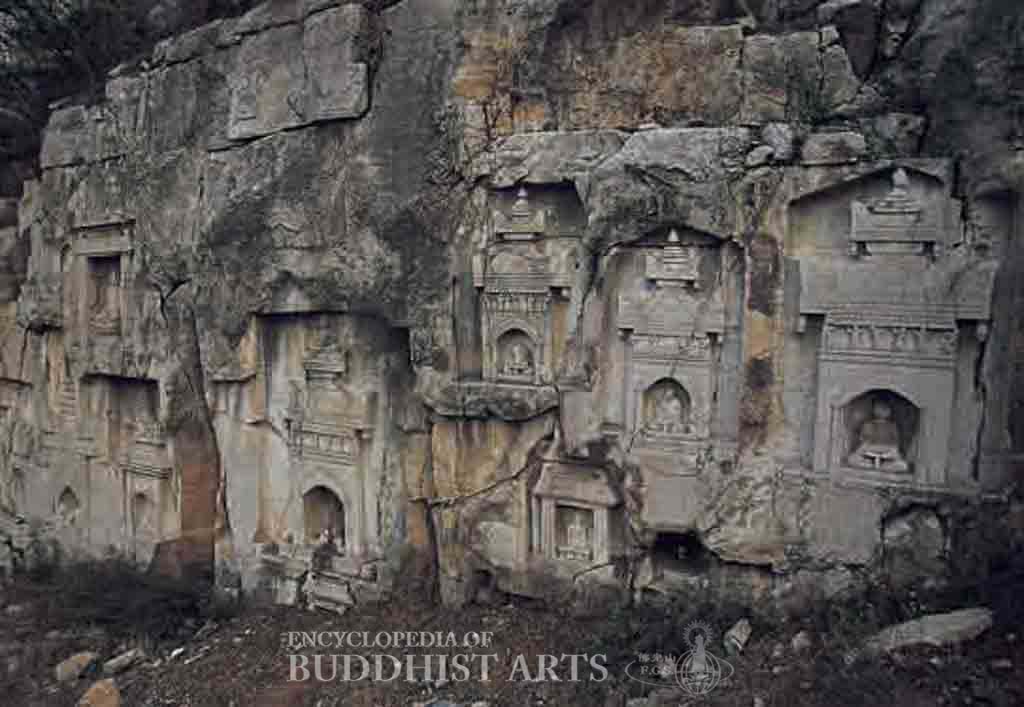
Lingquan Temple Caves: Pagodas
Lingquan Temple Caves
CHINA, Henan, Anyang
The Lingquan Temple Caves are located between Baoshan (Treasure Mountain) and Lanfengshan (Misty Peak Mountain), and was formerly known as the Baoshan Temple Caves. The site includes the Daliu Cave and Dazhu Cave. Together with Xiangtangshan Grottoes, it is situated along the main road from Yecheng (present day Linzhang, Hebei) to Taiyuan in Shanxi. Excavated between 534 and 618, the caves were listed as a National Cultural Heritage Site in 1996.
Daliu Cave, commonly known as Daoping Shitang, is located in the foothills of east Lanfengshan. To the side of the cave entrance an inscription states that the cave was excavated in the year 546 by a monk named Daoping.
Located in the southern foothills of Baoshan, Dazhu Cave was constructed in 589 by Lingyu, Daoping’s disciple. Facing south, the rectangular cave is 3.43 m in width, 2.6 m in height, and 3.4 m in depth. Reliefs of Narayana and Kapila are found on either side of the entrance. Separate niches carved into the three interior cave walls each feature a Buddha triad. Based on an adjacent inscription, the back (north), east, and west walls hold a Vairocana Buddha Niche, Maitreya Buddha Niche, and Amitabha Buddha Niche, respectively. Carvings of the Seven Buddhas of the Past and the Thirty-Five Buddhas of the Past surround each niche. Carved on the front (south) wall is a bas-relief illustration of the Twenty-Four Masters Propagating the Dharma along with engravings of various scriptures, such as the Mahasamnipata Sutra. Carved on a cliff surface outside the cave are the Lotus Sutra, Names of the Thirty-Five Buddhas, and Buddhas of the Ten Directions.
In addition to the Daliu Cave and Dazhu Cave, on the mountains that surround Lingquan Temple there are 153 reliefs of pagodas carved between the Eastern Wei (534–550) and Song (960–1279) dynasties. It is one of the earliest forest of pagodas in China.
For more details, go to the Encyclopedia of Buddhist Arts: Caves R-L, page 648.
Cite this article:
author = Hsingyun and Youheng and Johnson, Peter and Mankuang and Huntington, Susan and Edson, Gary and Neather, Robert,
booktitle = {Encyclopedia of Buddhist Arts: Caves R-L},
pages = 648,
title = {{Lingquan Temple Caves}},
volume = 6,
year = {2016}}