
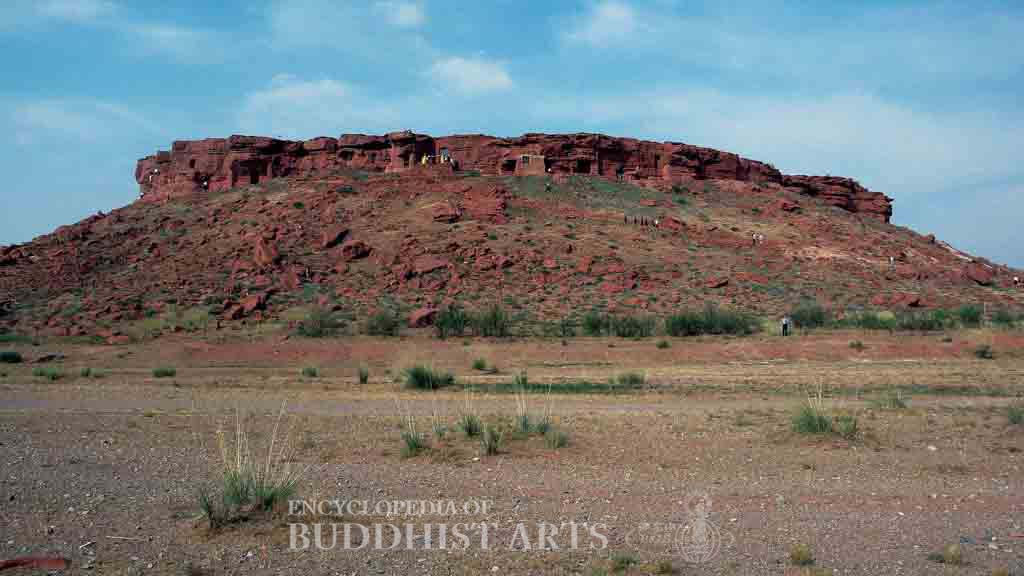
Arjai Caves
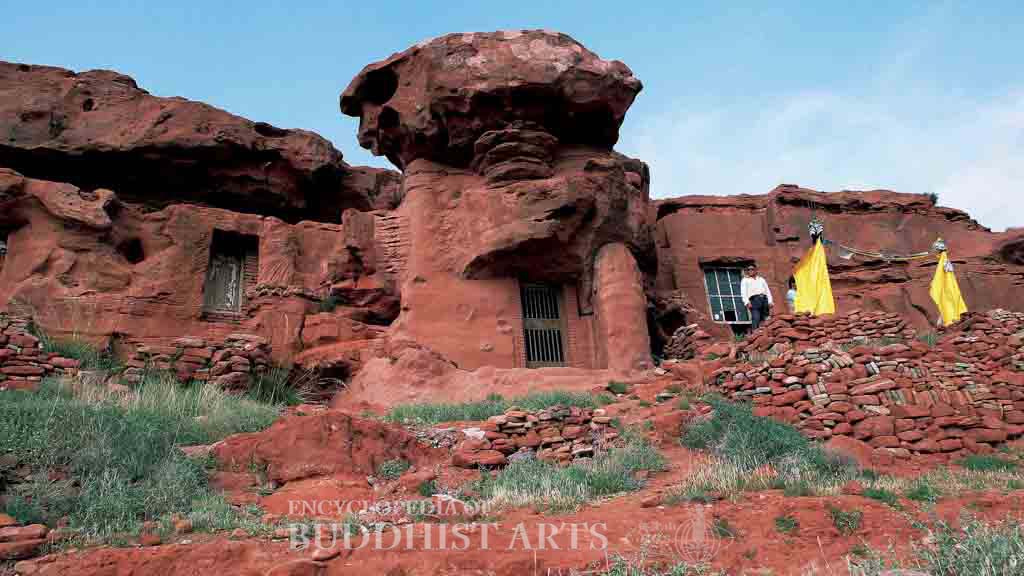
Arjai Caves
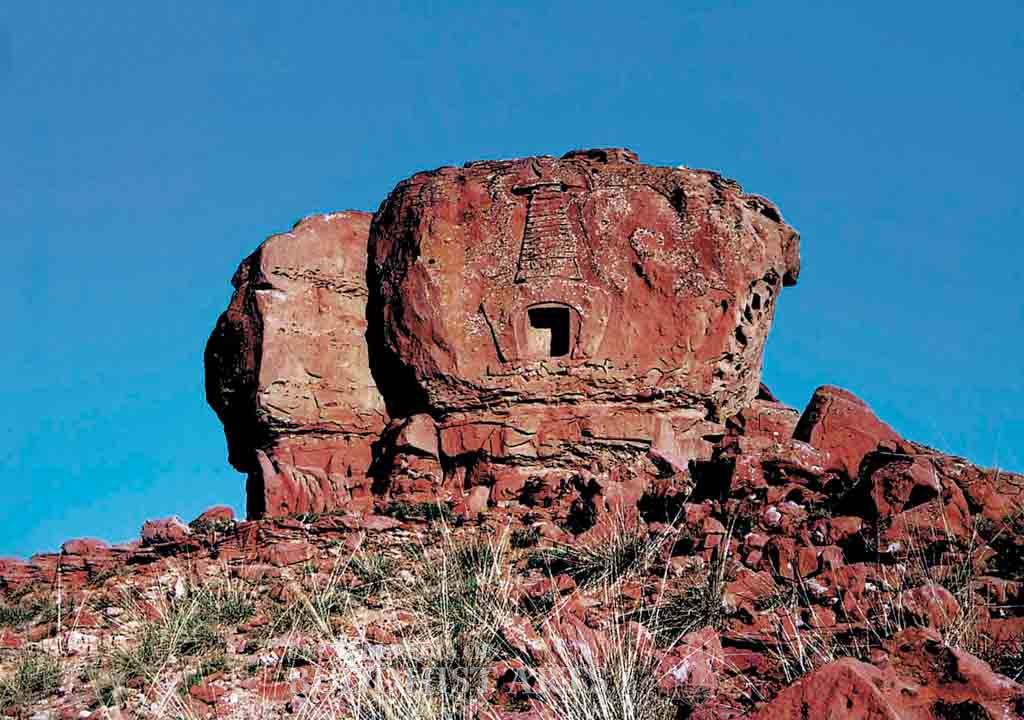
Arjai Caves: Stupa Relief
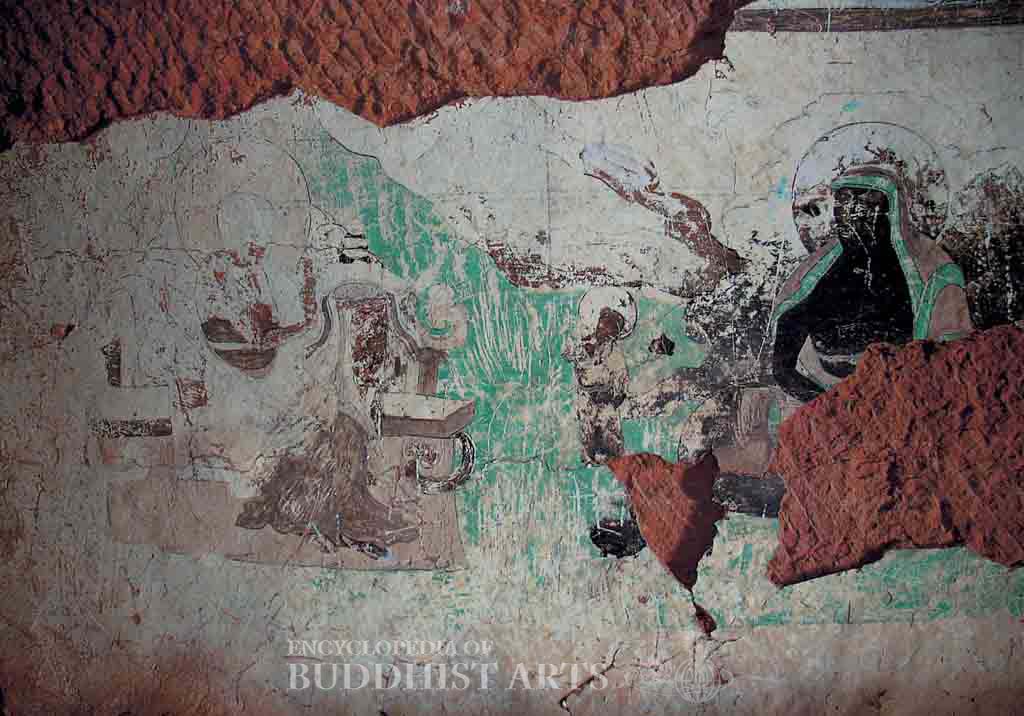
Arjai Caves: Cave 28 - Mongolian Royalty and Eminent Monk
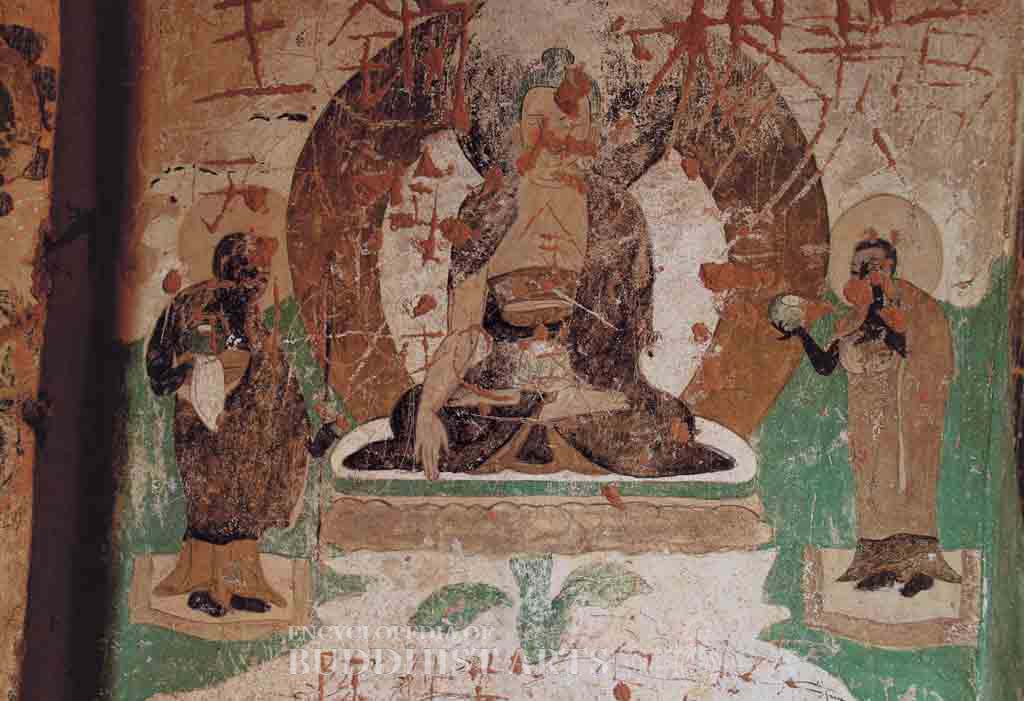
Arjai Caves: Cave 31 - Buddha Triad
Arjai Caves
CHINA, Inner Mongolia, Ordos
Arjai means Upheaval or Protruding from Flat Ground in Mongolian. The Arjai Caves are located on Arbus Mountain in Ordos, Inner Mongolia. The caves derive their name from the red sandstone hill on which they are located. They are also known as the Hundred Eyes Caves, as well as the Arjai Cave Temple due to their historical use as a Buddhist monastery. The caves were constructed during the Yuan dynasty (1271–1368), with further renovations taking place during the Ming (1368–1644) and Qing (1644–1911) dynasties. The site of the Arjai Caves was listed as a National Cultural Heritage Site in 2002.
There are 67 extant caves, although only 43 of them are preserved. Most of the caves were constructed along the south cliff face in three tiers. Also carved onto the cliff are 26 pagodas and stupas in relief; one is a multi-eave pagoda, while the others are inverted bowl shape stupas. The tallest such carving stands at 6 m, while the smallest is only 10 cm high. On the flat top of the hill are the remains of six buildings, along with scattered objects such as yellow and green glazed tiles, eave tiles carved with fearsome animals, and blue and white porcelain plaques.
The caves at this site can be divided into large, medium, and small sizes. Cave 19, the only large cave, is located in the middle of the south cliff. It is estimated that this cave was formerly around 30 sq m in size, but it has collapsed. Traces of a structure on the outside of the cave suggest that eaves were once built above it. The majority of the caves at Arjai are medium in size: approximately 2.5 m to 3 m in height with an area of approximately 20 sq m. The entrances are either arched or rectangular, and large Buddha niches are located in the center of the back walls. The side walls of the caves are carved with evenly spaced, symmetrical Buddha niches. Of the medium-sized caves, Caves 10 and 28 have a central pillar. The small caves are between 1.5 m and 2 m in height, with an area of about 10 sq m. There are no Buddha niches in any of the small caves.
The sculptures in the caves are all either missing or destroyed, although some sculptural fragments can be found. However, almost 1,000 murals are preserved, many of which are of high artistic, cultural, and historical value. All of the existing small caves contain murals. Of particular interest are the numerous Buddha images in Cave 31. The themes of the murals include Jataka tales, Buddha teaching the Dharma, Bodhisattvas making offerings, the royal family of Genghis Khan paying respect to the Buddha, and various local themes such as a Mongolian funeral. Many murals make use of bright red, yellow, blue, green, and white colors.
Accompanying the murals are remnants of cartouches written in Uighur-Mongolian script, Tibetan writing, and Sanskrit in Ranjana script. The contents of the cartouches include: Song of Repentance to the Thirty-Five Buddhas, Praise to the Twenty-One Taras, Praise to the Sixteen Arhats, Praise to Damodara, and Praise to the Four Heavenly Kings.
For more details, go to the Encyclopedia of Buddhist Arts: Caves A-E, page 85.
Cite this article:
author = Hsingyun and Youheng and Johnson, Peter and Mankuang and Huntington, Susan and Edson, Gary and Neather, Robert,
booktitle = {Encyclopedia of Buddhist Arts: Caves A-E},
pages = 85,
title = {{Arjai Caves}},
volume = 5,
year = {2016}}