
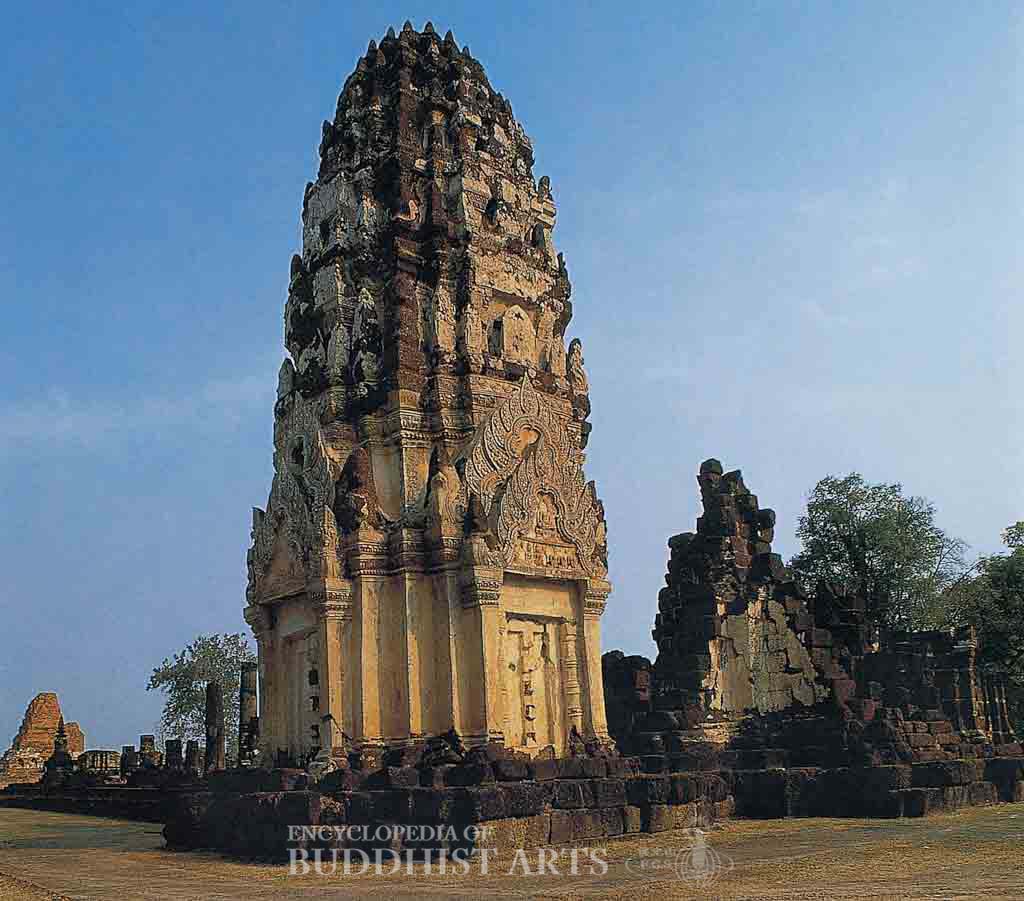
Wat Phra Phai Luang: Khmer-Style Stupa
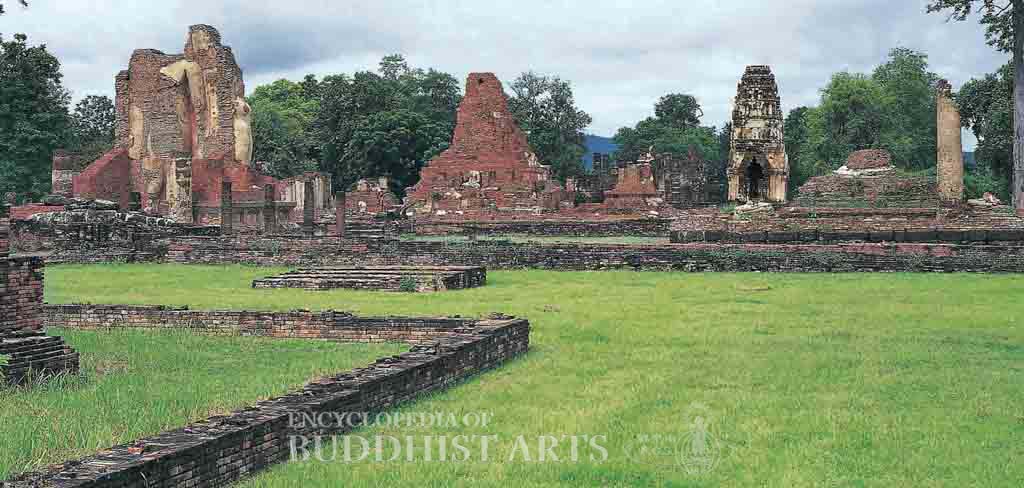
Wat Phra Phai Luang
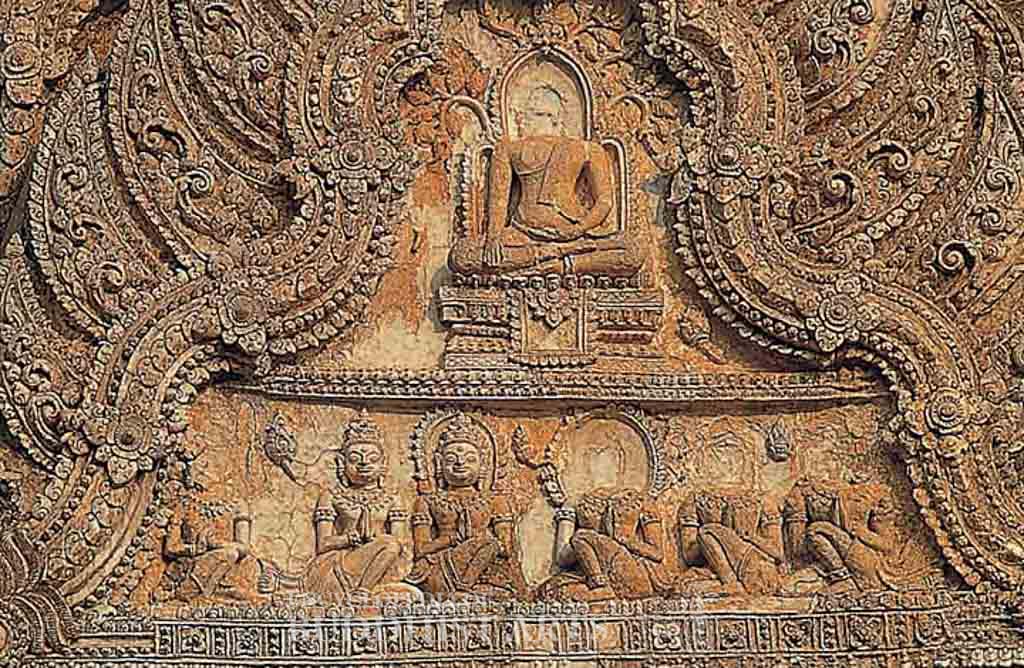
Wat Phra Phai Luang: Khmer-Style Stupa (detail)

Wat Phra Phai Luang (site layout)
Wat Phra Phai Luang
THAILAND, Sukhothai
Wat Phra Phai Luang means the Temple of the Great Wind. It is one of the largest temples in northern Sukhothai and is an important historic site. It was originally constructed during the reign of King Jayavarman VII (reigned circa 1181–1220) as a Khmer Mahayana Buddhist temple. During the Sukhothai period (circa 1238–1483), it was converted to a Theravada Buddhist temple. As part of the Historic Town of Sukhothai and Associated Historic Towns, it was listed as a UNESCO World Cultural Heritage site in 1991.
The main structures of the temple lie on an east-west axis. Starting from the entrance, the major buildings include a pavilion, square Thai-style stupa, Buddha hall, three Khmer-style stupas, and ordination hall. There are also several stupas of varying sizes scattered around the temple complex, which is bordered by a moat measuring 600 m on each side. Of the original three Khmer-style stupas, only the one situated in the north is extant, the other two have just their base platforms remaining. The layout of the stupa is square with multiple corners, and the body has a tapered curved shape. The entrance is on the east side, with false doors on the other three sides. The tympanum above the entrance is decorated with a Buddha image forming the bhumisparsa (earth-touching) mudra, seated on a Sumeru throne under a Bodhi tree. Six disciples are depicted kneeling piously below, paying homage to the Buddha. The fine craftsmanship has produced a life-like portrayal of the subject.
In front of the three Khmer-style stupas there is the base of a rectangular, laterite Buddha hall, with circular columns that once supported a wooden roof. In front of the Buddha hall there is the square-based Thai-style stupa with Buddha niches around it. Even though the images are damaged, the holding of their hands in bhumisparsa mudra is indicative of the late Sukhothai style. The pavilion at the very front features four large Buddha images, each looking in a separate direction. The images adopt different postures, such as walking and standing. There is also a reclining Buddha in front of the pavilion. This is a unique feature of this temple. Many important sculptures have been unearthed from the temple grounds with styles ranging from the Sukhothai, Bagan, and Bayon periods. These images are kept in the National Museum in Sukhothai.
For more details, go to the Encyclopedia of Buddhist Arts: Architecture T-Z, page 1227.
Cite this article:
author = Hsingyun and Youheng and Johnson, Peter and Mankuang and Lancaster, Lewis,
booktitle = {Encyclopedia of Buddhist Arts: Architecture T-Z},
pages = 1227,
title = {{Wat Phra Phai Luang}},
volume = 4,
year = {2016}}