
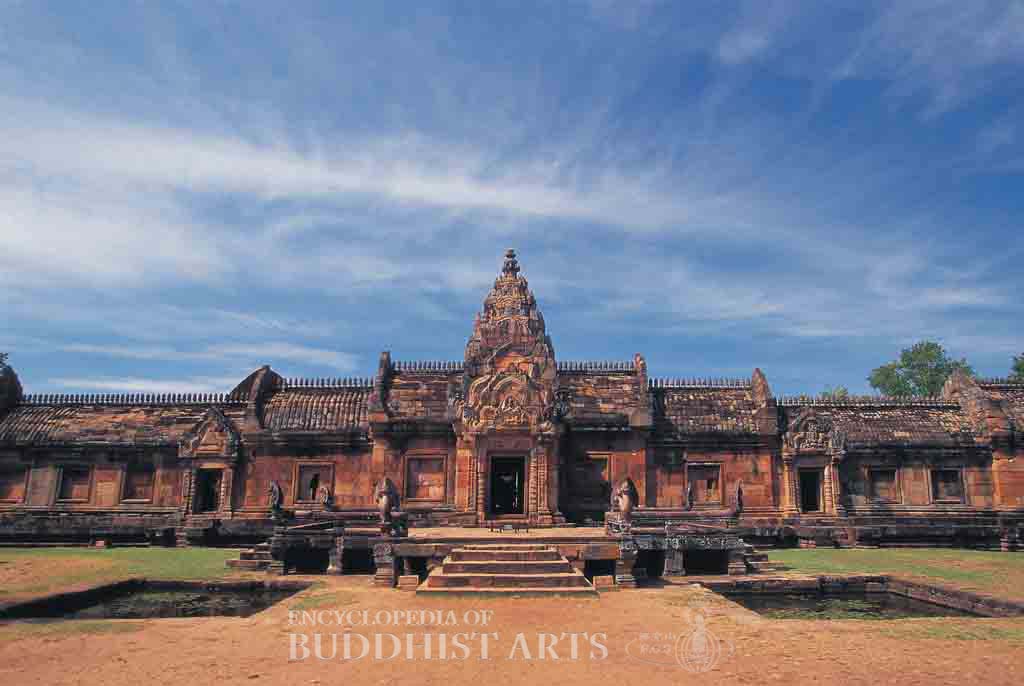
Prasat Phanom Rung
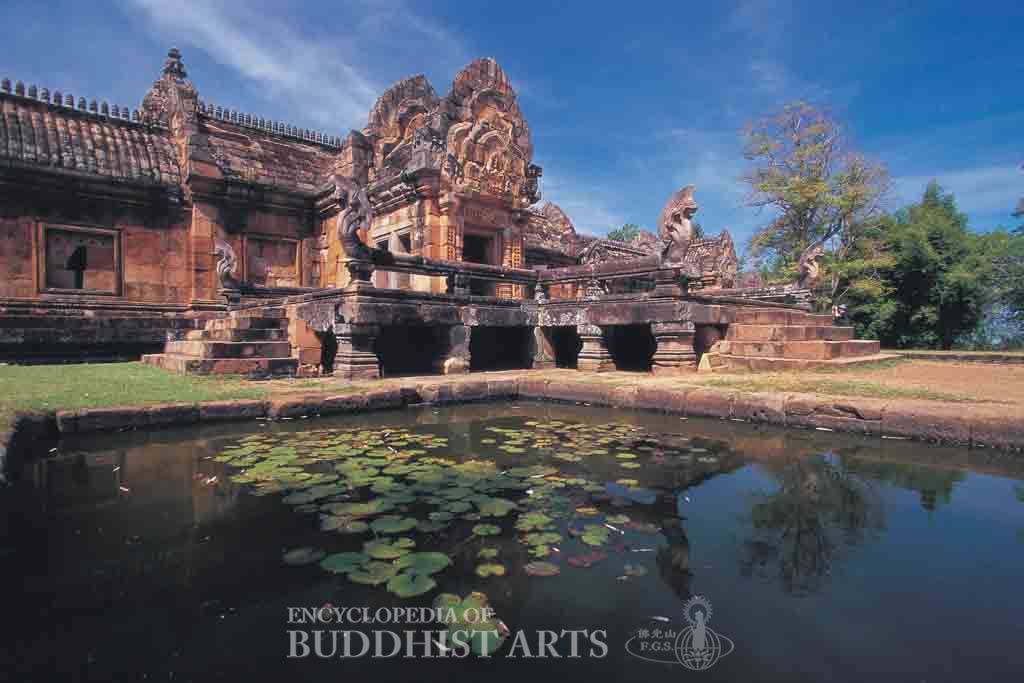
Prasat Phanom Rung
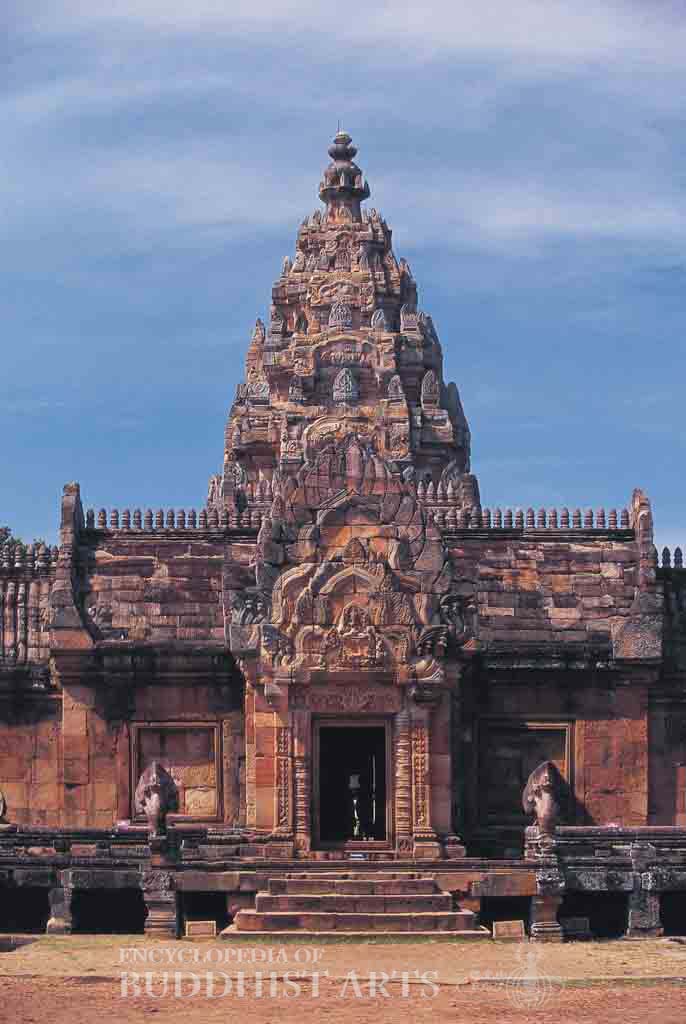
Prasat Phanom Rung: Entrance
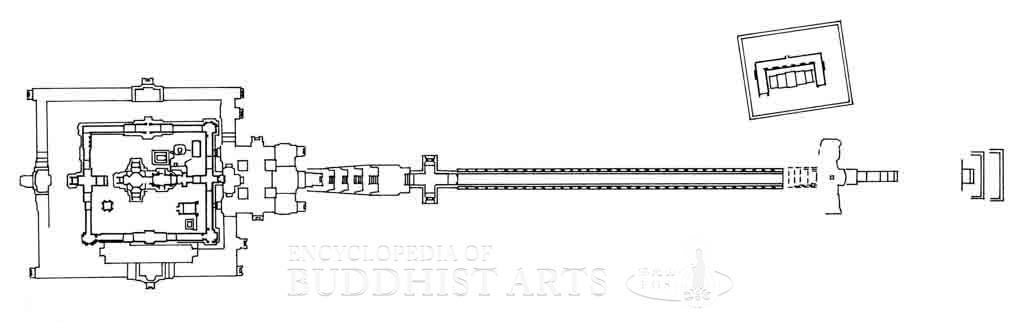
Prasat Phanom Rung (site layout)
Prasat Phanom Rung
THAILAND, Buriram
Phanom Rung means Big Hill. This temple was built on an extinct volcano and is one of the largest and most complete Khmer style structures in Thailand. It was originally a Hindu temple built in the 10th century during the Khmer Empire (circa 9th–15th century). It was subsequently expanded through the 12th century. King Jayavarman VII (reigned circa 1181–1200), who was a Khmer Mahayana Buddhist, added sutra repositories and converted this place to a Buddhist temple. Restoration was carried out and completed by Thailand’s Fine Arts Department in 1989.
The temple faces east and follows the contours of the land. The main architectural structures include the main stupa, sutra repositories, a smaller stupa, several ancillary stupas, and a surrounding gallery. Leading to the temple there is a processional walkway, which is 160 m long and 7 m wide, flanked by 134 carved sandstone posts. It leads to a terrace whose balustrades are decorated with nagas. There is then a set of 58 steps leading to the temple entrance. There are exquisite carvings in the stone lintel above the entrance, which is surmounted by double tympana with relief carvings of Hindu legends. The Khmer-style main stupa stands 23 m high, and is made of sandstone and laterite. The stupa has a square base platform and its multi-tier body tapers towards the top. The spire is in the form of a lotus bud. The chamber within the stupa has a vaulted ceiling. The two smaller stone structures located on the northeast and southeast sides of the main stupa are the sutra repositories.
For more details, go to the Encyclopedia of Buddhist Arts: Architecture M-S, page 840.
Cite this article:
author = Hsingyun and Youheng and Johnson, Peter and Mankuang and Lancaster, Lewis,
booktitle = {Encyclopedia of Buddhist Arts: Architecture M-S},
pages = 840,
title = {{Prasat Phanom Rung}},
volume = 3,
year = {2016}}