
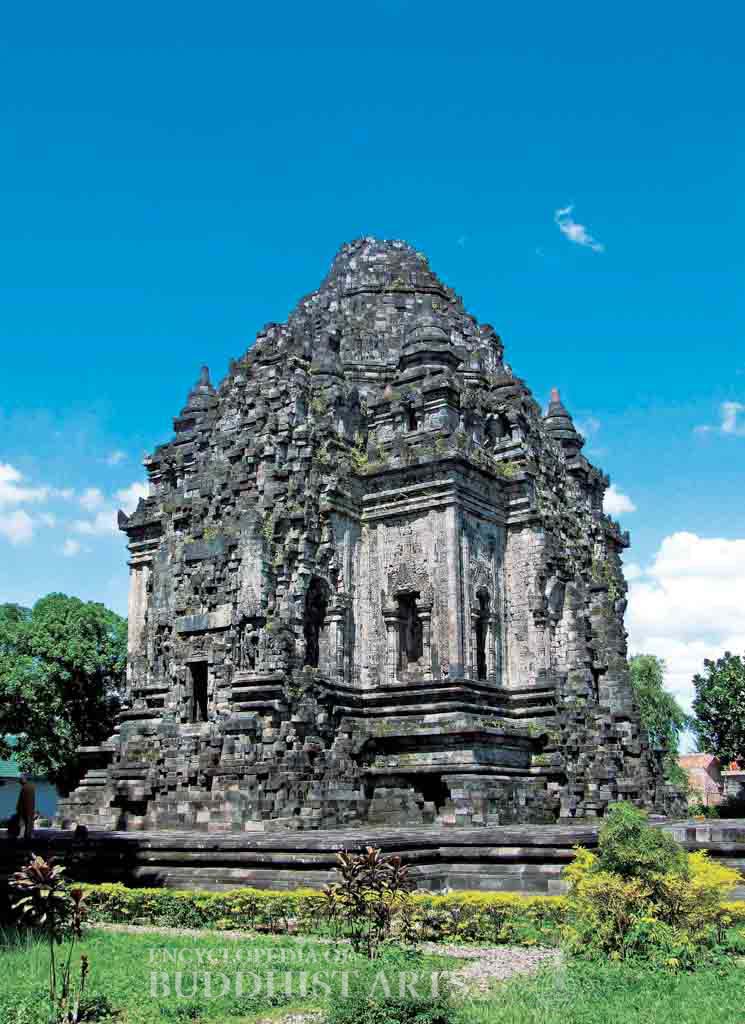
Kalasan Temple
Kalasan Temple
INDONESIA, Yogyakarta, Sleman
This is the earliest known Mahayana Buddhist temple in Java (present day Indonesia). The origins of the temple can be found in a stele inscription dated 778, which recorded an order from a king of the Sailendra dynasty (circa 750–850) to build a temple dedicated to Tara. It was enlarged in the 9th century and later underwent a number of changes.
The temple faces south with a present height of approximately 34 m. The plan of the temple is square. It originally consisted of a single chamber; projecting porticos on all four sides were added later. Each facet contains decorated niches filled with intricately carved reliefs of Bodhisattvas. Spanning the tops of the columns on either side of the doorway are relief carvings of kirtimukha. On the roof there are inverted-bowl stupas of different sizes, with a large, partially damaged, octagonal stupa in the center. Niches are located on the front wall just below the three stupas. The middle niche enshrines a seated Buddha, while the left and right niches each contain a standing Bodhisattva. The temple is believed to have once housed a bronze statue of Tara. The southern portico is the best preserved part of the building; its intricate carvings exemplify the aesthetics of Javanese architecture.
For more details, go to the Encyclopedia of Buddhist Arts: Architecture G-L, page 588.
Cite this article:
author = Hsingyun and Youheng and Johnson, Peter and Mankuang and Lancaster, Lewis,
booktitle = {Encyclopedia of Buddhist Arts: Architecture G-L},
pages = 588,
title = {{Kalasan Temple}},
volume = 2,
year = {2016}}