
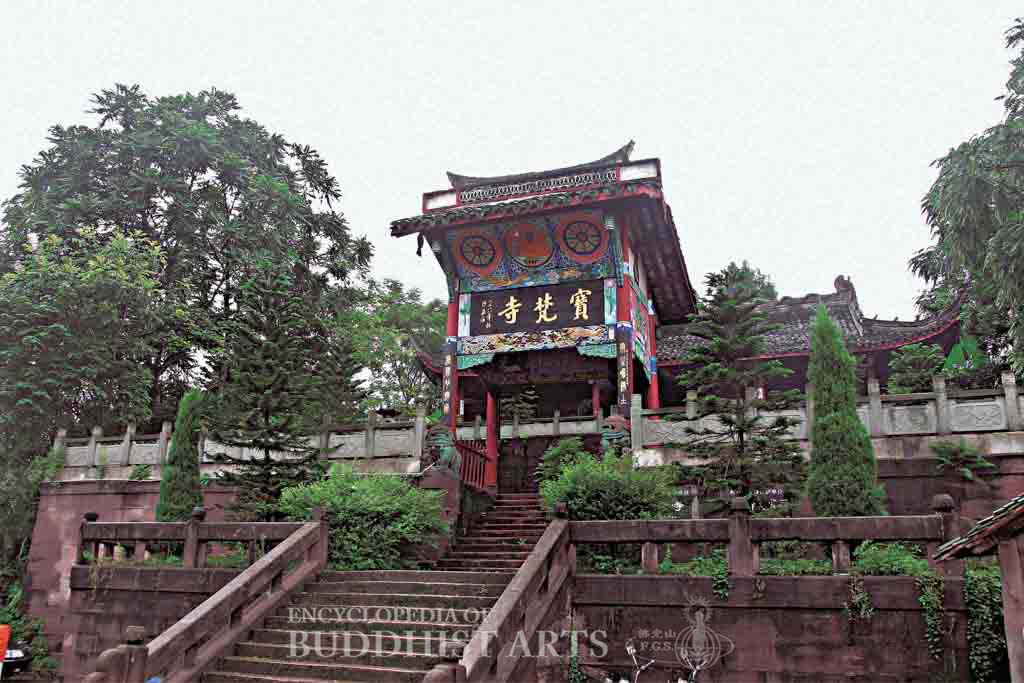
Baofan Temple
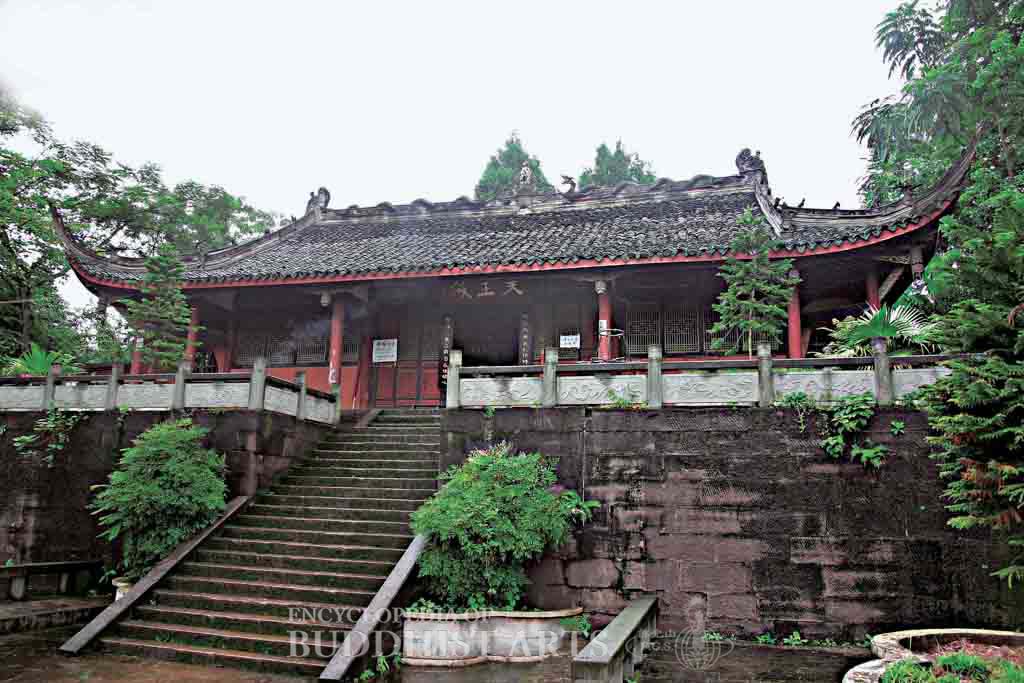
Baofan Temple: Heavenly King Hall
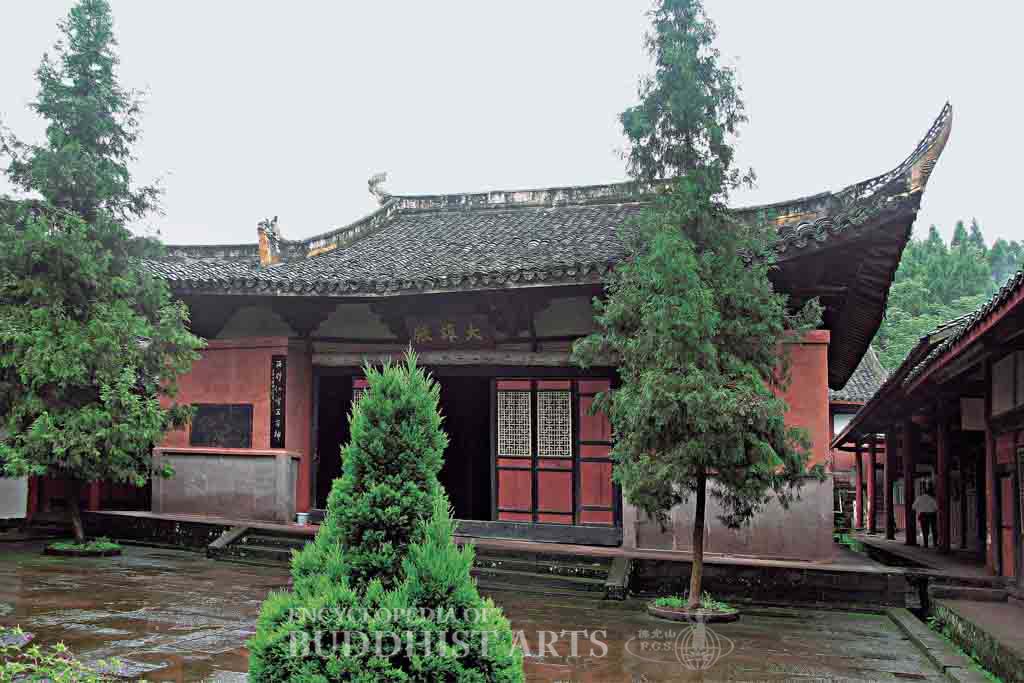
Baofan Temple: Great Hero Hall
Baofan Temple
CHINA, Sichuan, Suining
The temple was founded during the Northern Song dynasty (960–1127). The current buildings were reconstructed during the Ming (1368–1644) and Qing (1644–1911) dynasties. It was listed as a National Heritage Site in 2006.
The temple faces south and is built according to the contours of the mountain. The buildings occupy 1,700 sq m. There are three courtyards with buildings such as the Heavenly King Hall, Great Hero Hall, and the Vairocana Hall. The bell and drum towers are located to the sides along with the Avalokitesvara Hall and Infinity Hall.
The three-bay wide Heavenly King Hall has a single-eave hip-and-gable roof. A pair of dragons is depicted along the main ridge. The Great Hero Hall was rebuilt in 1450 during the Ming dynasty. It is three bays wide and has a single-eave hip-and-gable roof. It has a four rafter, post and lintel structure. In 1466, monks Qingcheng and Jingyuan commissioned artists to create a series of Arhats murals in the Great Hero Hall. The 12 murals are collectively known as the Western Pure Land Murals; however, two of them have been irreversibly damaged. They are considered to be masterpieces of the Ming dynasty. The Avalokitesvara Hall also houses murals which were transferred from the nearby Dingjing Temple. They depict heavenly beings making offerings to Buddhas and Bodhisattvas, and were created in 1451 during the Ming dynasty.
For more details, go to the Encyclopedia of Buddhist Arts: Architecture A-F, page 49.
Cite this article:
author = Hsingyun and Youheng and Johnson, Peter and Mankuang and Lancaster, Lewis,
booktitle = {Encyclopedia of Buddhist Arts: Architecture A-F},
pages = 49,
title = {{Baofan Temple}},
volume = 1,
year = {2016}}