
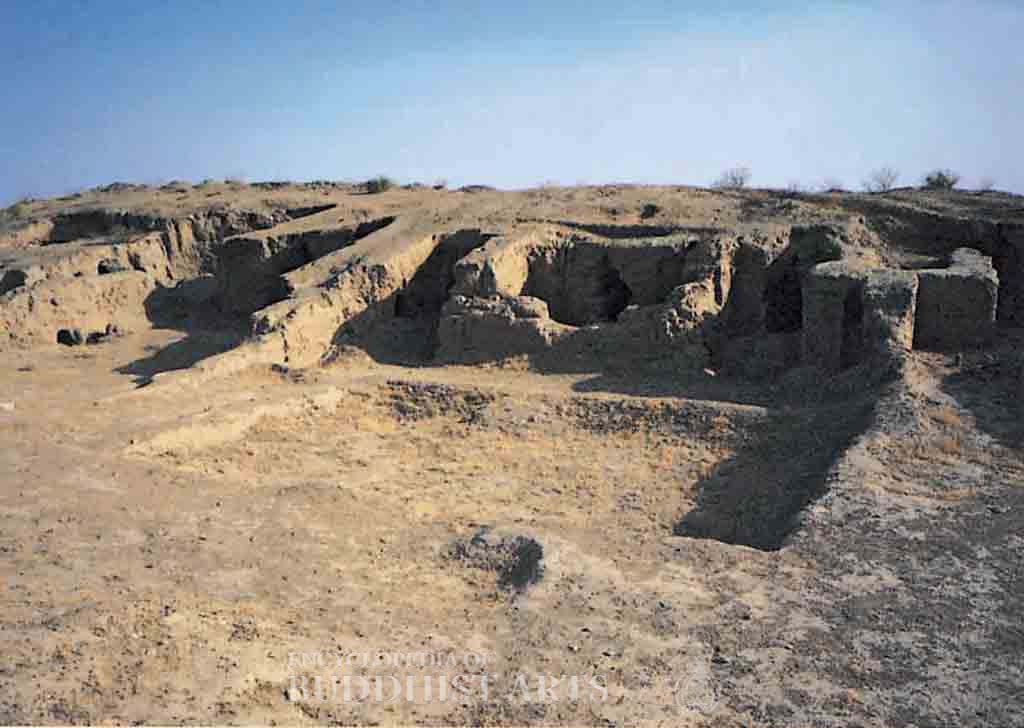
Termez: Kara Tepe
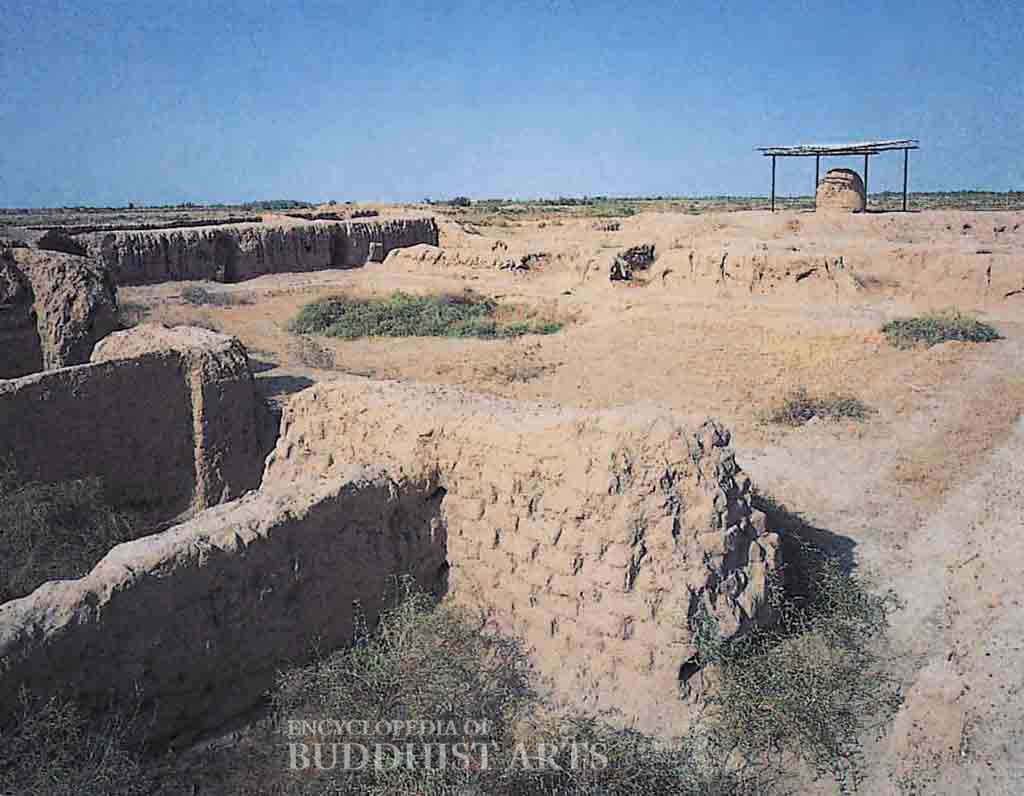
Termez: Fayaz Tepe
Termez
UZBEKISTAN, Surkhandarya
Termez was built on the bank of the Amu Darya River more than 2,500 years ago and is one of the oldest cities in Central Asia. According to research, Buddhism spread to Termez during the Greco-Bactrian period (circa 250–128 BCE) and it flourished as a Buddhist center under the rule of the Kushan Empire (circa 1st–3rd century). When the Tang Buddhist monk Xuanzang stopped in Termez on his way to India in the 7th century, he described it as a place with a dozen Buddhist monasteries and over 1,000 monastics. However, in the late 8th century Islam replaced Buddhism as the main religion. Termez was destroyed by the Mongols in the 13th century and a new city was built east of the original site. In 1927 a Russian team of archaeologists began to excavate and carry out research on the original city of Termez.
The site of the ancient city occupies over 400 ha. The main Buddhist sites include the Airtam and Dalverzin Tepe, built during the 1st century, as well as the Kara Tepe, Fayaz Tepe, and Zurmala Stupa, built during the 2nd to 4th century. A large number of artifacts were excavated, including stone sculptures, fragments of murals, sculptures of the Buddha’s head, sutra manuscripts, terracotta fragments with inscriptions in Brahmi and Kharosthi scripts, and coins from the Greco-Bactrian and Kushan periods. These artifacts are stored at the Historical Museum of Uzbekistan, the Fine Arts Scientific Research Institute in Tashkent, the Termez Archaeological Museum, and the State Hermitage Museum in St. Petersburg, Russia.
Airtam is located to the east of the ancient city of Termez. The site consists of a stupa, halls, and monastic cells. It was built with adobe walls laid with stone slabs. The stupa ruins are approximately 1 m high, with a square base and an inverted bowl-shape body. The Dalverzin Tepe is located in the valley of the Surkhandarya River and is the oldest known temple in Central Asia. At its center there is a large platform made of adobe that looks like the base of a stupa. The south, north and east sides of the platform have walkways that lead to courtyards.
Kara Tepe is located in the northwest corner of the ancient city and consists of 11 caves, a stupa compound, temples, halls, and monastic cells. They are the very few cave temple ruins found in Central Asia. Fayaz Tepe is located north of the ancient city. This rectangular structure consists of stupas, halls, monastic quarters, a lecture hall, and a dining hall. The interior walls of the hall used to contain large murals of standing Buddhas and donors. Only the images of donors remain on the walls. They are among the earliest Buddhist murals in Central Asia. The Zurmala Stupa is located southeast of the ancient city. It is believed to be made with 120 million adobe bricks. Its base consists of white limestone slabs and its body is made of bricks. There are traces of paint on the surface of the stupa, indicating its original colorful appearance.
For more details, go to the Encyclopedia of Buddhist Arts: Architecture T-Z, page 1104.
Cite this article:
author = Hsingyun and Youheng and Johnson, Peter and Mankuang and Lancaster, Lewis,
booktitle = {Encyclopedia of Buddhist Arts: Architecture T-Z},
pages = 1104,
title = {{Termez}},
volume = 4,
year = {2016}}