
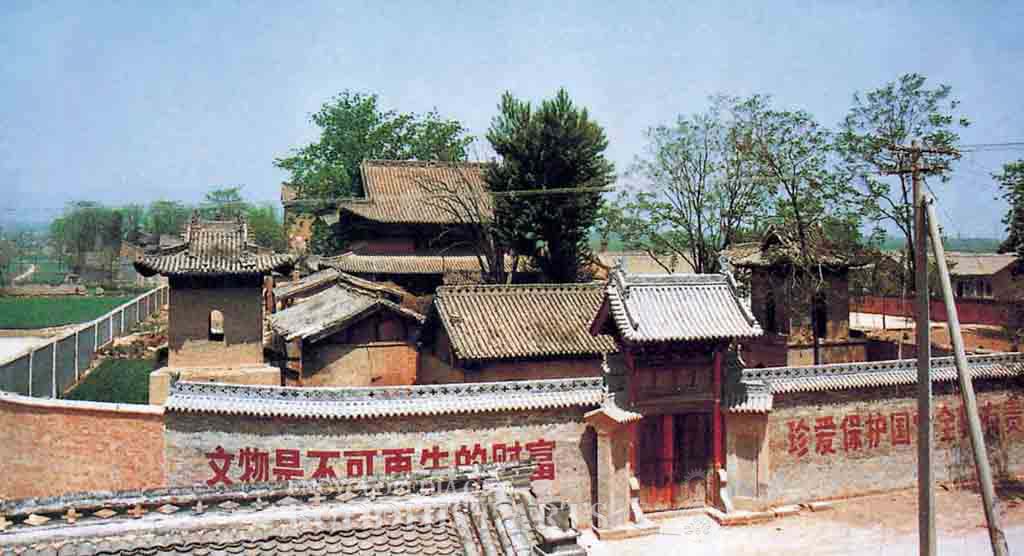
Fusheng Temple
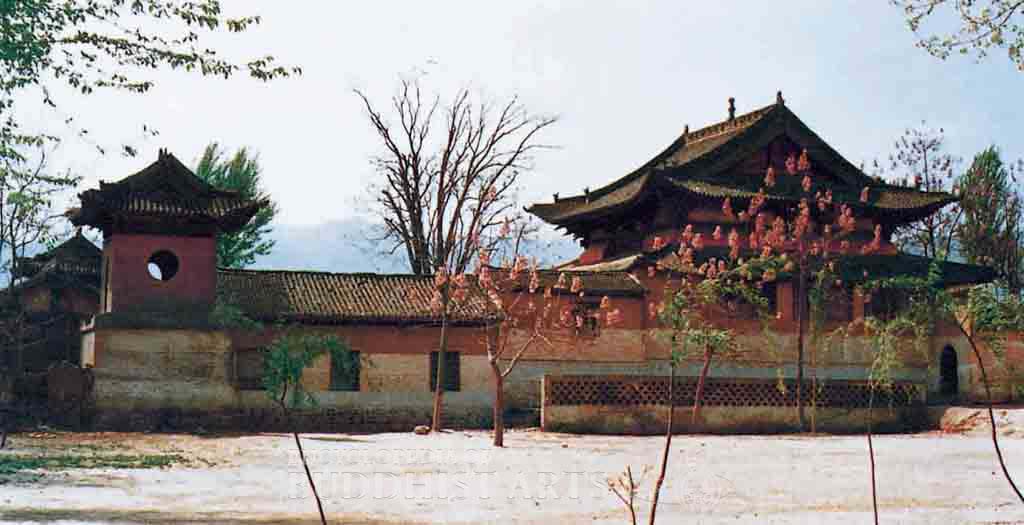
Fusheng Temple: Amitabha Hall
Fusheng Temple
CHINA, Shanxi, Yuncheng
Fusheng means Good Fortune and Victory. The temple was built during the Tang dynasty (618–907) and has subsequently been rebuilt and renovated a number of times. It was listed as a National Cultural Heritage Site in 2001.
Facing south, the temple covers 5,450 sq m and consists of two courtyards. Along the central axis in the front courtyard there are the main temple gate, Heavenly King Hall, and Amitabha Hall. Side buildings include the bell and drum towers, Hall of the Ten Kings, Triple Star Goddess Hall, and ancillary halls. The rear courtyard is larger and contains the sutra repository, some side halls and a shrine. Apart from the Amitabha Hall and cave dwellings on the lower parts of the sutra repository, which date to the Yuan dynasty (1271–1368), all the other buildings were reconstructed during the Ming (1368–1644) and Qing (1644–1911) dynasties.
The main building is the five-by-five bay Amitabha Hall with a double-eave hip-and-gable roof. Statues of Amitabha Buddha, Avalokitesvara and Mahasthamaprapta Bodhisattvas are enshrined within the hall. At the rear there is a hanging sculpture of Avalokitesvara Crossing the Sea with Sudhana, Wisdom Kings, and donors. It is thought that this artwork was created during the Yuan dynasty. Statues of the Four Heavenly Kings and the Eighteen Arhats from the Ming dynasty are lined up along the sides.
For more details, go to the Encyclopedia of Buddhist Arts: Architecture A-F, page 347.
Cite this article:
author = Hsingyun and Youheng and Johnson, Peter and Mankuang and Lancaster, Lewis,
booktitle = {Encyclopedia of Buddhist Arts: Architecture A-F},
pages = 347,
title = {{Fusheng Temple}},
volume = 1,
year = {2016}}